


In today’s newsletter:
Economic Affairs columnist Matt Ridley on AI panic distracting us from the looming threat of another pandemic.
Britain prospered in the 1980s because it stopped propping up failing industries. Nostalgia risks repeating the mistakes of the past.
Why Zimbabwe should recognise its informal markets, not replace them.
Lots of upcoming events - join us at the IEA soon!
An introduction from Economic Affairs editor Maeve Halligan
Another week, another set of public finance figures to make the Chancellor reach for the smelling salts. The Government spent more than it planned, borrowed more than it hoped and is now staring down an October Budget with all the enthusiasm of someone opening their credit card statement after a holiday. Still, with the Budget only weeks away, there's plenty of time to find the money down the back of the Treasury sofa…
Meanwhile at the IEA, Christopher Snowdon and I were both waxing lyrical about gambling. Chris took the House of Lords to task in The Critic for wanting to ban gambling ads on the basis of evidence they admit doesn't exist, while I argued in ConservativeHome that squeezing legal betting just hands the winnings to the black market and America. For a Government this short of cash, it's a curious bet.
In Economic Affairs, Daniel Hannan asked why we’re so misty-eyed about coalmining, reminding us that jobs are a means to prosperity, not an end in themselves.
And Rob Armstrong went looking for liberty in the Bayeux Tapestry, finding that the defeated Anglo-Saxons stitched a quiet protest into the Normans’ own propaganda. Proof, perhaps, that the English have always been good at losing gracefully while having the last word.
Matt Ridley is a science writer and a former member of the House of Lords.
Imagine an artificial intelligence making copies of itself... the first replicator assembles a copy in one thousand seconds, the two replicators then build two more in the next thousand seconds, the four build another four, and the eight build another eight. At the end of ten hours, there are not thirty-six new replicators, but over 68 billion. In less than a day, they would weigh a ton; in less than two days, they would outweigh the Earth; in another four hours, they would exceed the mass of the Sun and all the planets combined.
This is the fate we face, according to many. Notice, though, that the paragraph above is in italics. That is because I did not write it. It was written 40 years ago in a book published in 1986, and I have changed just one phrase, substituting “an artificial intelligence” for “a replicator floating in a bottle of chemicals”. The book was not about AI at all – it was about nanotechnology.
Engines of Creation was written by Eric Drexler and in it he coined the term “grey goo” to describe the fate of the world if self-replicating nanobots took off. Later he said he regretted the fear that his words sparked. Britain’s Royal Society, at the urging of the then Prince of Wales, wrote a lengthy report about the risk. Yet nobody now talks about nanotechnology in such apocalyptic terms, just as nobody says acid rain, ozone depletion, an imminent ice age or the Y2K computer bug are urgent existential threats. If you live as long as I have, you see many such scares come and go, and you become a tad cynical.
Economic Affairs is a reader-supported publication. To receive new posts and support our work, consider becoming a free or paid subscriber.
An X account called Pessimists Archive, run by Louis Anslow, collects such cases. He recently pointed out that in 2026 “The New York Times cites seriously academics who say AI might end the world”, and in 1881 “The New York Times cites seriously academics who say telegraphy might end the world”. In the latter case, the paper opined that meddling with the earth’s electric currents by building telegraph lines might freeze Africa and turn New York into a tropical jungle: “such are the appalling results which, according to our esteemed scientific contemporary, are to follow the girdling of the earth with a continuous line of telegraph.”
At this point my more responsible friends remind me that the boy who cried wolf was eventually right, and there was a wolf. They also insist that AI is not like the other scares, and that this time is different. If I reply, “they said that last time, too”, it cuts little ice, and of course they have a point. At some point there may be a wolf.
But this is when I get even more exasperated, because my world weariness at promises of theoretical future calamity is matched by my bafflement at complacency about a current, urgent calamity. Why, when a wolf did suddenly descend on the fold, did the entire bien-pensant world dismiss it?
I am referring to the Covid pandemic. In my view, the evidence is now overwhelming that this began with a foolish experiment that went wrong in a laboratory in Wuhan –but even if you think that was only a small possibility, you should be really alarmed by the fact. If one virology experiment can kill 15 million people and do US$45 trillion of damage to people’s livelihoods, then why have we largely ignored it while obsessing over some potential threat from AI in the future? This point was brilliantly made recently by the celebrated venture capitalist Bill Gurley in a talk at the All-In summit in Los Angeles. “My p(2nd Covid) is way higher than my p(doom). And if their models are so ****ing smart, tell me what happened here.” To translate out of Silicon Valley-ese: we are facing a far greater risk of some virologist starting another pandemic than we face from AI. Yet nobody even wants to investigate, let alone prevent it.
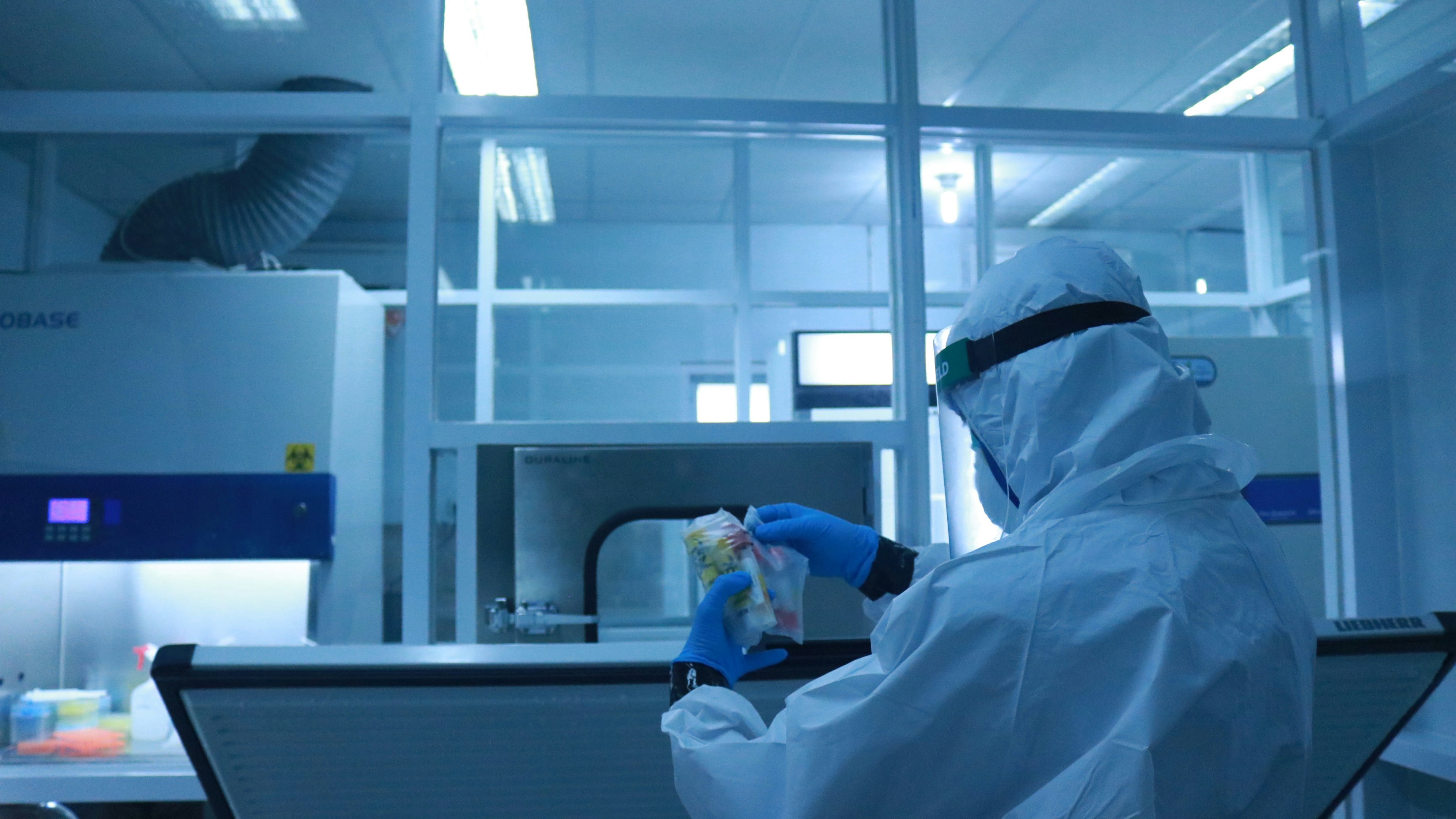
Gurley summarised in devastating detail how, when an accident happens, we usually leave no stone unturned to try find out whether it was somebody’s fault. When a building collapsed at Surfside in Florida, when two Boeing 737 MAX aircraft crashed, when Hurricane Katrina overwhelmed New Orleans, when the Fukushima nuclear plant suffered meltdown, when the Challenger shuttle exploded – in each and every case, teams of investigators and journalists eventually found out that these were man-made disasters, not natural accidents. It took heroic determination to unearth the facts that, respectively, faulty design, faulty software, faulty levees, faulty flood protection and faulty cold resistance in the O-rings were the causes.
But in each of those cases, the teams of relentless “searchers”, as Gurley calls them, had to fight like tigers to overcome powerful “blockers” from corporate and (yes) regulatory bureaucracies that did not want to find the truth. Yet those five events were pinpricks compared with Covid-19. Speaking of Richard Feynman’s battle to find out what happened to the Challenger, when he was told he should try being nicer, Gurley said: “If you have to get through niceties and seek truth when seven people died, how are you supposed to behave when 15 million people died?”
In the case of the pandemic, the “blockers” performed their task with unfortunate success. They scared off almost all journalists, politicians, spies and lawyers by branding the lab leak a debunked conspiracy theory. As a result, it was left to a few self-funded amateurs to do most of the work finding out what happened in Wuhan.
We are facing a far greater risk of some virologist starting another pandemic than we face from AI.
Not only did Western authorities fail even to try searching; they did nothing to pressure Chinese scientists. There was no hint that collaboration should cease until they came clean about what happened, for example. There has not been a ghost of an attempt to improve the monitoring of what happens in virology labs in future. The opposite, in fact: the WHO was warning about the risks of lab leaks before the pandemic but has said barely a squeak since.
Yet we are all supposed to be engaged, dawn till dusk, in an obsessive debate about the vague – rarely specified – way in which AI might doom us at some rarely specified point in the future. Ah, say my responsible friends, but it is precisely through virology that AI might harm us. Imagine how much worse it will be when AI starts designing virus genomes! Maybe, but would it not be a good start to pay a smidgen of attention to what human intelligence can do and is doing?
“A lot has been said about AI x bio trigger events [alarming incidents at the intersection of AI and biology that could prompt tighter regulation] that should lead to increased regulation or oversight,” writes my co-author, the virologist Alina Chan. “Yet, roughly seven years since Covid emerged, the research pipeline that likely caused the pandemic is still legal to conduct outside of high containment without independent oversight.” To put it another way, we have just survived one shark attack and are swimming towards the shore in deep water, refusing to board life rafts, while discussing whether there might be a tiger where we land. a refighting of the economic culture wars of yesteryear worse than useless.
The best way to never miss out on IEA work, get access to exclusive content, and support our research and educational programmes is to become a paid IEA Insider.
Why can't Britain fix its pensions? Lord Hannan hosts the IEA Podcast with Kristian Niemietz and Christopher Snowdon on the case for replacing the state pension with compulsory private saving, and whether a funded system on the Australian or Chilean model could ever survive the politics, plus the "strange death of libertarianism", the fusionist alliance holding in Britain but breaking down in America, and the Lords' call to ban gambling advertising. YouTube
This week on Economic Affairs


News and Views from the IEA
This has gone far enough. Daniel Hannan, Director-General of the IEA, writes for the Daily Mail on why Britain, the nation that spent nearly two per cent of GDP a year hunting down slavers, is the only country being pursued for reparations. He argues that our diplomats' habit of indulging the demands has marked us out as a soft touch, and that we should treat them as hostile acts, with aid cuts, visa bans and sanctions to match.
Economists warn that Burnham’s capital gains tax raid would backfire, The Telegraph reports. Valentin Boboc, Senior Economist at the Institute of Economic Affairs, is quoted saying that a rise could be “catastrophic”, resulting in “panic-selling” before it comes in.
Making it dearer and harder to bet legally does not magically eliminate demand. Maeve Halligan, spokesman at the IEA and editor of Economic Affairs, writes for ConservativeHome on why Britain is missing out on the boom in prediction markets. She argues that regulations and heavy taxation simply push punters to the black market and across the Atlantic.
“The Government treats online betting and gaming as a cash cow to be milked rather than an industry to be nurtured.”
Healey accused of risking ‘market chaos’ as he considers allowing Budget headroom to shrink, the Daily Mail reports. Julian Jessop, Economics Fellow at the IEA, is quoted warning that letting the headroom shrink is “tempting but risky”.
“[This] could send a damaging signal about Healey’s and Burnham’s commitment to fiscal discipline at a time when markets are already on edge.”
The Lords want to ban gambling advertising without evidence that it causes gambling harm. Chris Snowdon, Head of Lifestyle Economics at the IEA, writes for The Critic on why the Lords' call for a ban on gambling adverts swaps evidence for the precautionary principle, when gambling participation has fallen sharply and problem gambling has stayed flat.


Education, Events and Opportunities
Food for Thought with Charles Goodhart and Manoj Pradhan
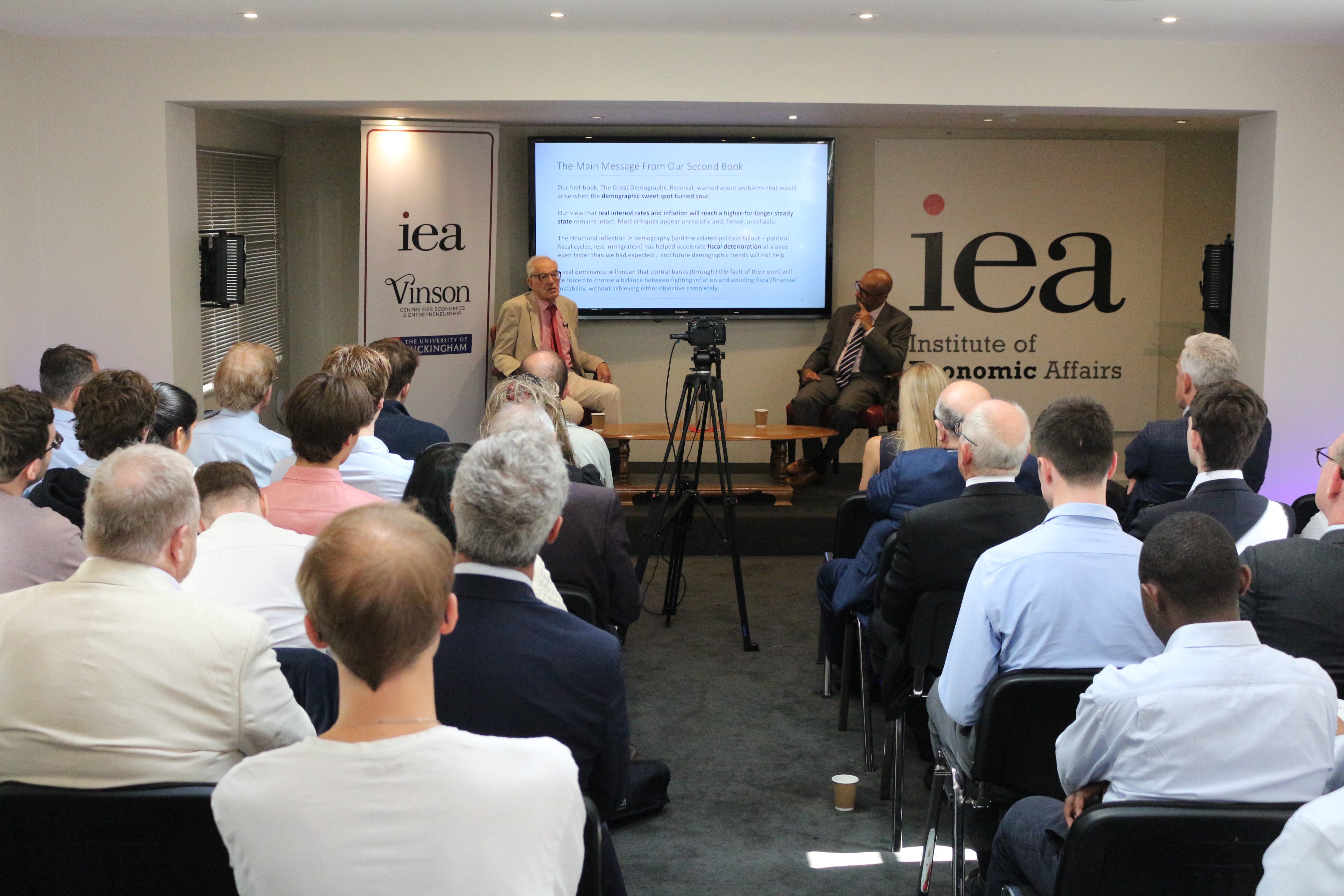
On Monday, the IEA hosted the latest instalment of our monthly Food for Thought series, in collaboration with the Vinson Centre at the University of Buckingham. Charles Goodhart, the former Bank of England MPC member behind "Goodhart's Law", and Manoj Pradhan of Talking Heads Macroeconomics discussed their new book, The Unanchored Central Banker. They argued that ageing populations, supply shocks and rising defence spending have put public finances on an unsustainable path that democracies struggle to correct. The result is an era of fiscal dominance, in which central banks must balance fighting inflation against preventing financial instability, without fully achieving either.
Upcoming: Tower of Basel by Adam LeBor - Book Launch
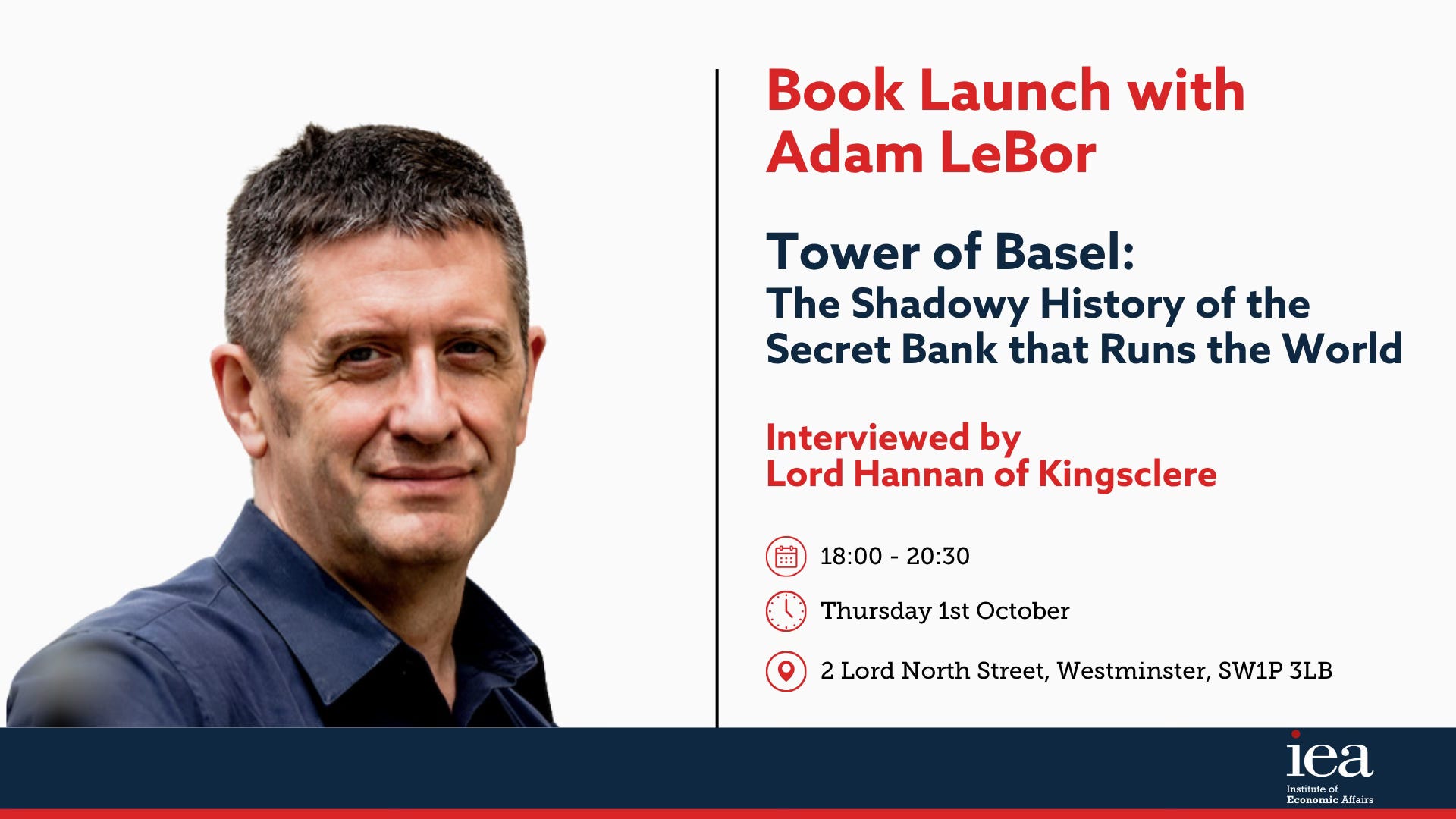
Join us for the launch of the revised and updated edition of Tower of Basel: The Shadowy History of the Secret Bank that Runs the World. The book examines the Bank for International Settlements, the little-understood “bank for central banks”, with two new chapters on its role in developing central bank digital currencies and what they mean for privacy and financial freedom.
Speakers:
Adam LeBor, author and journalist writing for the Financial Times and The Critic
Lord Hannan of Kingsclere, Director General of the IEA
When: Thursday 1 October 2026, doors open 18:00, discussion 18:30 to 19:30, followed by a drinks reception
Where: Institute of Economic Affairs, 2 Lord North Street, London SW1P 3LB
This event is free and open to all.
Upcoming: Adam and Eve by Jeffrey Archer - Book Launch
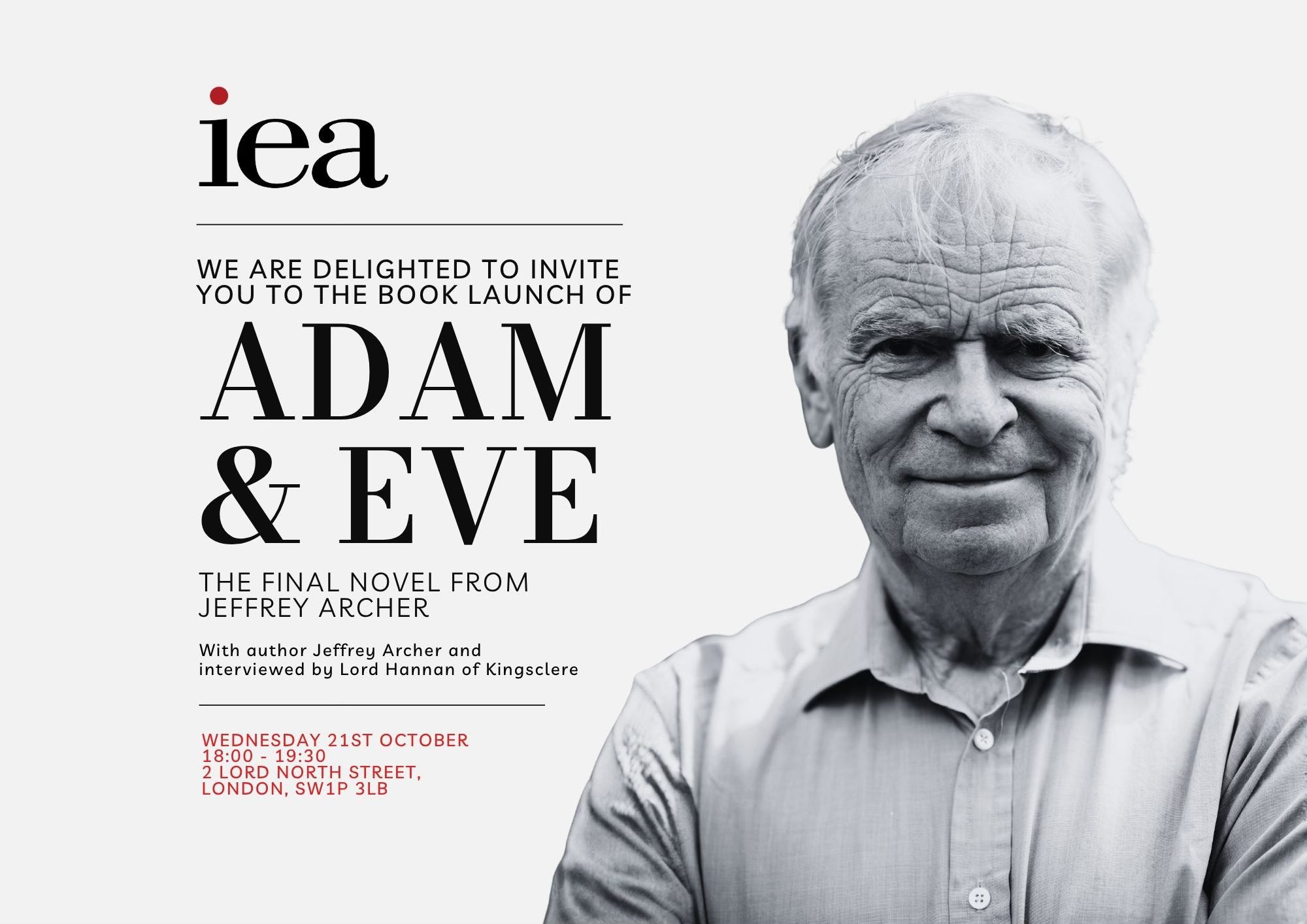
Fifty years after his first novel, Jeffrey Archer launches his final standalone novel, Adam and Eve. It opens on Armistice Day 1918 with the birth of two children hours apart: one the son of a shepherd, the other the daughter of an Earl. Copies will be available to buy on the evening.
Speakers:
Jeffrey Archer, bestselling author of Kane and Abel and the Clifton Chronicles, with more than 300 million copies sold worldwide
Lord Hannan of Kingsclere, Director General of the IEA
When: Wednesday 21 October 2026, doors open 18:00, discussion 18:30 to 19:30, followed by a drinks reception
Where: Institute of Economic Affairs, 2 Lord North Street, London SW1P 3LB