



Last weekend my beloved Chelsea got “mauled by the Tigers” of Hull City, resulting in a 2–2 draw. I would have liked to watch the game and share my amateurish views as a world-class pundit at my local, but alas, I couldn’t watch it.
The reason? It was played at 15:00 on a Saturday, during the football blackout.
For those unfamiliar with this particularly British form of sporting deprivation, the 15:00 blackout prevents any football matches from being broadcast on television in the UK between 14:45 and 17:15 on Saturday matchdays – including those in Europe or further east. A match which kicks off within the blackout window may, however, be joined in progress once the window ends. It is an odd situation. We live in a country where you can watch an English football match being broadcast to audiences across the world, while the English themselves are told: sorry, try again at 17:15.
The blackout is not a legal requirement imposed by the British Government. Rather, it operates under Article 48 of UEFA’s broadcasting regulations, which allows national associations to designate a period during which domestic football cannot be broadcast. In England, the Football Association enforces the blackout at the request of the Premier League and English Football League.
When a petition was submitted to Parliament calling for the blackout to be ended, the response on the 14th of September was essentially: not our problem.
Parliament explained in response to another petition last year:
“It’s about something that the UK Government or Parliament is not directly responsible for.”
It continued:
“Decisions about when to hold and broadcast football matches are a matter for the FA, the Premier League and the Football League, and broadcasters, not the Government or House of Commons.”
Non-interventionism was hardly the view of the Government when it published its Football Governance Bill – the 112-page doorstopper that aimed to ‘redistribute’ football revenue. Still, government-sanctioned self-regulation in its own right can become a remarkably effective form of collective control. When an entire industry agrees on a restriction, it can have many of the practical characteristics of a monopoly. It is hard to see why the industry would choose a policy that costs it £200m a year in revenue, however. There must be more to it.
Blame Burnley
The blackout dates back to the 1960s, when Burnley chairman Bob Lord was fiercely opposed to football being shown on television. Lord was so resistant to broadcasting that he banned the BBC from televising Match of the Day from Turf Moor for a period.
He subsequently pushed the Football League towards adopting a broader policy restricting Saturday afternoon broadcasts. When a man nicknamed the “Khrushchev of Burnley” introduces a football policy, you know it probably deserves another look sixty years later.
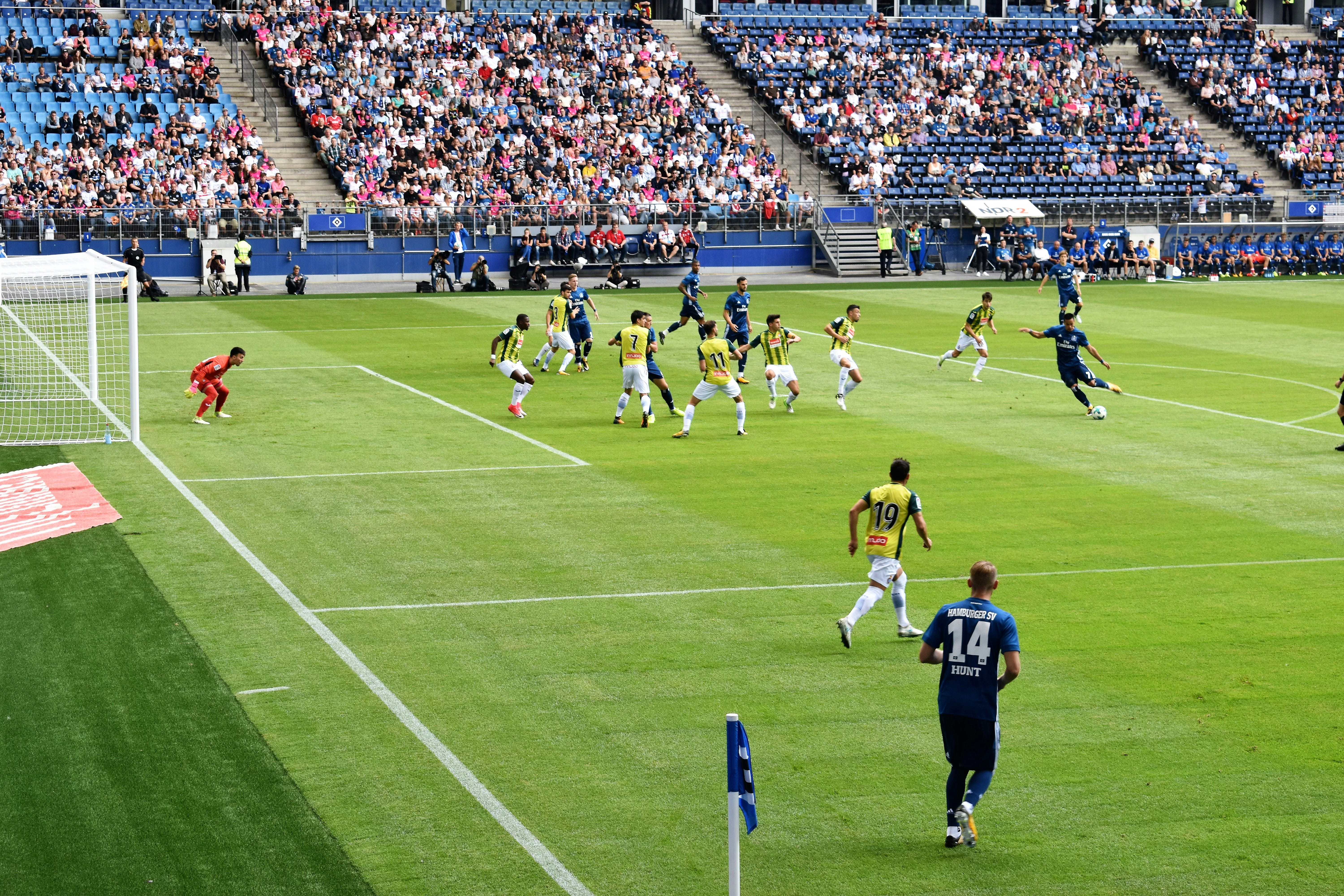
The argument for the blackout is that televised top-flight football competes with lower-league and grassroots matches. If supporters can stay at home and watch the big games, they might decide not to go and watch their local club. This could damage the structure of English football that makes it more interesting and competitive than other leagues around Europe, and eventually make even those big games less compelling. I willingly pay money to stand in the rain and watch Wycombe Wanderers every week. So I agree with the goal. But this is not the way to achieve it.
The lower-league argument
The great thing about lower-league football is that it offers something television cannot. You can buy a reasonably priced ticket, travel a relatively short distance, go with friends or family, have a few drinks, complain about the referee and experience the game as part of a community. That is a fundamentally different product from watching a Premier League match on the sofa.
Economically, the relationship is also more complicated than a simple substitution effect. Removing the blackout would not mean that every person who watches a Premier League match at home would otherwise have attended a lower-league match. People have limited time and money, so changes in the availability and price of football can also create an income effect: if consumers can access more football at relatively low additional cost, they may consume more football overall rather than simply switching from one match to another. The deadweight loss from keeping the blackout in place, then, is larger than the simple substitution story suggests.
The football landscape of the 1960s consisted of fewer than a handful of channels. There was no streaming, no smartphones, no social media, no international broadcasting market and certainly no legal Premier League app sitting in your pocket. That broadcasting environment no longer exists. Depending on one’s attitude towards copyright law, finding an “unofficial” stream is not difficult. Black markets are a predictable response to restrictions of this kind. The Guardian reported 3.6 billion illegal streams of English football last season, while The New York Times called sports piracy in the UK “endemic”. This is a regulatory failure that will take decades to correct culturally.
Money talks
There may, however, be some light at the end of the tunnel. It has been reported that a decision on whether to retain the 15:00 blackout could be made before the end of the 2027/28 season. As television rights are negotiated for the next cycle, Premier League chief executive Richard Masters has suggested that the issue of Article 48 will be reconsidered.
“I’d say in about 18 months’ time we’ll come back to that decision about whether Article 48 should remain or not,”Masters said.
His comments came after the Premier League launched a new streaming service in Singapore, highlighting the increasingly global nature of the football broadcasting market. Perhaps that is where the future of the blackout will ultimately be decided: not by Parliament, not by UEFA, and certainly not by the ghost of Bob Lord.
The Premier League has built a global broadcasting business worth billions, and clubs, broadcasters and leagues have become increasingly sophisticated at selling football to audiences wherever they happen to be. At some point, it becomes increasingly difficult to justify telling the domestic consumer that the product they are helping to finance is the one product they cannot buy.
That does not mean the interests of lower-league football should be ignored. Quite the opposite. If the blackout is removed, the Football Association, Premier League and EFL might be able to provide greater financial support for lower-league clubs. Ultimately, that is what this was all about.
I am not asking for Chelsea matches to be beamed into every pub, living room and bus shelter in Britain at 15:00 on a Saturday. I am simply asking for the freedom to watch my team draw 2–2 with Hull City from the comfort of my local. Surely, after sixty years, that is not too much to ask.
