


In today’s newsletter:
Fighting postwar nostalgia
Is Britain neoliberal?
Taking apart the wealth tax, again
19 July 2026
Andy Burnham
House of Commons
London
SW1A 0AA
Dear Mr Burnham,
Congratulations on your appointment, and our best wishes for the task ahead. You assume office at a difficult moment, with a tricky fiscal position, a national debt at its highest share of the economy in more than sixty years and nearly two decades of low growth behind us. Few Prime Ministers have entered Downing Street with less room for manoeuvre, and none in recent memory with a greater need to find it.
The good news is that much of what holds British output back is legal and regulatory rather than fiscal, which means it can be removed without a line in a spending review.
Below is a list of eight measures in this spirit. Each costs the Exchequer nothing or close to nothing and all could be delivered in your first 100 days. Each one would support Britain’s economic growth, and with it help improve the public finances, public services, and the pockets of hard-working people.
Restore a competitive tax regime for internationally mobile residents. Reinstate the remittance basis as it stood before April 2025, with the annual charges and fifteen-year limit it had acquired. The current system raises nothing for the Exchequer once a quarter of former non-doms leave, so reversal is at worst free and, plausibly, revenue-positive.
Release green belt land within walking distance of railway stations. Green belt land within a short walk of an existing station could accommodate around two million homes. As Mayor of Greater Manchester, you made the case for green belt release through the Places for Everyone scheme, and you could do so nationally. Ministers can amend the National Planning Policy Framework within a matter of months, as was previously done in 2024 to designate the new ‘grey belt’ category. This rules-based change targets maximal gains for minimal changes.
Cut red tape on major projects. All 47 recommendations of the Nuclear Regulatory Task Force have been accepted, and a Nuclear Regulation Bill has been announced, so the work is to legislate in your first months rather than let implementation drift to the end of 2027. The Government could go further and apply the same principles of proportionality, a single lead regulator and outcome-based assessment across the whole nationally significant infrastructure regime.
Raise childcare staffing ratios towards continental norms. France and the Netherlands allow carers more children per adult than England permits. Allowing a higher ratio cuts costs for parents without a pound of new subsidy.
Pause the uncommenced provisions of the Employment Rights Act 2025. With close to a million young people not in education, employment, or training, the country cannot afford rules that raise the cost and risk of a first job in hospitality and retail. Halt the equalisation of youth and adult minimum wage rates through a revised remit to the Low Pay Commission, and pause the guaranteed hours provisions of the Employment Rights Act 2025 before they are commenced.
Recognise the decisions of trusted foreign regulators. Automatic UK approval for medicines and devices cleared by the American, European, and Japanese agencies, with a restored 60-day statutory clock for clinical trial decisions, would return trials and early drug launches to Britain. This would be an easy way to dynamically align to EU standards whilst also maintaining regulatory independence and speeding up innovation.
Remove tariffs on consumer goods. Duties on citrus fruit, rice, olive oil, and dozens of similar lines raise trivial sums, affect products we don’t produce domestically, and therefore have to import, while adding to food prices and to manufacturers’ input costs. Unilateral removal is the cheapest cost-of-living policy available to the Government.
Scrap vehicle excise duty and move towards a single road charge. Road taxation is already too complicated. A tax on vehicle ownership sits on top of several taxes on vehicle use, namely fuel duty for petrol and diesel cars, the mileage charge announced last November for electric vehicles and an assortment of local tolls and congestion charges. The latter is likely to grow, particularly with enhanced powers for Mayors. In recognition of this change, the Government could scrap vehicle excise duty, and allow authorities to pilot road pricing schemes instead of the new charge. This will secure the tax base as the vehicle market evolves, improve the road pricing policy through competition, and strengthen the fiscal powers and responsibilities of devolved authorities.
None of these measures asks for money the country does not have. Nevertheless, each proposal removes a barrier to growth, and each is within the power of ministers to lift in the coming months with minimal friction, whilst allowing Britain to build, hire, trade, and invest more freely than it does today.
We wish you every success in the work ahead.
Yours sincerely,

The best way to never miss out on IEA work, get access to exclusive content, and support our research and educational programmes is to become a paid IEA Insider.
IEA Podcast: Managing Editor Daniel Freeman is joined by Editorial Director Kristian Niemietz and Senior Economist Valentin Boboc to discuss taxes on land, wealth, and Temu, IEA YouTube
This week on Economic Affairs


News and Views from the IEA
"No country in the world has more interventions in the food supply in the name of fighting obesity.", Chris Snowdon writes in The Critic
What Went Wrong After Brexit Won? Lord Hannan interviews Lord Elliott on Brexit ten years on, IEA YouTube

Is Britain Actually Neoliberal? Lord Hannan interviews Michael Simmons on what the UK economy really looks like, IEA YouTube
Why JD Vance is wrong about GDP, Valentin Boboc defends the measure in CapX
Education, Events and Opportunities
Sixth Form Future Thought Leaders
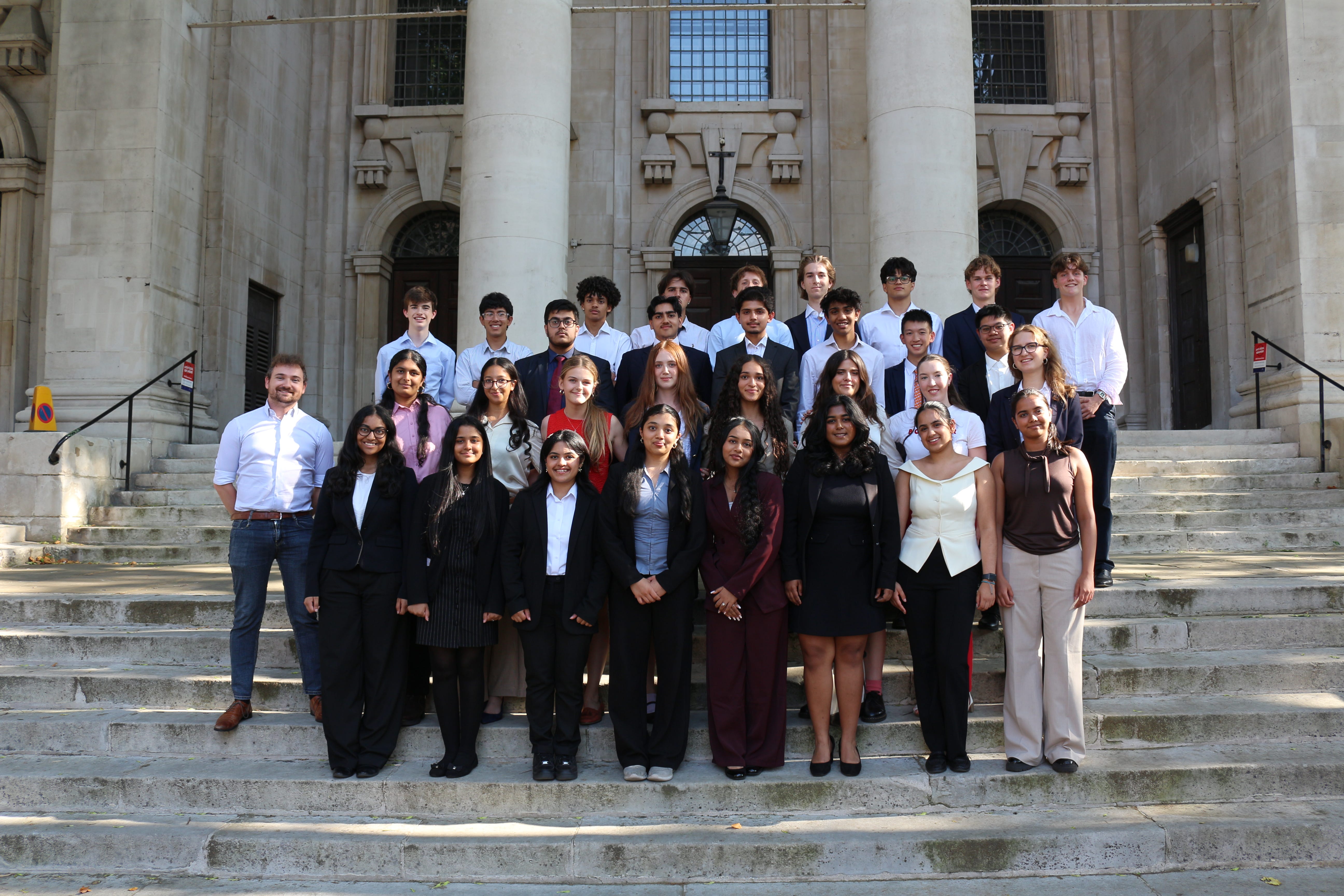
This week saw the second and final wave of our Future Thought Leaders (Sixth Form) programme, running from Monday to Thursday at the IEA’s London office. As with the first cohort, students spent four days exploring the core ideas of classical liberalism and free market economics, taking part in seminars, speed debates, and public speaking workshops before rounding off the week with our elevator pitch competition. This brings our summer season of Future Thought Leaders to a close, and we’ve been delighted by the enthusiasm and calibre of students throughout. Our thanks go to everyone who took part, and to the speakers who gave their time. we look forward to welcoming to running this programme two more times in August for our Undergraduate students.
A great podcast again.
Land taxes and wealth taxes are the latest version of ‘how to get more tax take’.
We know this because our government is constantly in a deficit.
Despite your disagreement to Gary Stevensons crusade for a wealth tax, his warning of an ever increasing disaster is a real one and should be considered.
We see every day mega wealth next to mega poor. From the favelas of Brazil to the Indian slums. From African famine to the American tent dwellers we see the poorest living cheek by jowl with the wealthiest on this planet.
Gary sees that if the rich keep getting richer then the result has to be the poor getting poorer. So I happen to think he has concerns that need to be heeded.
That said, your talk today, as informative as it was, missed the point.
Any tax has to be affordable. Not just to the poor but the wealthy too. Many people, normal people have accumulated wealth. But have no income to pay for taxation.
And this is where my own theory trumps all others. Because my view is that wealth is assets and goods bought with money that’s already been taxed. Or should have been!
I happen to believe that goods and assets are the accumulation of work. It’s the property of work and as such should not be taken or taxed. It’s theirs to sell as required. Their choice. Not to be forced to sell just to pay taxes.
However, money is a different thing. Money is not for keeping or it shouldn’t be. Money is your be fairly exchanged for the work and production of others. In a FULL and FAIR and complete exchange of work for work. It shouldn’t be held it must be exchanged in full in a time suitable for the needs of the rest and the needs of the government. That’s my firm belief.
Money is a token of our exchange. But it’s not being exchanged! It’s being held or rather withheld from the rest by the few. The few who hold it. The banks the wealth funds the pension funds the insurance funds indeed any fund or bank that holds our money for their use. The majority of us are made to be devoid of its use by withholding the natural course of money to be a full and fair exchange of work for work.
Once barriers or dams are placed in the way for free flowing money then you allow the slow or stagnant path of money. Causing the picture of our economic drought as we all see it now.
Money is the key to unlock flow by SPENDING.
So money has to be the answer to get more flow to ensure not just tax is paid but sufficient tax is supplied by supply sufficient glue fir us to increase our incomes to be in a position to pay more tax. You have to make us richer with money to afford increases in tax take.
So you have to look at certain consideration first. Firstly, is there sufficient money in the economy to begin with?
My view is it has to be calculated on need and population. We need enough to go around! It sounds simple but what is enough? Well it needs to be calculated on population amounts and needs of that population. So I have some sympathy with MMT that says we can produce more money. Yes! That’s not new it’s been the case since the beginning of money. We have produced amounts. So why not get the right amount?
I know there isn’t enough as our banks need to leverage money to give us more! My question is if banks do it for profit why can’t our treasury do it for nothing? Especially as more tax is needed as a result.
once that is argued we then turn to how do we get that money flowing? Well working and spending is the only way. We work and spend it all to give that flow its non stop feed. In the time we need, monthly.
Reward those more by all means. But unless the money is spent back we will always be short. We will always be devoid of its use. We will never be able to live without borrowing. We need full money turnover to get the economy for all.
The fairness comes in wealth. Goods and assets. That can be sold later. It’s fair! But the leveller is the necessity to spend money as it’s earned. That’s the leveller. Rich or poor you spend it. Hold assets not money. When assets turn back into money then it’s in play and can be taxed. While money glues sufficient taxes can be taken.