



Professor Len Shackleton is an Editorial and Research Fellow at the IEA and Professor of Economics at the University of Buckingham.
The headlines are being grabbed by concerns about the funding of Nigel Farage and Reform, and it looks as if the Government may rush through legislation to limit donations by non-UK nationals. It will play on fears of foreign interests manipulating the UK’s political processes to their own advantage.
But nearer home, Labour as always turns a blind eye to the way in which trade union funding - £5.6 million for the 2024 election – has been used to promote policies which serve their interests. The Employment Rights Act (ERA) is the most blatant example for many years.
Leaving aside those parts of the Act which apply right across the economy, such as the shorter interval before Unfair Dismissal kicks in, default flexible working and restrictions on zero-hours contracts, several important features of the legislation directly promote the interests of the trade unions. We have been reminded of this by two recent events.
One was the announcement of the results of two health service strike ballots. The first was by senior doctors, who are seeking a gobsmacking £15,000 increase in their yearly pay. We don’t know how this will pan out, but under the new legislation the result of this ballot has a year’s effect rather than the six months which was the case previously. This is likely to mean a harder bargaining stance and a longer-drawn-out dispute.
The second ballot was that of the specialist, associate specialist and speciality (SAS) doctors. The vote was 90 per cent in favour of strike action by the SAS. However, the turnout was only 43 per cent so the SAS strikes cannot go ahead, as existing law says that there must be a 50 per cent turnout for a valid ballot. Later in the year, the ERA abolishes this hurdle, and a simple majority in a vote will be sufficient – however low the turnout.
Strikes or potential strikes in the NHS always get a lot or publicity. This is not true of the recent publication of a document reporting government consultation on recognition and derecognition processes for collective bargaining.
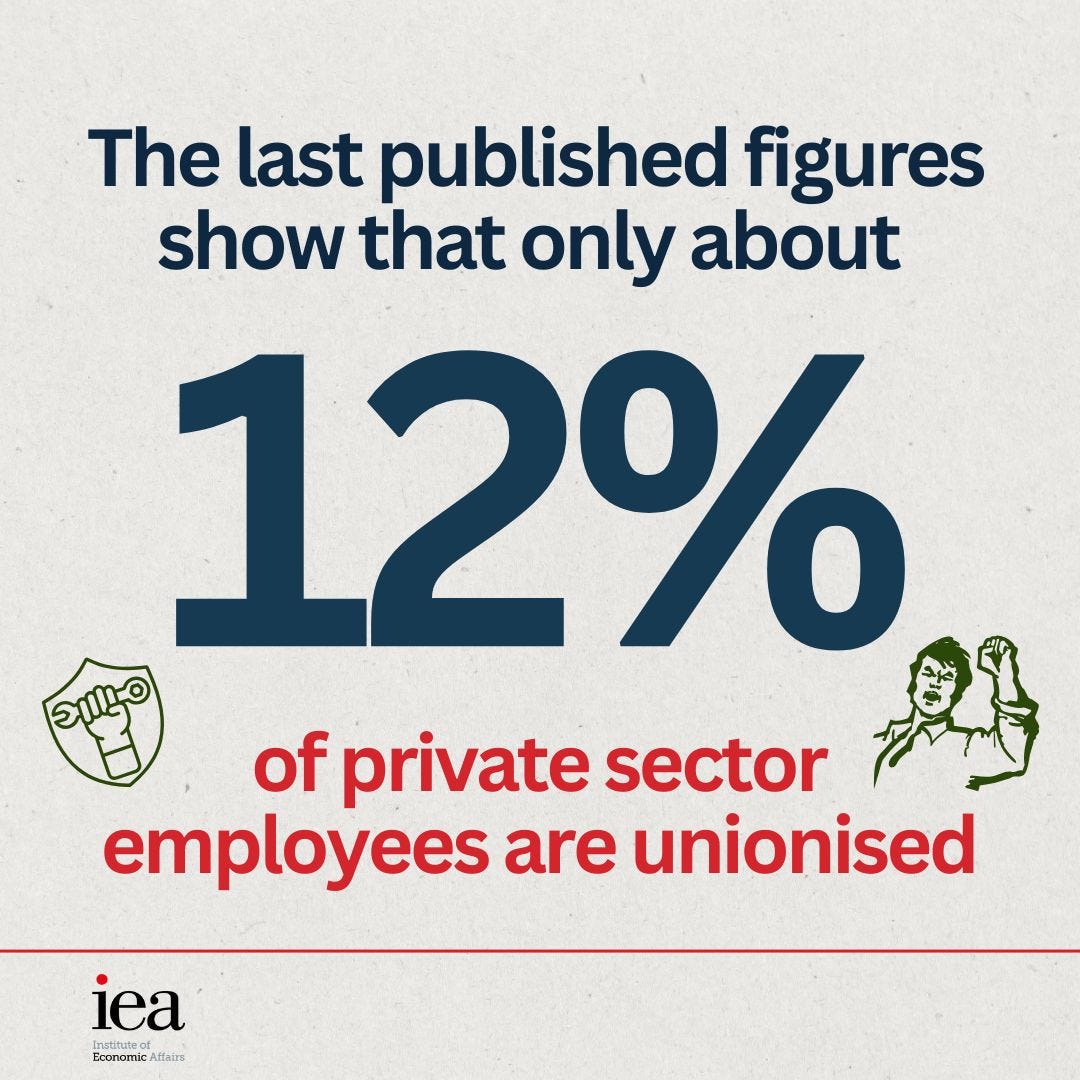
Union membership has been on the skids for many years. The last published figures show that only about 12 per cent of private sector employees are unionised, and many of those will be in sectors which were previously nationalised – utilities, Royal Mail, train operating companies. Labour wants to see the numbers rise, and the ERA encourages this by making it easier for unions to be recognised, and by obliging employers to give them access to real and virtual workplaces to proselytise and promote union membership. Hence the consultation about the details.

Unions which have recruited a number of members (currently 10 per cent of the relevant group of employees, though this may be reduced) in an enterprise employing 21 or more people, can request recognition for collective bargaining purposes. An employer can simply agree, but otherwise the Central Arbitration Committee (a relic from the 1970s) can consider the application – adjudicating on the evidence provided or requiring a ballot to be held. The ERA simplifies and speeds up this process.
The group most concerned about the new arrangements is, unsurprisingly, small businesses – often started by one person who has little experience of unions. Of the over 900 organisations submitting responses to the consultation, 71 per cent employed fewer than 50 staff.
The Government’s response will not have assuaged their concerns. One worry is what employers can say while a union recruitment drive is taking place if they don’t wish to acquiesce in collective bargaining – which of course covers far more than pay, including staffing arrangements, working hours, promotions, discipline, health and safety. Here the Government’s reply simply trotted out banalities about fair and unfair practices and specifically refused to give examples as requested by some of the respondents.
Several questions revolved around admitting union representatives to workplaces to make presentations and talk to individuals in working time – potentially a disruptive activity, particularly in smaller customer-facing businesses. The Government suggested a minimum frequency of such meetings of once every five working days during a recruitment campaign. But 98 per cent of respondents disagreed with this proposal; nevertheless, ministers are going ahead with it.
Similarly, the Government proposed that the minimum length of these meetings should be 45 minutes (up from a previous suggestion of 30 minutes). Again respondents – 97 per cent of them – rejected the proposal. And again, despite recognising that this had potential to disrupt activity in smaller businesses, the ministerial reply was that no employee would be obliged to attend, so the proposal would be implemented anyway.
Respondents were very concerned about the requirement to allow unions access to electronic communications in order to reach remote workers and those on shifts which don’t coincide with real-life meetings. There were concerns about allowing unions to send out materials with which the employer disagreed, with restrictions on the right to reply, and about potential breaches of GDPR. Again, the Government’s response was anodyne rather than helpful. This consultation exercise was a waste of everybody’s time.
It may be that smaller businesses are worrying too much. It is not clear that many more organisations will recognise unions as a consequence of the new measures.
Union leaders may believe that the Thatcher-Major industrial relations were responsible for the decline of unionism and that new legislation can reverse this decline. However, private sector unionism has been falling across the developed world, even where – as in much of the EU – legislation is supportive.
In a more individualised world, with increasing diversity and higher levels of education in workforces and greater competition in labour markets, unions have rather less to offer workers than was once the case. Nevertheless, it is concerning to see the Labour government so blatantly promoting the cause of sectional interests which partially fund it.
Very informative. I never realised the scale of the 'take-over' It is not surprising when of the 100+ ministers that comprise the government about 90% belong or have belonged to a trade union. Bear in mind that only circa 20% of the electoral role voted Labour and one might consider the outcome a Union putsch (shades of 1933 Germany).