


John Redwood is an incisive commentator on economics and politics, writing his daily blog on www.johnredwoodsdiary.com. He has led two UK-based international industrial businesses, set up and sold on an investment management company and is a fellow of All Souls College, Oxford.
President Trump is struggling with an Iran war that will not end as he wants it to. He came out with a new offer to try to woo voters in the upcoming mid-term elections. The state will give every adult $5000 if they choose a Republican House and Senate again. The Democrats and the left this side of the Channel were outraged, and some immediately called it a bribe. Lawfare is now so often the left’s first resort, rather than their last. In this case, the question quickly became whether he could be prosecuted.
I am as strongly against bribery in politics as the left claim to be. Of course, no candidate or party funder should offer individual voters money in return for their vote, and it is rightly a crime to do so. It is also hard to see how such a scheme would even work in practice. Presumably payment would depend on proof, with the money only changing hands after a photo of the duly completed ballot paper had been seen, for example. people who were always going to vote for that candidate could claim the money anyway, while those reluctant to vote for them would have to commit a crime to collect it. Either way, it would guarantee nothing.
The left, however, are guilty of their usual asymmetry when it comes to tax cuts versus spending. To them, a tax cut in an election manifesto, whether for all taxpayers or for certain categories of them, is a “bribe”, while the offer of more free services, grants or benefits for preferred voter groups is not. The truth is that both left and right seek to win votes from large numbers of people, either by offering more public spending for their benefit or by promising less taxation. Indeed, the left is more prone to this mercenary approach. Their electoral strategies are often based on trying to create coalitions of different groups of people dependent on the state for services and benefit incomes.
In the UK, left-wing parties all offer more money and the recruitment of a larger public-sector workforce as they seek to expand what they think should be their very own voter base. Conservatives face less competition to represent the taxpayers, private-sector workers, savers and investors, the people who have to pay for an ever-growing state. But Conservatives also appeal to public-sector workers who want good management, quality and value for money in their workplaces.
It would be good to extend the Trump idea of a dividend or rebate, paid when a government has done well with the economy, to the provision of public services. The UK public sector today is too often clumsy, bossy and inattentive to good customer service. Bad surgeries see patients as a nuisance and seek to make it very difficult to book an appointment. Bad hospitals cancel operations at short notice, keep people wating in outpatient clinics and try to cover up clinical errors such as contaminated blood. Nationalised Network Rail causes too many delays and train cancellations. The Post Office wrongly prosecuted sub-postmasters and lacks a credible business plan to provide better services. Lib Dem and Labour highways authorities go out of their way to inconvenience the car and van drivers whose taxes pay for the roads, while delays and congestion are commonplace. Many public bodies demand you communicate through poor websites, under threat of prosecution if you do not follow their contorted required path.
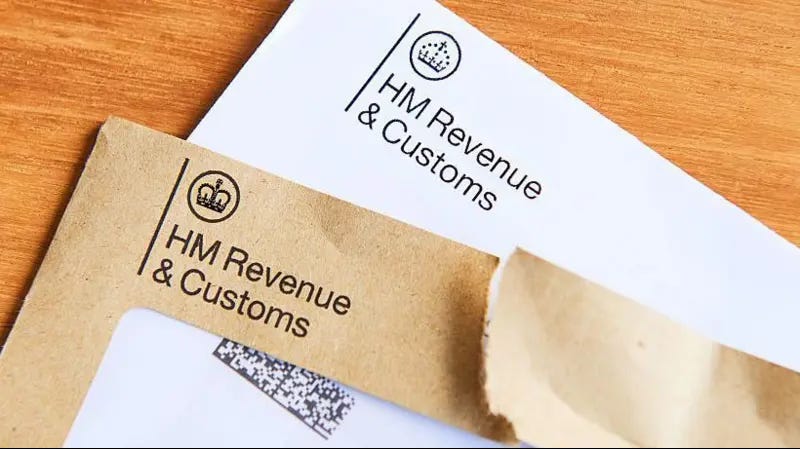
Wouldn’t it be good if, alongside the productivity revolution we need within public services, there was a customer service revolution? Indeed, the two can work together. Having fewer mistakes and cancellations will reduce customer complaints and frustrations. Look after people well and get things right first time, and things become a lot easier to run.
The public sector should look at the model of the great supermarkets that sell us our food. They never run out. They stay open long hours so working people can also use them, where most public services shut down every evening and weekend. They work away at keeping prices down, offer discounts, promotions and loyalty schemes to make shopping cheaper. The public sector is always claiming it does not spend enough on provision and is always demanding more tax revenue or higher fees and charges. The food shops are very careful to avoid contamination and food poisoning, with high standards of hygiene and refrigeration.
So, what needs to change? How could the public sector regain the trust of its users by doing a better job? Why not offer a discount on council tax for prompt, reliable payment? Why not let people use Post Office counters to deal with government, for those who find websites too difficult or too hostile? And why demand annual re-registration for both the single-person council tax discount and the electoral register, when simply requiring people to report any changes would do the job just as well?
The Government claims to want more building and construction, yet planning delays and excess bureaucracy get in the way. Why not offer half-price planning permissions for applications that attract no objections? This would make it cheaper and faster to approve many applications where the neighbours have agreed and the wider community backs the project, while for larger schemes, it would encourage developers to offer compensation and consult in advance. Less contentious planning applications should be put on faster timetables. Larger and more contentious schemes should not require detailed studies of how local wildlife might need to adjust, unless a rare species at risk of extinction is involved.
Highways authorities should review their often extreme and excessive rules and controls to reduce the number of ways drivers can get fined. Speed limits should be realistic. Low limits should only apply in places and at times when pedestrians – especially children – could be at risk. Double yellow line control to stop parking blocking roads needs to be combined with more free parking nearby. Making parking payments should be easy, with machines accepting cash, card or app transactions. Offering free parking days in state or council owned parks near shopping centres would help promote High Streets.
“Meaningful change would also require new attitudes from the government and councils as employers. Staff should have fewer, clearer targets to hit, with bonuses paid for meeting them, and further bonuses for staff who come up with good ideas for improving quality and lowering costs. There should be far fewer managers, and instead a select few with real power to change how services are delivered and to mentor, monitor and promote good staff. Senior managers should be able to earn larger bonuses than at present, but should also know that poor performance will threaten their bonus or, in more severe cases, their job.
Where the state is levying a tax, imposing a monopoly charge or demanding a licence fee, its aim should be to make it as easy to pay and comply as it is to pay for another parcel from Amazon. It should not threaten you or treat you as a potential criminal unless you fail to pay or behave badly. Ministers should also exert tighter control over quangos, which should not be allowed to raise fees and charges without a strong case for doing so and a genuine offer of better service in return.
What a difference it would make if the state cared as much about taxpayers, licence applicants and service users as it claims to. It has much to learn from the customer focus shown by the best private-sector companies.
"The state will give every adult $5000 if they choose a Republican House and Senate again" - you then go on to say "Presumably payment would depend on proof..of the duly completed ballot paper". My understanding is that the payment applies not to how an individual vote is cast, but as to how the constituency votes. You vote Republican but get a Democrat senator - no pay out; you vote Democrat but get a Republican senator, enjoy your riches.
Surely even Trump is not after photos of vote slips?