



I am leaving the IEA after 18 years – that’s the lifetime of a young adult.
It was a tumultuous time to be working in Westminster, which covered the Great Financial Crisis and the fallout from it, the Brexit madness, Corbynmania and the political awakening of the Millennials, the rise of the new doomsday environmentalist movement around Greta Thunberg, Extinction Rebellion and Just Stop Oil, the Great Awokening with BLM and the transgender movement, Covid, the Truss meltdown, The Quiet, and whatever you want to call the current thing.
The IEA was right at the heart of all this commotion, at a time when the think-tank sector itself was undergoing radical change internally. I joined before the take-off of social media, when, at the risk of sounding like one of the Four Yorkshiremen, we had no Twitter, no YouTube, no podcast, no Instagram, no TikTok, and even the blog was considered a radical innovation. In my early days, it was a version of the IEA which Ralph Harris and Arthur Seldon would still have recognised.
But this article is not really about that. What I will do instead is take stock of some of the things I have been up to over those 18 years, bragging about what I consider successes, but also mentioning regrets alongside. This will inevitably be a bit self-indulgent and self-important, so consider this a fair warning. I never bothered to learn the Anglo art of “humblebragging”, and I’m not going to start now.
Poverty
I joined the IEA in 2008 as its Poverty Research Fellow, working on a project which led to the publication of my first two books, A New Understanding of Poverty and Redefining the Poverty Debate.
Poverty has long been a bit of an Achilles heel for free-marketeers. On a good day, some of our opponents will concede that, yes, free-market economies can generate growth. But, they will say, market-generated growth will always be profoundly unequal, primarily benefiting those at the top.
Britain’s anti-poverty campaign groups are universally on the Left. They have a monocausal view of poverty, in which the poverty rate is a function of the size of the welfare state: when welfare spending goes up, poverty comes down; when welfare spending goes down, poverty goes up.
My alternative thesis was that the best insurance against poverty was not a massive welfare state, but simply a competitive product-market structure in which the basic essentials of life are easily affordable across the board. Once you have cheap rents, cheap groceries and cheap energy, it is difficult to be destitute. The cost of basic essentials, though, varies wildly between countries and regions, and not randomly so. It can be systematically inflated by government policies. I showed that Britain was a particularly bad example of that, and how this could be reversed.
The message cut through beyond the circle of the usual suspects. Among the established anti-poverty campaign organisations, the more hardline left-wing ones hated my message, because they thought it was just a Trojan horse for “neoliberalism”. But the more reasonable ones reached out to me. For a while, I was a regular guest speaker at the Joseph Rowntree Foundation, for which I also wrote a report.
What I regret is that I did not keep those connections and outreach efforts going. At some point, I thought that I had made my case, and that that was enough. But it does not work like that. Building coalitions requires ongoing efforts, and once those efforts cease, the coalition goes dormant. It would be great if someone could revive that coalition between anti-poverty campaigners and free-marketeers again in the future. It will never be a love match, but as Margaret Thatcher said about Mikhail Gorbachev: “We can do business together.”
YIMBYism
“We must have something really good and well-informed and up to date on Housing”, wrote my predecessor Arthur Seldon in a letter to Ralph Harris in August 1965.
I was not the first IEA author to cover this subject, and I was not the second or the third one either. But if you were a housing policy wonk in the early 2010s, the IEA would not have been on your radar.
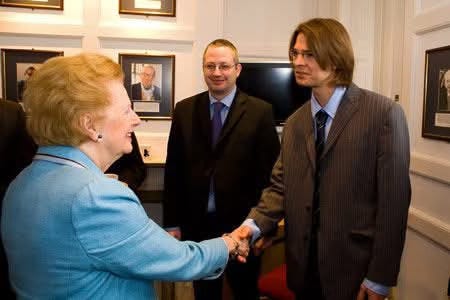
In 2012, I wrote Abundance of Land, Shortage of Housing, which showed that Britain’s restrictive land-use planning system was the main driver of the country’s high housing costs. Today, this would be like a paper which tries to show empirically that the Pope is, in all likelihood, a Catholic, but in 2012, it made a media splash. A few months later, it landed on the desk of the new Planning Minister Nick Boles, whom I met to discuss the paper.
Boles was the one solid YIMBY in an otherwise largely useless NIMBY government. He did not get very far in government, which confirms what Hayek had told Antony Fisher more than 60 years earlier: there is no point winning over individual politicians if the ground is not prepared. Britain was not ready for a YIMBY revolution.
But I developed an obsession with the subject, and found audiences in lots of different places: easier ones such as the Financial Times and the various industry publications, but also more challenging ones such as the New Statesman and the Intergenerational Foundation. In 2015, an article in Inside Housing said:
“There was a touch of good news for housing this week. Support for retaining the untouchability of the green belt is slipping. […] This is a tribute, I hope, to the work that has been done over the past few years by commentators like Paul Cheshire at the LSE, […] Kristian Niemietz at the IEA, and Duncan Stott at Priced Out, among others.”
In 2016, two left-wing academics published a paper bemoaning the “neoliberal” assault on our “democratic” planning system. Four years earlier, such a paper would not have mentioned the IEA at all, but in that paper, the Institute was one of their main villains. The IEA had become a major player in the housing debate, and it has retained that role ever since.
What I regret is not making the jump from “narrow YIMBYism”, which is about residential development, to “broad YIMBYism”, which is about the built environment more generally, at an earlier date. YIMBYism is about much more than residential housing; it is about the bottleneck that strangles economic growth, productivity and prosperity.
Health systems
Think tankers are obsessed with the concept of the “Overton Window”, the range of socially permissible ideas, and how it changes over time. Healthcare is perhaps the clearest example of a recent Overton Window shift, and while this is hard to prove, I am convinced that the IEA has played a large role in it.
Starting in 2015, I wrote a series of publications which compared the NHS to other health systems, and found that some of them were unambiguously superior in terms of the medical outcomes they delivered, while still covering everybody.
In those years, the cult around the NHS was still fully intact, so each publication caused a storm of outrage. Paradoxically, though, it was precisely that hysteria which, in a way, helped me to make my case.
I used to do a bit of health economics at university, and I know that it is a fairly dry subject, which most people will not find interesting. However, when a healthcare publication is trending on Twitter because tens of thousands of people are freaking out about it, or when a Shadow Secretary of State treats it as a national emergency, onlookers will want to know what all the fuss is about. I was able to leverage the hysteria of my opponents to get people to read material that would otherwise have been as dry as a Manzanilla sherry to them.
Of course, it also helped that Kate Andrews, who was the IEA’s media star in those years, shared my views on the subject, and broadcast the message to a far bigger audience than I could have reached.
Eventually, it paid off. Starting around 2022, several people in the mainstream media started criticising the NHS and making the case for alternatives, in ways that sounded suspiciously similar to my own. One could watch the Overton Window shifting in real time.
What I regret, though, is that I missed several opportunities to get people in the medical professions involved. If change is ever going to happen, the initiative is going to have to come from within the NHS itself. But I’m not much of a networker, and hate the very concept of “networking”, so when those opportunities came along, my attitude was more like “I’ll send you a copy of my paper, otherwise, leave me alone”. I hope that in the future, someone with better organisational and people skills will give that another go. What you have to do, basically, is read Lenin’s What Is To Be Done?, and apply that to the NHS, setting up a professional vanguard of counter-revolutionary doctors.
Brexit
After 2016, some people in the free-market bubble got a bit too carried away with Brexit. Hooray, we’re going to become Singapore-on-Thames! Finally, free-enterprise Britain will break free from the shackles of corporatist Europe, and Britannia will be unchained!
I was not able to share that enthusiasm, because I did not believe that Brexit would turn out that way. I was a Eurosceptic of sorts, but not a Brexiteer. I was not necessarily “anti-Brexit” as such, but I did not believe that it was worth sacrificing the Four Freedoms of the European Single Market for speculative gains that would probably never materialise. So for five years, I was banging the drum for a softer version of Brexit, which would have involved (re-)joining the European Free Trade Association (EFTA), and remaining in or close to the European Economic Area (EEA).
The way Brexit actually turned out was a lot closer to my pessimistic predictions than to the Singapore-on-Thames vision. But that alone does not make my Brexit-scepticism a useful contribution. The reason why I think it was useful for the IEA is this:
From 2018 onwards, the IEA was increasingly (and wrongly) perceived to be “a pro-Brexit think tank”. Since Brexit was such an ultra-polarising issue, this meant that opponents of Brexit automatically saw the Institute as an enemy, and were no longer prepared to listen to a single word it said on anything else.
This included potential allies. Opinion polling by the Social Market Foundation and Opinium conducted at the time showed that about 13 per cent of the British population had broadly pro-market liberal attitudes: these people are the IEA’s core audience. Out of those, two thirds were Remainers.
Getting sucked into the Brexit culture wars was bad for the IEA, because it meant losing potential allies. That damage was limited by the fact that some of us (not just me) took a very different line on Brexit. In hindsight, we should have made more of that, publishing not just articles and podcasts but perhaps full-length reports arguing for a different Brexit model.
Socialism
In the mid-2010s, a quarter of a century after Fukuyama’s “end of history”, socialism made a sensational comeback, this time as a trendy youth movement. The problem with it was that supporters of the market economy, by which I don’t just mean liberals but also conservatives and market-friendly social democrats, no longer knew how to defend it. For too long, they had assumed that it was simply no longer necessary to explain why capitalism is better than the alternatives. They had assumed that “everyone” knows that – until it turned out that millions of people did not know that at all.
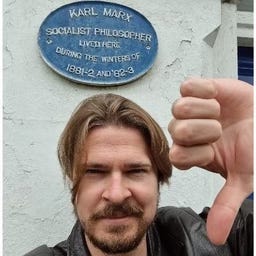
I did not welcome that development, but I saw it as an opportunity to go back to the basics. Socialism: The Failed Idea That Never Dies became the closest thing to a “blockbuster” the IEA ever published. It was, however, really just one element of a much bigger workstream, which also included revisiting socialist classics such as Friedrich Engels, Lenin, Rosa Luxemburg and Bertolt Brecht from a contemporary classical liberal perspective.
My book on socialism came out before the Millennial Socialists themselves – e.g. Aaron Bastani, Ash Sarkar, Grace Blakeley, Bhaskar Sunkara and Nathan Robinson – had a chance to publish theirs. Maybe that’s a comment on capitalist vs socialist productivity, but in hindsight, I should have waited for some of their books to come out first, and included my critique of them in my own.
The Culture War
The Great Awokening started in the early 2010s, and reached “peak woke” about 2020–22. We had internal debates about this: should liberals engage in the culture war at all, or should we ignore it? If the former, what would a liberal position in the culture war look like?
I was a culture warrior right from the start – but a selective one. My position was that, yes, liberals should take part in the culture war, but they should pick their battles wisely. If the culture-war battle of the day is about whether a Disney film remake with a dark-skinned princess is “woke”, then no, a liberal does not need to wade into that. But we certainly should get involved when a culture-war battle has implications for civil liberties (freedom of expression, freedom of contract, freedom of association) or economics. The clearest example of the latter was that in Britain, the Great Awokening led to a revival of the fashionable idea that the Western world’s wealth was built on slavery and colonial extraction. I rebutted that idea in Imperial Measurement, which very much does wade into the culture war, but which nonetheless remains an archetypal IEA publication. Imperial Measurement was no Harry Potter, but it did find its way into high-street bookshops, which is rare for a think-tank report. Proper economic historians such as Lawrence Goldman, Victoria Bateman and Zareer Masani had positive things to say about it, while critics such as Alan Lester and Will Hutton hated it. That is exactly as it should be.
The Wealth Tax
Free-marketeers do not have agenda-setting powers in Britain. That’s a sad fact, but a fact nonetheless. We just don’t. Whether it is the Great Awokening, the new climate hyper-alarmism or Corbynmania, most of the time, the political Left gets to decide what the national conversation is about, and everyone else just follows.
But while free-marketeers have no say over this, we can free-ride on the Left’s agenda-setting powers. Because once an issue is high-salience, and one side of the argument completely dominates the debate, there will be a demand for an opposing view. What you have to do then is fill that void.
The wealth tax is a good recent example. During the first 17 out of my 18 years at the IEA, nobody ever asked me what I thought about wealth taxes. Then Gary Stevenson and Zack Polanski created a massive hype around the issue. Once I started commenting on it, I was all of a sudden in high demand, and so I decided to make it my main subject area for a while.
In the run-up to the publication of Fool’s Gold, I debated wealth taxes at the LSE (against Gary Stevenson), King’s College London (twice), the University of York and on Piers Morgan Uncensored (against Stevenson again). I’ve still got speaking engagements lined up, and I’m sure I will get further ones. Once you can make a topic “yours”, you get to keep it for a while.
Conclusion
This is just a selection. I haven’t yet mentioned my work on welfare, infrastructure, decentralisation, pension systems, immigration or environmentalism, but I have been bragging enough, and I have already sufficiently provoked my eternal enemy, the word count.
The short summary, though, is that it’s been one hell of a ride, and while I regret some individual decisions, I have no regrets whatsoever about having spent 18 years of my life at the forefront of the battle of ideas.
Individually, most of our opponents make little difference, because they promote ideas which are already fashionable, and which would be there with or without them. The marginal benefit of one more socialist, one more Greta Thunberg fan or one more person defending the NHS is close to zero. Classical liberalism and free-market economics, on the other hand, are so unfashionable and so counterintuitive that every supporter counts. These causes could very easily drop out of the national conversation altogether, and had there been no IEA over the past 18 years, they might very well have.
That aside, for more than 90 per cent of the time, it did not feel like a “job” at all, but more like a way of getting paid for my hobbies.
I am leaving the IEA, but I am neither abandoning classical liberalism nor free-market economics. So stay tuned. We’re not done yet. Auf Wiedersehen.
Thank you Kristian. I've only been following the IEA for the past few years but on many occasions I've enjoyed your incisive logic, delivered with wit. I wish you success in new endeavours and hope you will soon reappear on my radar, but in the meantime, thank you for doing what I immensely value - you've made me think.
I can’t imagine the IEA without you - hero!