


Dominic Pino is an editorial writer at the Washington Post.
Free-market supporters are used to hearing about the horror stories of socialism from countries such as the Soviet Union, Cuba or North Korea. Property confiscation, prison colonies, famines and mass graves. It’s vitally important to keep telling the history of what happens when free markets and the rule of law are abandoned.
But as I was walking around Scotland recently, I thought of a different case against socialism, or at the very least in favour of free markets. Scotland doesn’t have bread lines or death camps, of course. It was certainly a nice place to visit, and by global standards, it is an incredibly pleasant place to live.
It just isn’t all it could be. When Scotland rejected its heritage as the birthplace of free-market ideas, it didn’t plunge into poverty, but it did yoke itself to mediocrity.
Samuel Gregg wrote for Law & Liberty about Scotland’s “intellectual triumph” during the Enlightenment. It’s a formidable record from an unexpected place.
It was an economic backwater in the late eighteenth century, ruled from afar since 1603. But Scotland had deep connections to European intellectual life and developed some of the greatest thinkers of the age. Francis Hutcheson, David Hume, Adam Smith, Thomas Reid, William Cullen, Lord Kames, Hugh Blair, Dugald Stewart, Adam Ferguson and others developed a rich, liberal tradition.
Their appreciation of liberty and rejection of top-down control were reflected in the economic thought of the time, best known from The Wealth of Nations. Smith wrote of the “system of natural liberty” where “every man, as long as he does not violate the laws of justice, is left perfectly free to pursue his own interest his own way, and to bring both his industry and capital into competition with those of any other man, or order of men”.
It wasn’t only the thinkers. Scotland produced many practical men as well. The other great event of 1776, alongside the Declaration of Independence and the publication of the Wealth of Nations, was James Watt’s invention of the steam engine.
Everyone who has used a paved road is indebted to John Loudon McAdam, whose surname gives us the back half of the word “tarmac”. William Rankine and Lord Kelvin laid the foundations for the modern science of thermodynamics at the University of Glasgow. James Clerk Maxwell opened our eyes to the electromagnetic spectrum. Life-saving medical technologies now seen as mundane, such as the hypodermic syringe and saline drip, were invented by Scots, Alexander Wood and Thomas Latta, respectively.
The astonishing record of achievement from a country that has never had a population larger than that of the present-day Madrid metropolitan area seems to have died off around the turn of the twentieth century. Alexander Fleming and Alexander Graham Bell made their advances outside Scotland, and since then, it’s hard to point to anything that lives up to the country’s previous reputation.
“Rather than showing the rest of the stagnant non-London British economy how the ideas her forefathers propounded can restore growth and increase prosperity, Scotland lags behind.”
It’s obvious, when visiting the Scottish National Portrait Gallery in Edinburgh, that Scotland has rejected its heritage. The stunningly beautiful building is filled with remarkable artwork that the museum is apparently ashamed to be displaying. The descriptions accompanying the artwork follow a predictable formula: one paragraph describing who the individual was, and a second describing an often-threadbare connection to slavery.
Even for someone who opposed slavery during his life, such as Adam Smith, the museum couldn’t display James Tassie’s medallion of his likeness without saying that Smith “appeared resigned to the continuing existence and even inevitability of extreme social and economic inequality” and promoted “the ethnocentric view that Western capitalist societies are superior to all others”.
Contemporary Scottish politics is consumed by quixotic nationalism that a majority of the country rejects. The Scottish National Party, which has controlled the devolved parliament since 2007, vacillates between over-the-top progressivism and pointless centre-left mush. Rather than showing the rest of the stagnant non-London British economy how the ideas her forefathers propounded can restore growth and increase prosperity, Scotland lags behind.
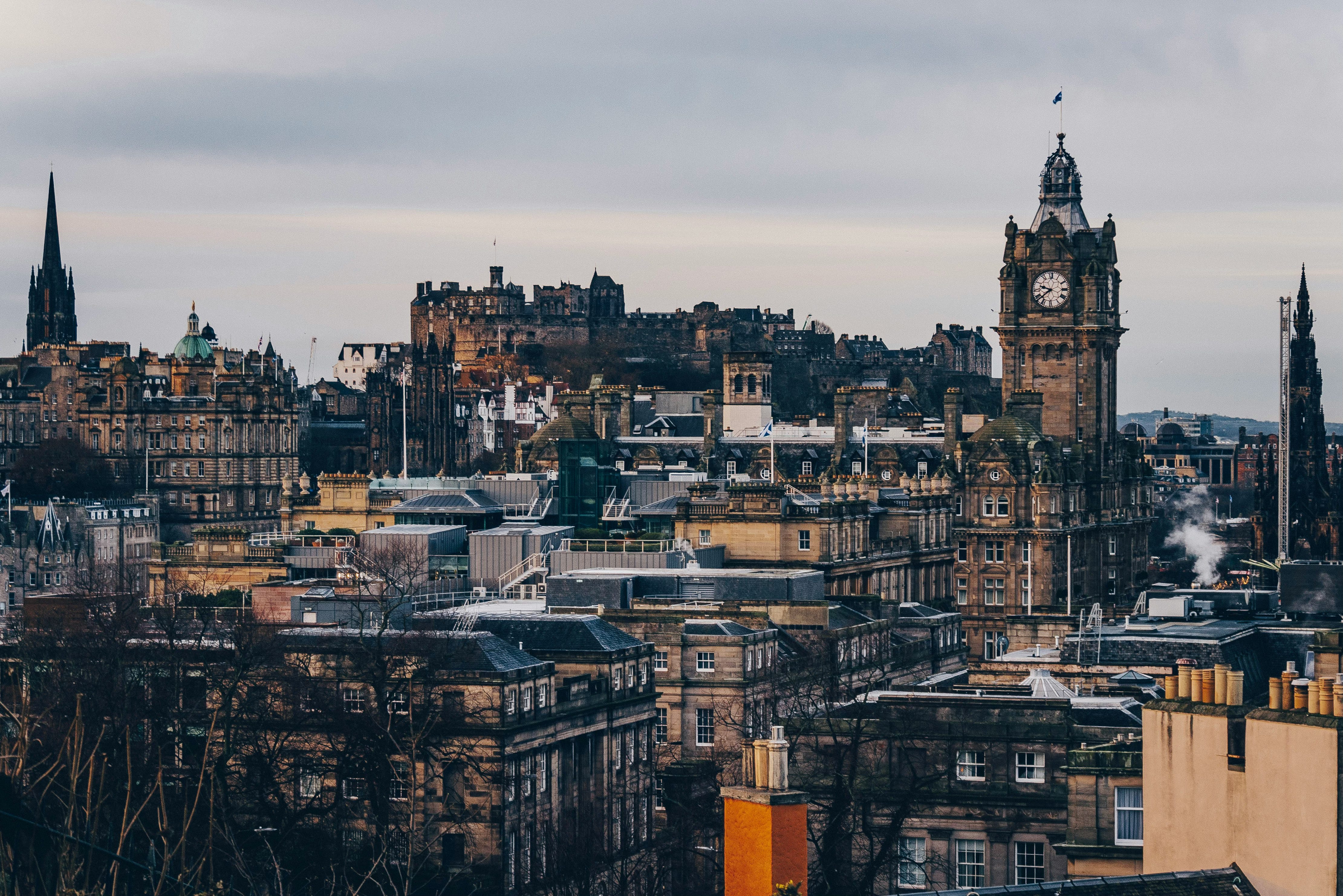
Scotland should be rich. North Sea energy can power high-tech industry to replace the old factories that closed. The ancient universities should be magnets for the world’s best talent. Edinburgh has centuries of banking history and remains a financial centre today. And Scotland has no problem attracting tourists like me to come and visit.
Instead, Scotland is a heavily indebted country inside a heavily indebted country. Its 2025 deficit of 11.6 per cent of GDPis larger than that of any other country in Europe and would be 14.3 per cent if not for North Sea oil. Scotland is pulling down the average economic output per person in the UK, trailing England by almost £3,000 per head.
And for the amount of tax Scots pay – 42.2 per cent of GDP, higher than most European countries and roughly two-thirds higher than in the US – they at the very least ought to have better roads.

Most critics of free markets today don’t want to go full Soviet, and it’s hard to imagine, say, John Swinney sending anyone to a gulag. But free marketeers shouldn’t need to reach for the worst atrocities to prove their point. Just look at Scotland. It’s not horrifying, but it is sad.
Your article’s most revealing sentence is its last: “It’s not horrifying, but it is sad.”
That is also where I believe your argument is weakest.
You arrive in Scotland as a visitor, admire
our scenery and intellectual heritage, observe some genuine economic shortcomings, and conclude that the country has betrayed its inheritance of free-market thought.
But you make a large leap from economic statistics and museum labels to a diagnosis of national disappointment.
From the standpoint of someone who lives in Scotland, is now retired, is not sad, and even possesses a James Tassie medallion of Adam Smith as a graduate of the University of Glasgow, I would offer a different verdict.
Scotland has problems, but it is not a failed experiment in social democracy, and its achievements cannot be understood by treating Adam Smith as the patron saint of laissez-faire capitalism.
Your article invokes Scotland’s intellectual inheritance while giving remarkably little attention to the complexity of that inheritance, the economic history of the country, or the actual experience of living here.
There is a serious argument to be had about Scottish productivity, public services, taxation, energy and political competence.
For me you weaken it by turning Scotland into an allegory about the supposed consequences of abandoning free markets.
Scotland does not need to choose between complacency and despair, or between an uncritical celebration of the state and an uncritical celebration of the market.
Its Enlightenment inheritance offers something better: reasoned argument, intellectual independence and the willingness to judge institutions by how well they serve human beings.
That is a more demanding standard, I would suggest, than yours. It is also one more faithful to Adam Smith.
Painfully accurate analysis. Labour/Lib Dem and SNP administration's both culpable of gross misuse of considerable devolved powers. Of course, the bovine acceptance of the situation by much of the Scottish population has contributed to the tragic economic underperformance of the Scottish economy and the consequent dire social circumstances of large sections of the population.