


Matt Ridley is a science writer and a former member of the House of Lords.
If there is one issue that best exemplifies my own disillusionment with politics, it is precision breeding of crops. This was a matter that I spent a lot of energy on, both as a commentator and as a legislator, during the 10 years after the Brexit referendum. Progress was so slow as to be exasperating, and now, with a wave of Andy Burnham’s hand, even that looks like being thrown away.
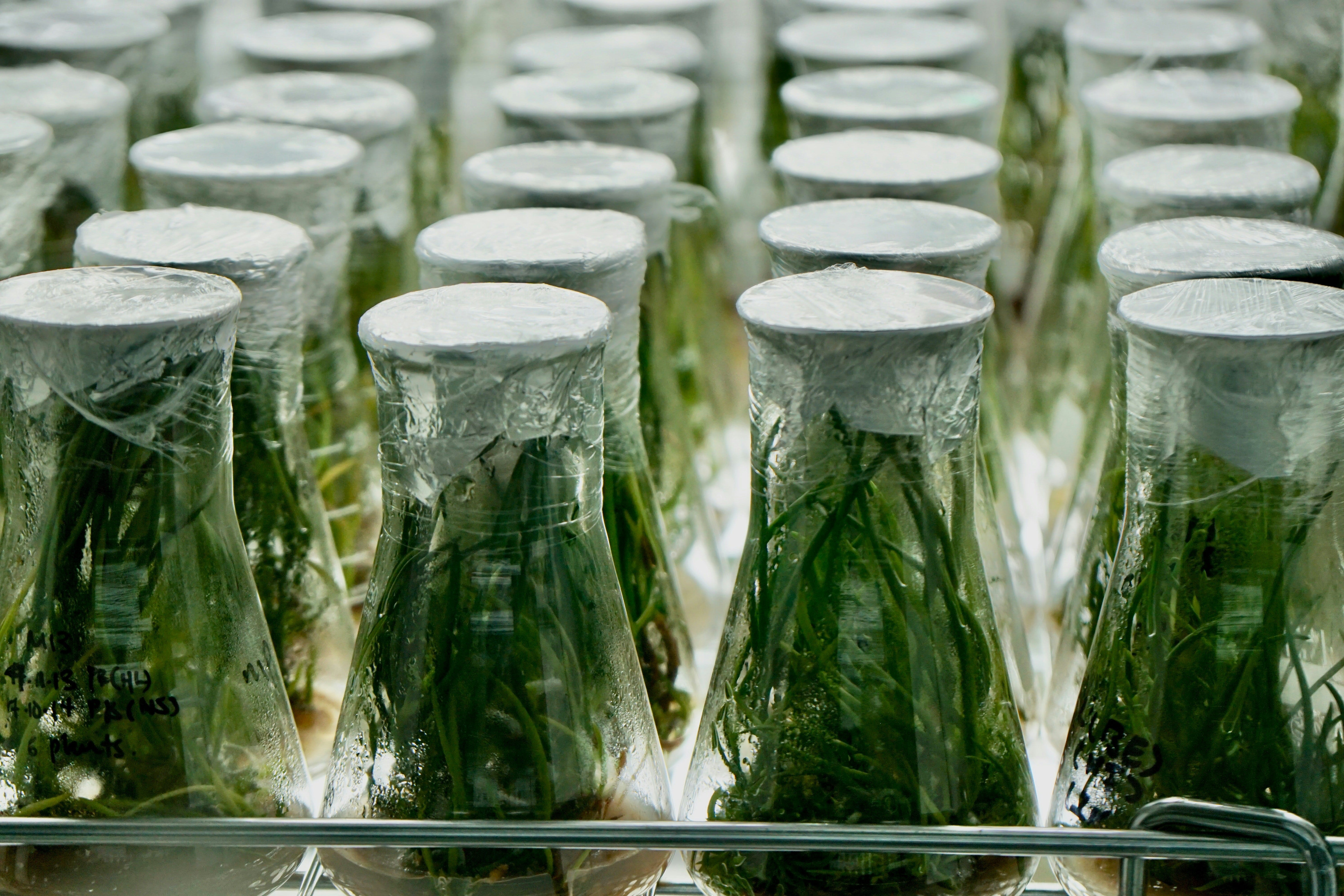
All crops are genetically altered from wild plants, most of them dramatically so. Almost nobody, if asked, thinks it is a good idea to breed new crop varieties by bombarding seeds with gamma rays in the hope that among the scrambled genes that result there might be one that is an improvement – a hopeful monster. Almost everybody agrees it would be better to identify individual genes and make minute alterations to one or two of them in a targeted way.
Yet the gamma-ray way, known as mutation breeding, is subject to no special regulations and has been widely used for 70 years or so, even to produce organic crop strains, such as Golden Promise barley. By contrast, the gene-editing way, known as precision breeding, is effectively criminalised on most of the European continent. Good luck explaining this to the person in the street.
While Britain was in the European Union, it was illegal for us to liberalise precision breeding. Once we left, we were free to do so. Right, said I and others, let’s get on with it. I sat on a body called the Regulatory Horizons Council, where we assembled advice to the government on how to bring in a workable lighter-touch regulatory system for precision breeding, well short of full liberalisation. We took evidence from Japan, Norway, South and North America, where far more freedom was already being practised with excellent results.
That was in 2021. It then took two years before some version of the simple regulatory changes we proposed could become law and another two years before those changes could slalom through various bureaucratic chicanes to actual implementation. The new regulations came into force on 13 November 2025, but even then it took the Government another seven months to finalise a few details – just in time for the tenth anniversary of the Brexit vote. Still, as I put it hopefully in The Spectator in June, “a dismal decade of dither during which America, China, Argentina, Brazil and other agricultural pioneers raced ahead is finally coming to an end.”
Alas! Now it seems even that progress is to be snatched away from us by Mr Burnham’s “reset”. Initially, the Government said it would demand a carve-out that would spare British gene-edited crops from being banned under EU rules. But, true to form, the Government has dropped the carve-out for a cave-in.
Gene-edited crops will receive only a temporary exemption, being allowed to stay on the market for a transition period. After that, they will become subject to EU laws. The EU has adopted a liberalisation of this sector, due to apply from 2028, but it is limited, slow and seems more designed to allow regulators to build empires than to help the grower or consumer of food.
To be sure that I was not being too cynical here, I asked Grok, an AI chatbot, a neutral question about what looks to be looming. Yes, it replied, “based on current reporting on the negotiations, Britain is expected to give up (or significantly compromise) its independent progress on gene-editing regulation in agriculture under an Andy Burnham-led EU reset.”
The bottom line, Mr Grok went on, is this.
“The UK’s post-Brexit regulatory progress – an already-operational, lighter-touch system that has enabled real field and commercialisation steps ahead of the rest of Europe – is at risk of being subordinated to EU rules after a transition. Even with the EU’s own liberalisation, differences in criteria, process speed, labelling/traceability, potential extension to animals, and overall autonomy would be lost or constrained. Alignment also affects market access: only EU-compliant goods can freely enter the EU market.
“Domestic complications (a 2026 High Court ruling that the 2025 regulations were made unlawfully regarding labelling powers, plus a second judicial review) add further uncertainty, but the core trade-off with the EU reset is clear from the negotiations. Final terms will depend on the outcome of the 20 November summit and subsequent implementation details. The government has signalled it wants to protect innovative technologies, but the reported compromise involves giving up the full independence that the Precision Breeding framework provided.”
Of course, this is just one way in which the reset is a shocking sell-out. As Fred de Fossard of the Prosperity Institute has catalogued, the Government began by saying it wanted a “veterinary agreement” with the EU and nothing else. “This then morphed into total regulatory alignment for food standards, with no democratic accountability, and forcing British producers to follow EU rules if they want to sell British beef to British families.”
On youth mobility, university fees, trade protection, energy prices and more, we are apparently rushing to embrace subjection to the EU again.
“And for some reason,” says de Fossard, “we’re going to hand the EU billions of pounds for all of this. We’re going to pay for EU food safety regulators to inspect British farms, we’re going to pay into EU cohesion funds so European countries can spend Britain’s money.”
On the subject of the cost of the reset, a simpler question nags my brain. The fine we taxpayers paid for leaving the EU – agreed at roughly £39bn, say £500 a head – was intended to account for the commitments we had made to the pensions of eurocrats and other future spending.
Since we handed that money over, most of it anyway, we presumably have a credit in the EU’s accounts. When we reset our relationship, will that be taken into account? Will it be subtracted from the new payments the EU is demanding we make? Will it heck!
Very depressing situation, well explained. I feel the so-called reset is sneakily done, current proposals escalated from original statements (as pointed out here). Will there be proper Parliamentary scrutiny? On the broader issue of Brexit failing, and looking at ONS trade stats, UK goods export volumes have slumped since 2020 but service export volumes soared with the increase far exceeding the decline of the former. But of course a large number of people (including the PM) have not come to terms with the fact that we are predominantly a service economy.
Alignment will now be redefined as giving up long standing domestic rules derived over a number of years and instead replaced by incompatible edicts dreamt up by unelected bureaucrats in the name of conformity. 😬