


John Redwood is an incisive commentator on economics and politics, writing his daily blog on www.johnredwoodsdiary.com. He has led two UK-based international industrial businesses, set up and sold on an investment management company and is a fellow of All Souls College, Oxford.
According to the Office for Budget Responsibility (OBR), the Bank of England will lose us £288bn from autumn 2022 until its bond portfolio runs out in 2036. The Chancellor has recently approved wide-ranging changes to the way the Bank handles its bonds, in an attempt to limit the damage and defer some of these losses. The latest policy set out in the Chancellor’s letter of 17 September 2026 reminds us that, contrary to the widespread belief that the Bank of England (BoE) is independent and decides these matters, the Treasury still has most of the power.
In 1997-98, Gordon Brown made radical changes to the BoE. These changes are remembered chiefly for then-Chancellor Gordon Brown’s spin that he was making the Bank “independent”, whereas most of what he did stripped it of crucial powers over money, markets and banks. The power to issue new government debt in the market was given to a new body, the Debt Management Office (DMO), within the Treasury. The power to regulate the commercial banks and other financial markets was given to the Financial Services Authority (FSA). He also removed its powers of oversight over the money and bullion markets, and took away the executive powers of the Court of the Bank, making it a non-executive supervisory body.
In return he gave the BoE the sole power to fix the base rate and to provide independent forecasts of inflation and the economy. Even these powers were subject to an override, allowing the Chancellor to intervene in the public interest if necessary. Alistair Darling, like some other finance ministers, had to use this override to prevent extreme Bank of England tightening from bringing down even more banks. The Government sets the target that the Bank has to meet, and can change it, as Brown himself did when he switched from the Retail Prices Index (RPI) to the Consumer Prices Index (CPI), a softer target.
His system unravelled in the banking crash, when the regulatory partitions he had created hampered both prevention and cure. The BoE and FSA blamed each other for the major failures of bank regulation. The Coalition government gave some powers over banking and financial market regulation back to the Bank, to correct Brown’s mistakes.
The crash itself led the Treasury and BoE to start quantitative easing (QE) to create looser and cheaper money and credit. The Bank bought up government debt at rising prices to bring down longer-term interest rates. This allowed the government to borrow more at affordable rates to pump-prime the economy. Shadow Chancellor George Osborne argued against it, claiming that this was money printing, which was bound to be inflationary. When he took over as Chancellor, he changed his view and embarked on further QE himself. He inherited £200bn of QE from his predecessor, Alistair Darling, and added a further £175bn in three tranches. Philip Hammond authorised one tranche of £70bn. At the time of the Covid-19 lockdowns, Rishi Sunak approved two tranches totalling £300bn, then added a third of £150bn when the recovery was well under way.
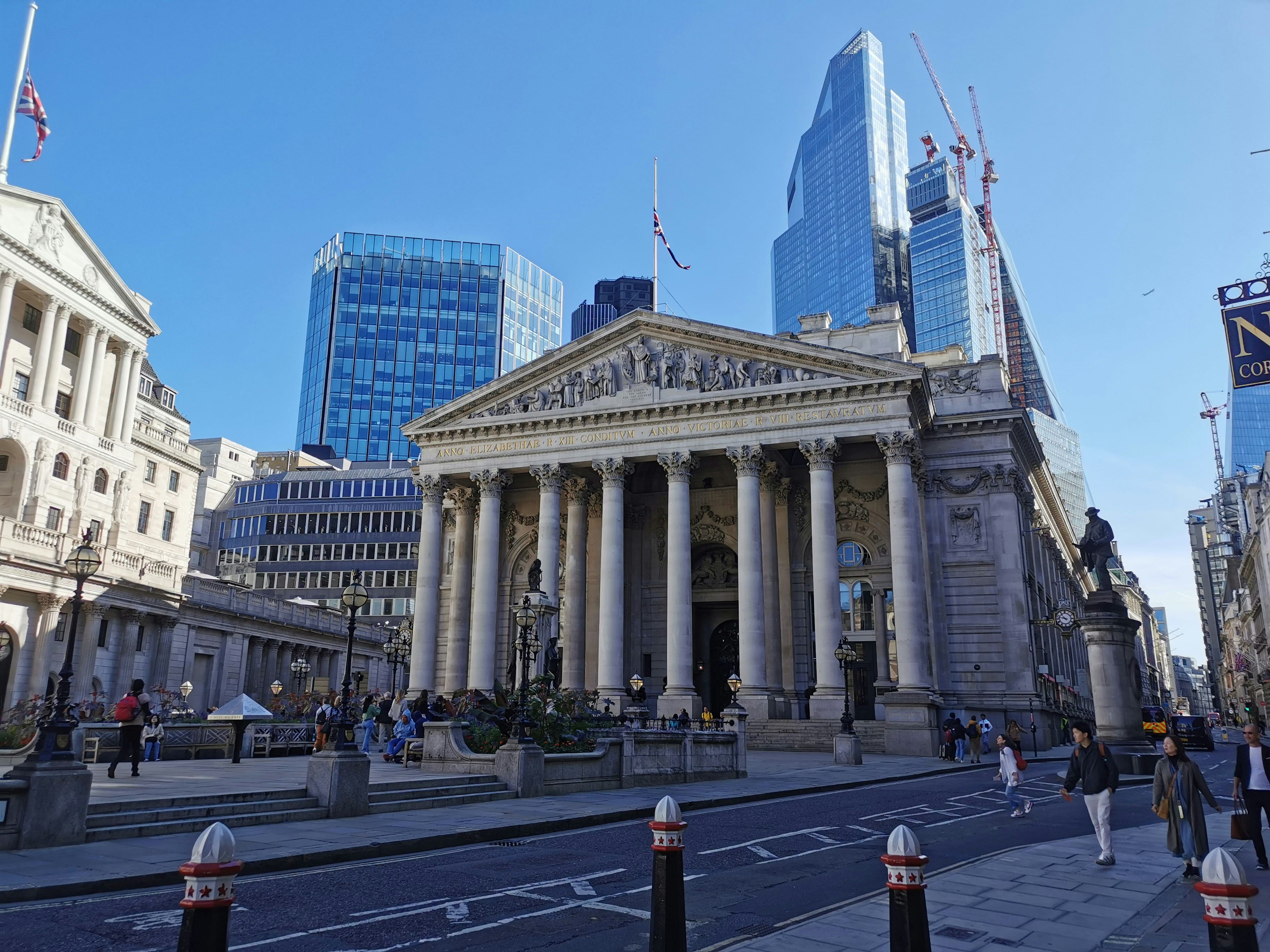
Each time more QE was proposed, the Bank needed the Chancellor to sign a letter of consent and an agreement that the Treasury (in effect, taxpayers) would pay for any losses arising from owning these bonds. Towards the end of 2022, nasty inflation was becoming embedded. The BoE and Treasury reversed the policy without conceding that QE had been inflationary. The Bank started selling the bonds back to the private sector, often at big losses. The Treasury, which had pocketed the profits on the way up, began paying out larger sums to reimburse the BoE.
Last week, the Treasury and the BoE finally realised that the scale of the losses under the bond-sales programme was unacceptable. The Chancellor has now authorised the Bank to hold to maturity the £120bn of longer-dated bonds carrying the largest losses at current prices, thereby avoiding big losses on sale. He has also said that, in principle, the Treasury will start buying the bonds the BoE wants to sell, rather than the Bank pushing them out to private buyers in the market, which might disturb prices more. This will, however, mean that the Government has to borrow more itself to pay for the bonds it takes from the Bank, so there will still be negative pressures on the market from Government actions.
“We lost the opportunity to lock in more cheap debt for longer.”
I have long warned of the damaging effects of these programmes. I supported the first two tranches of QE during the Covid-19 pandemic, when the Government locked down most of the economy and a strong offset was needed. I thought the third tranche was too much, however, and likely to prove inflationary. I tried to persuade the Government to borrow more of the money it needed for longer periods during the QE phase, as the borrowing rates on offer were clearly an artificial bargain. They insisted on continuing to borrow heavily at shorter maturities. We lost the opportunity to lock in more cheap debt for longer.
I have argued against the sale of bonds into the market under quantitative tightening (QT). I urged the authorities to do what the US Federal Reserve and the European Central Bank are doing: winding down their bond portfolios as the bonds mature, but not before. Instead, the BoE has sold large quantities at heavy losses, which the taxpayer has to pay. Private investors have benefited twice from the programme. They sold to the Bank at very high prices and can now buy back at much lower prices. The BoE has invaded fiscal policy by demanding money to cover its losses.
This is a sorry tale. We await the recalculation to see how much of the projected £288bn loss the Treasury and the BoE can avoid through the latest policy. The Chancellor’s letter makes clear this is not the sole preserve of an independent BoE but a joint policy that has gone wrong, with the Treasury and taxpayers picking up the bill and ultimately responsible. When I tried to persuade previous Chancellors to stop the sales and curb the losses, I was told that the Bank is independent. Yet it was ministerial signatures on the letters underpinning the whole policy that gave Chancellors every right to intervene, as the current Chancellor has now done. He needs to go further to curb the losses that are still being needlessly incurred.
Pity the poor taxpayer. Gordon Brown is the main cause of this: his badly judged changes to the regulatory system allowed the boom and the banking bust. This led directly to Darling’s Treasury inventing QE and setting up the taxpayer for losses. The Covid episode compounded the problem based on more wrong thinking by the Bank and Treasury. Since 2022, taxpayers have suffered needless harm because big losses have been taken on selling bonds bought at inflated prices at the peak of QE. Other central banks avoided extreme losses because they had no Treasury guarantee to fall back on. It is worrying that so many Chancellors signed all of this off without asking how much taxpayers might lose.
All roads lead to Labour - from 1945 to the present.
A very useful and incisive article which should make peopel stop and ask, how did Brown manage to convince so many people that he was giving the BoE independence when he was actually neutering it? For almost 30 years the financial press has been an accomplice in Brown's deceit.
The ridiculous notion that Brown saved the financial system in 2008 is still believed by many ignorant people. I despair.