


Daniel Hannan is Director-General of the Institute of Economic Affairs.
Why does Britain put up with it? When Caribbean governments make ludicrous demands for financial transfers from the country that stamped out slavery, we should treat it as a hostile act rather than indulging it.
The concept of historic collective entitlement (or guilt) is morally and legally absurd. Think about it for a moment. There are around a million Brits of Caribbean origin. By what conceivable logic are they under an obligation to pay money to those of their cousins who stayed behind? Our legal system, like our Judaeo-Christian ethical code, is based around the idea that we answer for our own behaviour: “The son shall not bear the iniquity of the father, neither shall the father bear the iniquity of the son.”
The concept of personal responsibility distinguishes modern civilisation from kin-based societies where vendetta and blood feud are ruling imperatives. Understanding that it is not acceptable to injure people because of what their grandparents did is a precondition of an open society. As so often, we see so-called postmodernists espousing some chilling pre-modern ideas.
If, though, you reject the primacy of the individual, and insist on collective identity, you run up against a bigger problem. Where are the descendants of the slavers today?
Whenever the issue of reparations comes up, a certain kind of white person likes to say, with a knowing chuckle, that Britain should in that case get reparations from France for the Battle of Hastings.
One of the many objections to that argument is that all Brits not of recent immigrant stock are descended from William the Conqueror. They would be demanding reparations from themselves.
By the same token, where are you most likely to find the descendants of West Indian slave-owners? Yes, some people owned shares in plantations without leaving Britain. But you are far more likely to find the blood of the slave-owners among people in the Caribbean today.
Then again, every human being alive today is descended from both slaves and slave-owners. It could hardly be otherwise, human bondage having been common to all pre-modern civilisations.
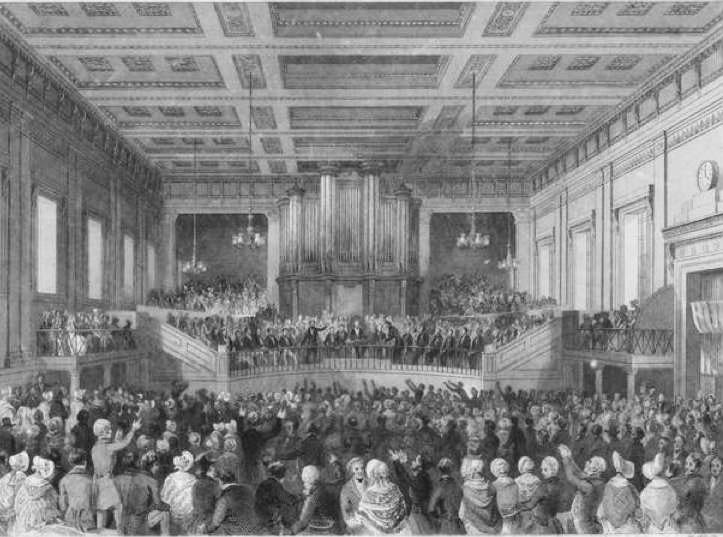
Britain was earlier than most places in extinguishing slavery within its own borders, but it was a major player in the international trade in the 17th and 18th centuries.
In the 19th century, however, it diverged from most other places. Driven partly by religious conviction, partly by Enlightenment individualism and partly by capitalism, which made forced labour economically obsolete, it banned slavery in its colonies and poured its resources into a global campaign against the traffic.
Britain’s anti-slavery campaign, which began in 1807, was resisted by many African kings, who saw slavery as both naturally ordained and economically essential. It was their hostility that drove abolitionists and evangelicals to demand the establishment of African colonies.
Wokesters tend to talk of “imperialism and slavery” as if they were the same phenomenon. They rarely admit the extent to which the first was intended to extirpate the second.
Following abolition, Britain attempted to make restitution in a meaningful way, spending an astonishing 1.8 per cent of GDP annually between 1808 and 1867 on hunting down the slavers: the most expensive moral foreign policy in human history.
If there were a case for reparations in principle (which there is not), that sum alone, not counting the billions given since in development aid, would cover any debt many times over. But such is the moral fervour of the reparationists that few want to tell them when they are talking rot. Yet their fanaticism should not be confused with popularity.
Reparations would be wrong on every level. They are aimed narrowly at the country that, in a slave-owning world, distinguished itself by a decades-long struggle to end the foul business. They are based on a collectivism that is impossible to reconcile with freedom. They rest on poor history. They divert the energies of Caribbean politicians from domestic economic reforms to international rent-seeking.
And one more thing. Does anyone imagine that, if Britain forked over the ridiculous sums campaigners want, it would close the issue? Would any settlement be treated as final?
Of course not. Grievance and self-pity are addictive. Blame and victimhood have the same wasting effect as other narcotics. The worst thing we could do would be to feed the addiction.
Invoke Tort Law. The injured party must be returned to the exact state they were in - “their loss made good, made whole again” - before the injury took place.
Therefore since the reparations claimants are de facto proxies for their injured ancestors, they should be returned to the exact state of their ancestors prior to the injury - that is naked, in chains on the West Coast of Africa.
They can then take the issue of reparations up with their African cousins whose ancestors captured their ancestors and marched them to the coast to be sold to slave traders.
Justice is served.
And we can take back our islands.
Daniel, thanks for this excellent piece, to which I've just linked on the J4MB blog. It should be the last word on the subject of reparations, but of course it won't be.
JUSTICE FOR MEN & BOYS http://j4mb.org.uk
CAMPAIGN FOR MERIT IN BUSINESS http://c4mb.uk
MEN STOP DRINKING http://menstopdrinking.wordpress.com
MEN SHOULDN’T MARRY https://menshouldntmarry.wordpress.com/
LAUGHING AT FEMINISTS http://laughingatfeminists.com