



Mike Salem is a Senior Political Adviser for the Kava Coalition and a political and economic analyst.
I am now old enough not to pay attention to when half term is, and young enough not to have to think of half-term activities for children. It is true that I sit on the governing board of a local comprehensive secondary school, and these dates are a skeleton of my diary and always somewhere in my head. However, I always seem to forget until I board my usually quiet off-peak train to London only to notice there is barely any room to stand, let alone sit. Unless I’m attending a conference that starts at 09:00, I usually arrange for my meetings to take place around lunch and travel off-peak: it’s cheaper, more comfortable and gives me the opportunity to sit and do some work, even when the Wi-Fi is not working on the train. I am not alone in this, and it is a productive and economically rewarding arrangement.
Half term disrupts this and adds costs: swathes of ill-experienced commuters, drawn to the fluorescence of London, traverse the public transport network in the hopes of getting the sweet nectar of a city that was once the envy of the world. London, despite its decline, still attracts a host of domestic tourists. After all, its foundations have been strongly built and it is responsible for 22% of the country’s economic activity.
What is my grievance? These visitors occupy the seats that I usually sit and work in, depriving me of “adding value to the shareholders”. They stand in the middle of train platforms, delaying my quick pacing. They position themselves on the wrong side of the escalators, preventing those who wish to walk these steps from making progress. They mill around in front of the ticket barriers, stopping my cadence and preventing me from boarding the train I have timed to catch with 30 seconds to spare. I now wear shoes that can be heard before seen, making my adversaries tremble and, ideally, causing them to instinctively move out of my way. I half-jokingly told my brother that the cost of these disruptions outweighs the economic benefit and spending they bring.
On a serious note, this half term made me wonder why many visit London, where there are many other cities worth visiting. Is it convenience? London is probably the easiest city to get to for those who want a city break. Or is it for culture and entertainment? This debate also has topical relevance, since the Chancellor hinted in the Budget that local authorities will be able to introduce overnight visitor levies, and some believe that these taxes should be introduced as a means of offsetting some of the externalities caused by tourists on a city.
Upon doing some digging on whether London receives disproportionately more tourists than the rest of the UK, I found that London attracted approximately 15 million domestic overnight trips in 2024, representing around 17% of England’s total. The South West attracted a similar number. Manchester, Birmingham, Liverpool and Leeds also attracted substantial numbers, albeit on a smaller scale. London is therefore not the only city that benefits from domestic tourism, but it remains the country’s leading urban destination. VisitBritain’s domestic tourism statistics put Greater London at the top of the table for both overnight trips and tourism day visits in 2025.
The international picture is even more striking. London accounted for approximately 52% of all inbound visits to the UK in 2025, according to VisitBritain. The capital’s attraction to overseas visitors is hardly surprising: its museums, theatres, galleries, restaurants, shops and historical landmarks are concentrated within a relatively accessible transport network.
But my grievance is not with the Spanish school trips that take up two Tube carriages or the American family trying to find Buckingham Palace. It is with the congestion that emerges when thousands of people attempt to navigate the same limited spaces at the same time.
Half term makes this particularly visible. Families who might otherwise stay at home or visit a local attraction descend on the capital, while ordinary commuters continue to travel to work. The result is a collision between two groups with entirely legitimate reasons to be there, but very different objectives.
The commuter wants to get from A to B as quickly as possible. The visitor wants to see as much as possible before the children become tired, hungry or emotionally incapable of tolerating another historical landmark. Neither is wrong, of course, yet the infrastructure must accommodate both.
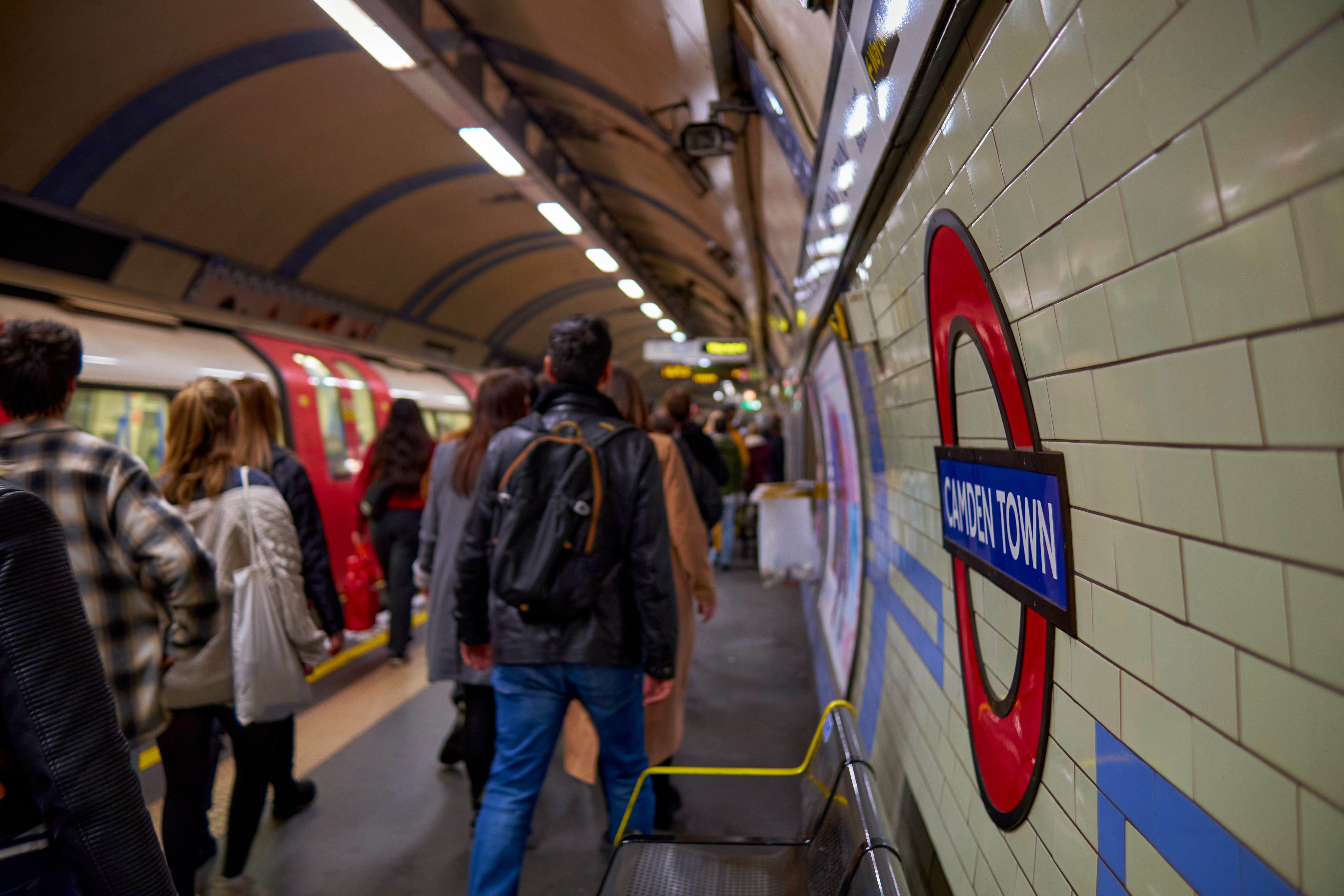
The cost of a crowded capital
Economists have a term for the problem: a negative externality. This is a cost imposed on someone who is not directly involved in the transaction that generates it. A tourist purchases a train ticket, lunch and perhaps a ticket to a West End show. The businesses involved receive revenue, employees receive wages, and the Treasury collects tax. These are genuine economic benefits.
However, the tourist’s spending does not necessarily compensate everyone affected by the additional demand. A commuter may experience a longer journey, a resident may find their local bus overcrowded, and a public transport operator may face additional pressure to provide capacity at peak times. These costs are not always reflected in the price paid by the visitor.
How much does this cost London? This is where the argument becomes more difficult. We can observe overcrowding, delays and increased demand, but we cannot simply assign a monetary value to every obstructed escalator or missed train. Whilst this Instagram reel is exaggerated for comic effect, I think it is a good way of trying to visualise my point.
A proper estimate would require data on passenger volumes, journey delays, the additional operating costs associated with visitor demand and the economic value of the time lost. It would also need to distinguish tourists from other occasional travellers and account for the benefits visitors bring. Without that analysis, any claim that domestic tourists cost London a particular sum would be little more than an educated guess.
We can, however, put the scale of tourism into context. In 2024, London recorded approximately 189 million domestic tourism day visits, alongside around 15 million domestic overnight trips. These figures describe different measures of tourism and should not be added together as though they represent unique individuals. Nevertheless, they demonstrate the sheer volume of activity taking place in the capital. Even a small additional cost per journey, multiplied across millions of journeys, could become significant. But that is a reason to investigate the problem, not a licence to invent a figure.
Should tourists pay a levy?
The Government has moved towards giving local authorities in England the power to introduce an overnight visitor levy. The policy is intended to allow local leaders to raise money for transport, infrastructure and the visitor economy. The Government published its response to the consultation in September 2026. The response made clear that the question was not whether, but when and how, to introduce the levy.
The principle is appealing. If visitors benefit from a city’s attractions and place additional demands on its infrastructure, it is reasonable to ask whether a modest contribution should be made towards maintaining that infrastructure. Other major tourist destinations already impose charges on overnight accommodation. The argument is not that tourists should be punished for visiting, but that the costs of hosting them should be shared more fairly.
There are, however, two important limitations. First, an overnight levy would not directly address the half-term visitor who travels into London for the day and returns home that evening. These are precisely the people who may contribute to congestion on trains, at stations and around major attractions without paying for accommodation in the capital.
A levy should not become an excuse to extract more money from visitors simply because a destination is popular.
Second, a levy is not automatically an efficient solution to congestion. A charge on overnight stays may raise revenue, but it does not necessarily reduce overcrowding at the time or place where it occurs. If the objective is to manage demand, targeted transport pricing, better crowd management and investment in additional capacity may be more effective.
There is also a question of fairness. London’s tourism industry supports jobs and businesses, while many visitors are families making an occasional trip on a limited budget. A levy should not become an excuse to extract more money from visitors simply because a destination is popular. The most defensible policy would link the revenue to visible improvements: more reliable public transport, better-managed stations, cleaner public spaces and infrastructure that benefits both residents and visitors. If people are asked to pay more, they should be able to see what their money achieves.
Perhaps the problem is not tourism
There is a temptation to treat the visitor as the problem. It is an attractive argument because the visitor is immediately visible, often unfamiliar with local customs and, on occasion, standing precisely where you need to walk.
But London is a global city. Its economy benefits from attracting people, whether they arrive to study, work, shop, attend a conference or spend a weekend looking at the Crown Jewels or believing they might see the King at Buckingham Palace. The same popularity that frustrates commuters helps sustain the businesses, employment and cultural institutions that make the capital worth visiting.
Perhaps the more useful question is not whether London has too many tourists, but whether it has planned adequately for the people who use it. A city that attracts millions of visitors should expect crowded stations during school holidays. A transport system that depends on moving large numbers of people efficiently should be designed to accommodate predictable surges in demand. And a government that wants to encourage economic growth should recognise that growth requires investment in the infrastructure that supports it.
The answer cannot simply be to discourage visitors, any more than it can be to tell commuters to accept increasingly uncomfortable journeys as the price of living in a successful city. An easy fix is to increase train services into London during half term, as operators do when there is a concert at Wembley. What we see is sadly the opposite: train operators reduce train services during half term, claiming that commuter numbers actually fall during half-term holidays. This is also the reason why they schedule major engineering work during half term. This is all a case that needs to be put to those who run the country’s railways
An economic case for better manners?
I still reserve the right to be irritated when someone stops at the top of an escalator to consult a map, or when a family occupies the entire pavement while deciding which direction to walk. There are limits to my economic enlightenment, and my patience is not an infinitely renewable resource, but perhaps I should treat it as a public good.
The case for a visitor levy should rest on evidence about the costs of tourism, the benefits it generates and the most effective means of financing the infrastructure that accommodates it. The revenue should be used transparently, and any charge should be designed to avoid placing an unfair burden on lower-income visitors. Most importantly, we should distinguish between raising money from visitors and actually solving the problems that their presence can create.
My view is that local authorities should compete, in good old-fashioned free-market fashion, to make the case for why their area is the best to visit. Whether to introduce a visitor levy or change train timetables should therefore be a local decision, aimed at attracting more and better-quality visits.
For now, I suspect I will continue to forget when half term begins. I will board my train to London, discover that my preferred seat has been occupied by a family of four, and spend the journey contemplating the economic inefficiency of having to work while standing. But perhaps I should be grateful. The crowds are evidence that London remains a place people want to visit, contrary to the many claims that it is a city in decline.
The answer is simple: travel in the rush hour during half term, the trains will be emptier than when the schools are in. Of course, comfort comes at the cost of a full price ticket...