


Daniel Hannan is Director-General of the Institute of Economic Affairs.
Why are we so nostalgic about hard, brutal and environmentally unfriendly jobs? Why do we, even now, complain about the Thatcher-era closure of steel mills, shipyards and, above all, coalmines?
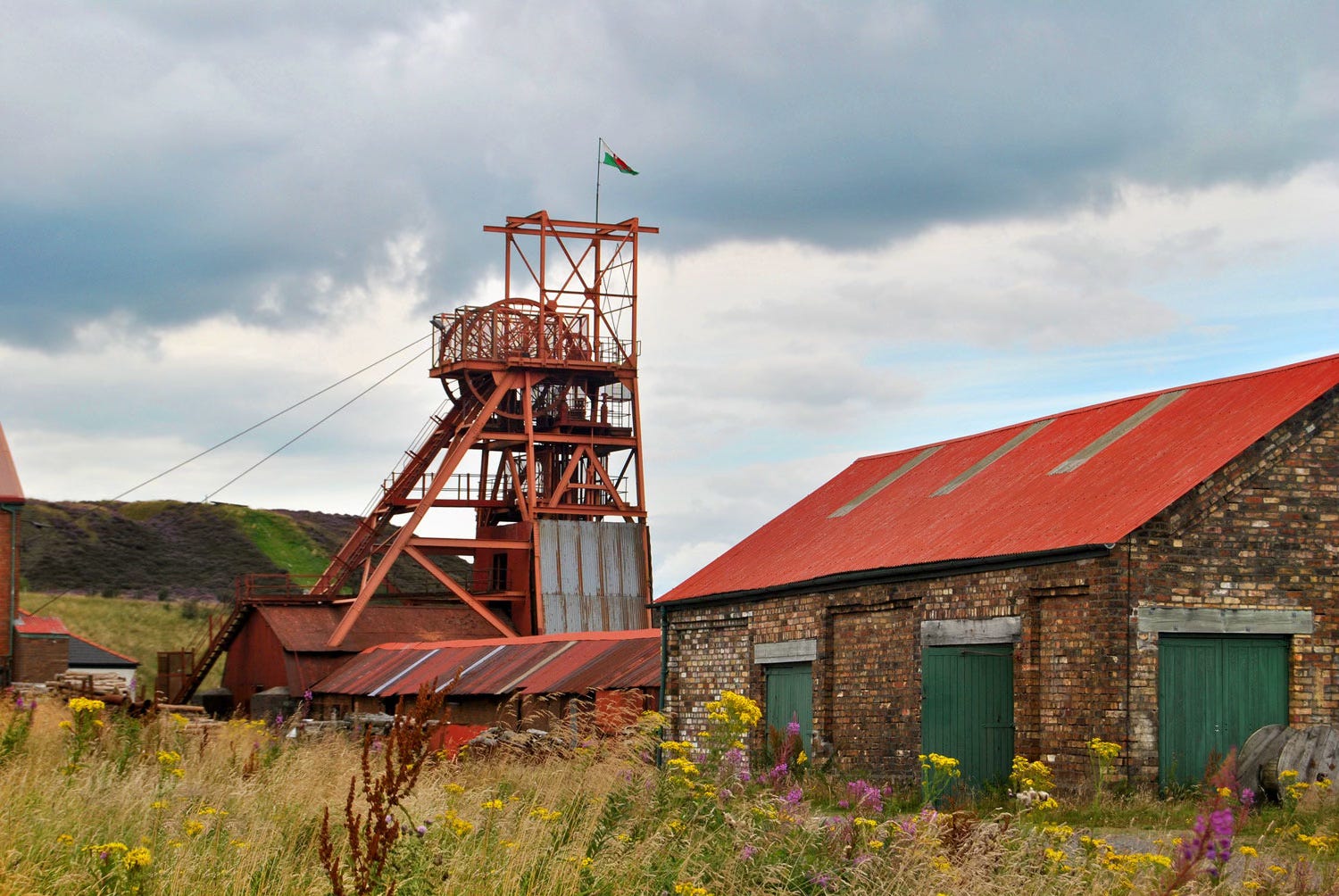
The answer is, I think, cultural rather than economic. A colliery was more than a place of work. In a pit village, it was also the social and cultural centre. When the mine closed, the way of life it had sustained – allotments, a brass band, galas, sports teams, family days out – disappeared. Who wouldn’t want to preserve those things? Who wouldn’t regret their passing?
Forty years on, though, we should be able to see the economic shift in perspective. Do we really want to send men to do brutalising and filthy work underground? Breathing coaldust causes lung diseases, and miners often suffered, too, from conditions related to working with vibrating machinery, from hearing loss and from mesothelioma. Do the nostalgics think it would have been better, taking everything together, to have kept those mines open – whether from the point of view of taxpayers or of miners?
The wistfulness people feel when they look back at the era of heavy industry stems from the widespread belief that economic growth exists to sustain jobs rather than the other way around. The early 19th-century French economist Frédéric Bastiat called this fallacy “Sisyphism” after the mythical Greek tyrant who was sentenced by the gods to spend all eternity pushing a boulder up a hill only for it to roll back down each day. Bastiat asked acerbically whether, by their own logic, the Sisyphists would prefer barren farmland, since it would take more people to grow food on it.
In our domestic lives, we recognise the advantages of labour-saving technology. No one laments the work “destroyed” by their dishwasher. But extend the same argument to industry and many of the same people turn Luddite, fretting that automation makes human tasks redundant.
Similar concerns surface in every generation. “The idea that the utility and importance of an industry are to be measured by the employment which it gives to labour is so deeply rooted in human nature that economists can scarcely claim to have taken the first step towards its eradication”, wrote the Canadian mathematician Simon Newcomb. That was in 1893. Today, the first step has still not been taken.
What the economist Bryan Caplan calls “the make-work fallacy” seems to be hardwired into our genome. In the late 18th century, there were widespread fears that mechanising agriculture would destroy jobs and turn farm-workers into vagabonds. These newfangled “manufactories”, clever men averred, would never employ enough people.
In the late 20th century, the same argument was applied to services. The “real” jobs, we kept being told, were in manufacturing. What were all the former factory-workers going to do? Cut each other’s hair? Flip burgers? Now, in the 21st century, the bogeyman is AI. And yet, every time, people end up being released from tougher jobs into better ones, and living standards rise.
Two hundred years ago, 95 per cent of working adults were engaged in food production. They had to be, or the world would have starved. Now, that number has fallen to 3 per cent. What happened to everyone else? Did they, as predicted, become an army of hungry vagabonds? Of course not. They were released to produce things that no one had previously dreamed of: pharmaceuticals, cars, life insurance, video games.
Yet, at every turn, people have decried technological advance, insisting that the jobs they remember from their childhoods are somehow more genuine than newer ones. The fallacy that makes us nostalgic for coalmining also makes us want to hang onto what is left of heavy industry and makes us fear intelligent machines.
During the 1980s, Britain went from being a poor, indebted, strike-ridden country, with fixed wages and prices and double-digit inflation, to being the most successful economy in Europe. That shift did not just happen. It took place because the Thatcher government stopped misallocating resources, allowed unsustainable industries to give way to profitable ones, and stood aside to permit innovation.
Yes, that process was painful. But how many coalminers of that era would want their grandsons to have jobs like theirs?
Today’s children are unlikely to have “a job” at all, at least not as we understood that word in the 20th century. Rather, they will find themselves constantly freelancing, retraining and adapting. Yet they will know riches that their grandparents could barely have imagined.
Jobs are not an end in themselves. They are a means to an end – that end being greater prosperity. If we can enjoy a higher standard of living while working shorter hours in less demanding jobs, so much the better. And, believe it or not, this is what has been happening these past two centuries, as the proportion of our lives spent at work dwindles and our living standards improve.
“Wealth increases as the ratio of results to effort increases,” wrote Bastiat. “Absolute perfection, whose archetype is God, consists in the widest possible distance between the two”. Tout à fait, Frédéric. Tout à fait.
The power situation in Australia is very similar to the situation in Britain, with coal being phased out in favour of intermittent wind and solar on the grid.
This is catastrophic and unsustainable but nuclear power is illegal and we have no alternative to burning more coal or all of our energy-intensive industries will be long gone before nuclear is an option.
https://rafechampion.substack.com/p/burn-coal-in-australia-or-die-in-f37
Surely coal can be mined in Britain with modern technology to eliminate health hazards.
The CO2 emissions will green the country and boost farm production.
What is the point of wind and solar on the grid anyway?
Wind and solar capacity is not real capacity because it’s not available during nocturnal wind droughts.
https://rafechampion.substack.com/p/wind-and-solar-aint-capacity
Batteries are not the answer. 2 MINUTES https://youtu.be/VjgDvG13Hgs
Wind and solar don’t generate enough energy to reproduce themselves. See Schernikau and Smith on the unpopular truth about electricity and the future of energy. https://rafechampion.substack.com/p/wind-and-solar-are-parasites-on-the
Trillions have been wasted for want of due diligence.
https://rafechampion.substack.com/p/criminal-failure-of-due-diligence
The voters have to realise the threat of wind droughts, especially windless nights, and lean on the lawmakers to stop the subsidies and mandates for unreliable energy.
https://rafechampion.substack.com/p/will-windpower-heat-your-breakfast
What is the cost-benefit ratio for net-zero?
What are the benefits?
This is not what the manufacturing argument is all about. Very clever to cloak the opening in terms of its negative impact on climate change - something you have been sceptical about. This is not about reopening coal mines and steel works - but looking at where we still have expertise in industrial technologies and capabilities that could be grown faster....with a more supportive tax and regulatory environment ......the Blairite idea of a 'weightless' economy, or what Torsten Bell calls a 'financial superpower' is as much a fallacy as the straw man you have created