



Dr Christopher Snowdon is the Head of Lifestyle Economics at the IEA.
I have never been fond of the term “demerit good”. It bestows the objective language of the economist onto something that is fundamentally subjective. Alcohol is supposedly a demerit good because of its effect on health, which would be fine if moderate drinkers didn’t live longer than teetotalers and if health were the only thing that mattered, but it isn’t. No decent economist would be arrogant enough to tell someone that the risks of heavy drinking outweigh their enjoyment of getting drunk.
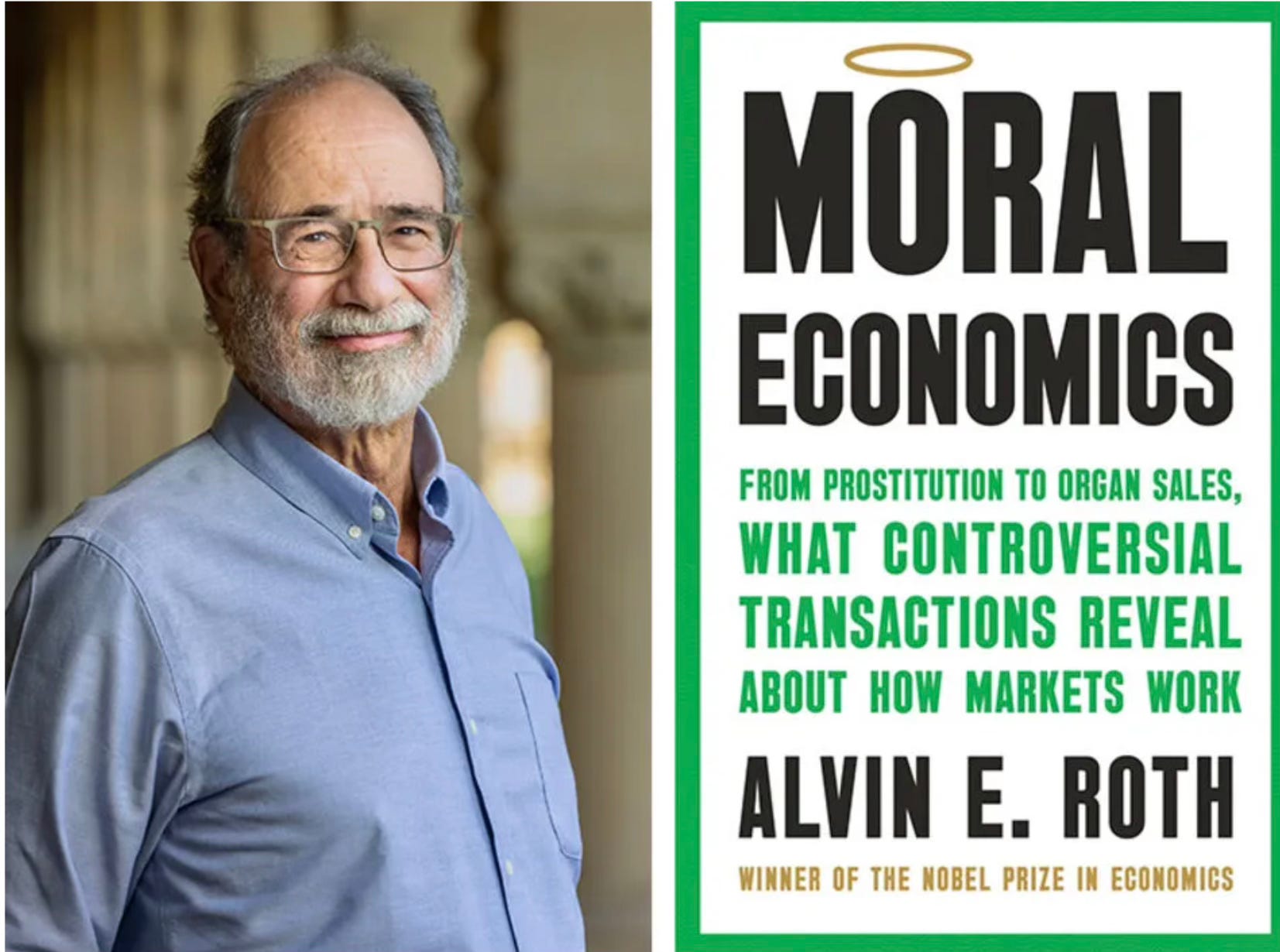
In 2007, Alvin Roth coined the term “repugnant transactions” to describe the exchange of controversial goods and services. I prefer this to the term “demerit good” because what people find repugnant varies in time and place and the word “repugnant” more accurately reflects the fact that this is really a question of personal taste and morality. Roth’s argument was that repugnance can be an unhelpful constraint on markets. Moral opposition to the sale of live organs, for example, costs lives.
Roth’s new book Moral Economics expands on this theme. Opposition to repugnant transactions is often difficult to justify in logical terms. California’s ban on horse meat – one of Roth’s favourite examples – applies only to horse meat sold for human consumption. It is not illegal to kill a horse for other purposes, nor is it illegal to turn a horse into pet food. It is only illegal to kill a horse “if that person knows or should have known that any part of that horse will be used for human consumption.” It is not a question of animal rights or food safety. The law reflects nothing more than an irrational disgust.
Moral objections are usually framed as consequentialist objections, but further probing often reveals these to be hollow. Those who favour laws against incest (of whom I am one, fwiw) on the grounds that it can lead to birth defects are generally not prepared to make exceptions for family members who use failsafe contraception. Those who support laws against tobacco on the grounds that smoking imposes a cost on the health service seldom change their minds when it is explained that the net cost is less than zero. Those who, like me, support the criminalisation of child pornography on the grounds that it fuels demand for the creation of more child pornography, and thus child abuse, remain deeply uneasy (at best) about such images being generated by CGI or AI.
We are not, therefore, talking about market transactions that necessarily create negative externalities. Activities such as prostitution and dwarf tossing are consensual and have no direct spillover effects onto others, but are nevertheless widely condemned. At best, opponents of such behaviour claim that it leads to a general coarsening of society or can act as a ‘gateway’ to more dangerous activities. The latter claim can be tested with empirical evidence, and it does not seem to stack up. Studies have found that the legalisation of sex work, for example, is associated with fewer sexual assaults. Roth notes that the increased availability of child pornography on the internet does not seem to have led to an increase in child abuse. The rise of vaping has not led to an increase in cigarette consumption, as some feared, but has instead acted as a substitute.
An important theme in this book is that moral repugnance increases when financial payments are introduced. The use of economic incentives seems to be enough to transform a respectable and laudable activity into a grubby and disreputable sin. Soldiers fighting for their country are heroes while mercenaries are villains. Donating your kidney is moral whereas selling your kidney is repugnant. Adopting a child is good but buying a child is bad. In each case, the transaction is consensual (unless the soldier is conscripted, but that is still considered less repugnant than being a mercenary!) and yet the introduction of cash payments casts the activity in a very different light. This is often reflected in the law.
Why should this be? Close to the surface are old canards about “exploitation”, “coercion” and protecting the poor. It is unquestionably true that a peasant in India will be more likely to sell a kidney than a millionaire in Luxembourg. But if it is also true that such people have “no other option”, as moral reformers claim, would it really benefit such destitute individuals to remove their last option? When Spain banned dwarf bullfighting, it was the dwarves who came out to protest. It tends to be sex workers, rather than their clients, who campaign for the decriminalisation of prostitution.
Roth says from the outset that he intends his book to be “descriptive” rather than polemical, but he does make his feelings clear on certain topics. With regard to human egg donation, surrogacy and new reproductive technology, he writes that “we can best protect the rights and welfare of intended parents, donors, surrogates, and children in almost every case via laws that establish well-regulated legal procedures, rather than bans.” He is clearly in favour of having a legal market in human kidneys, an issue with which he has long been associated, and he opposes bans on the sale of human blood and blood plasma.
His argument against prohibition is essentially consequentialist. If bans create dangerous black markets, they can cause more problems than they solve. For this reason, Roth says that we should “reexamine bans that cause many deaths or lots of crime. That’s especially pressing for bans (such as prohibition of alcohol or current bans on drugs) that don’t even succeed at substantially limiting the banned transactions.” Fair enough, but that raises the question of what we should do if a ban did successfully prevent the banned transaction, and therefore remove the dangerous black market, or reduce it to a negligible rump. Would Roth then become a supporter of prohibition? The logic of much of this book suggests that he would, but that does not seem to me to be the right moral answer. At any rate, he does not justify it in either economic or moral terms. What about the welfare loss to those who want to consume the banned product but are no longer able to do so? Shouldn’t the utility of the individual count for something in a book about economics?
Despite recommending that we “reexamine bans that cause many deaths or lots of crime”, Roth also says that: “We aren’t winning the war on drugs, but neither can we surrender.” It seems, therefore, that he is prepared to tolerate quite a few deaths and plenty of crime. This is not an inherently reasonable position. We should not repeal laws just because some people break them. But deciding where to draw the line requires a moral framework, one that is not based on pushing people as far as you can before they break the law and certainly not one that is based on the often irrational prejudices of temporary majorities.
