



Joshua Bowden is a Research Associate at the Vinson Centre at the University of Buckingham.
It was recently announced that the criteria for acquiring a Disabled Persons Railcard, entitling the holder to a third off train tickets in both Standard and First Class, had been extended to include people with ADHD. While this has been welcomed by some, it will cost Great British Railways money which is unlikely to be offset by much extra travel.
With passenger trains currently requiring a massive subsidy, and no clear steer about future pricing policy, this is not the right time to be offering wider discounts.
It is anyway questionable whether the current railcard system is fit for purpose, given an increasingly Byzantine system of discounts for particular groups, many of which are not likely to be particularly disadvantaged. With the Department for Education now reporting that over 20 per cent of schoolchildren have special educational needs, it is important, albeit politically difficult, to question whether continually expanding railcard criteria is really that prudent.
A report published by the New Economics Foundation (NEF) in July suggested that the railcard system should actually be expanded, with bus fares also capped at £1 across the country. It is argued that such a policy would help with the cost of living, given that high fuel costs make driving expensive, as well as improve public transport in general, with particular reference to the environment.
The idea that transport fares should be artificially low for social or political reasons has a long history, yet where it is tried the service invariably deteriorates.
British rail fares are complex, as Neil O’Brien has explained. One major issue is that the Government regulates some, but by no means all, rail fares, an approach that fails everybody. The Government gets blamed for fare increases while train operators are not always able to collect revenue that would most effectively cover costs. To continue the worst-of-both-worlds situation, regulated rail fares have actually risen whilst non-regulated prices have fallen.
A particularly controversial feature of British rail ticketing is the split between peak and off-peak fares, with the most expensive tickets on sale for three figures. In surveys, the public say they want simpler (and cheaper) fares.
Flexibility in fares, however, should be celebrated. Having different prices for different times of the day helps manage demand, reducing overcrowding during rush hour. Equally, leisure passengers in particular – more flexible about their time and probably more cost-conscious – can purchase tickets that are cheaper than would be the case with a more straightforward ticketing system. The public should be careful what they wish for. When train operating company LNER introduced a simplified ticketing system, it actually made fares more expensive.
At present, railcards are generally offered to specific groups, often on somewhat tenuous grounds. Why should a 30-year-old be able to buy a discount railcard but not a 31-year-old? A big problem is that it is often unclear when a railcard is a social benefit or profit-maximising price discrimination – or simply a promotional discount. Imagine if Tesco Clubcard prices were given out based on your age.
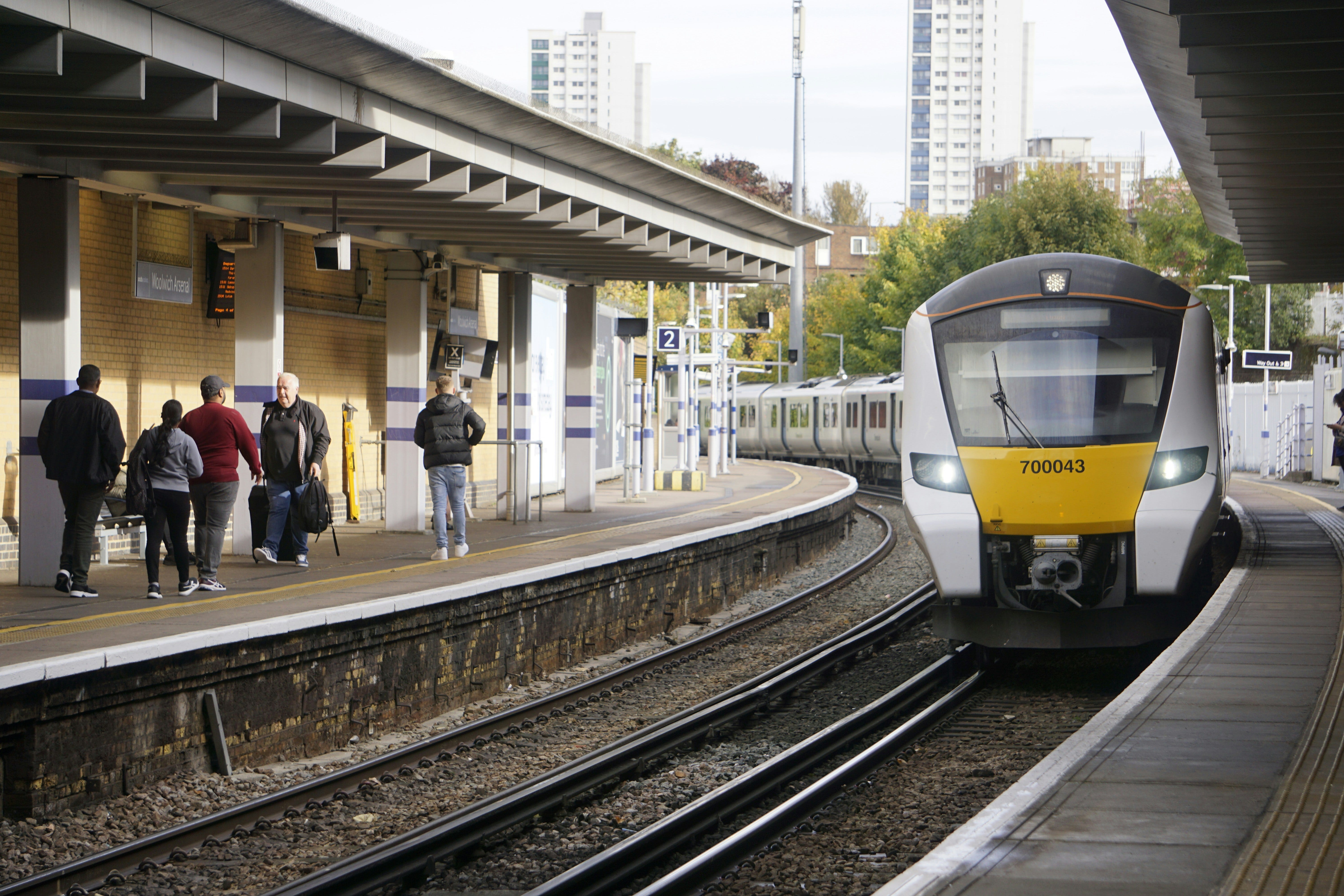
Whilst the NEF proposal is for a universal, region-based railcard that would be available to all, it would nonetheless exacerbate existing problems.
The NEF proposal is based on the idea that the one thing that stops people travelling by train is cost. Yet cost is not necessarily the main basis on which people make decisions with regard to transport modes. Long-distance coaches are much cheaper than trains but the latter are more popular.
People will have a variety of reasons for their choices, but the main advantage of trains will often be that they are the fastest or most convenient option, with price a secondary consideration. In fact, artificially low fares are the last thing the railways need.
The problem is that the idea of a universal railcard confuses two different concepts, the socially based discount and the market-based discount. There may be some justification for the former to exist for some groups, such as those with disabilities that leave them unable to drive, although not where the numbers eligible constitute a significant proportion of potential travellers.
The other concept is that of a market-based railcard. The two examples the NEF points to as successes are the Network Railcard in the South East of England and the region-based monthly and yearly passes distributed by transport associations in German-speaking countries.
The Network Railcard was introduced by the British Rail division Network SouthEast in the 1980s. Network SouthEast was created to improve the finances of the commuter services in the South East of England through delivering an improved service. As an initiative, the Network Railcard was something like a Tesco Clubcard, a loyalty system to encourage patronage.
The NEF’s proposal for a £35 regional railcard for each region of England is not that. It is simply a case of trying to make train tickets artificially cheaper.
At Zurich’s ZVV, one of the most successful of the German-speaking transport associations, the price of monthly passes is much higher than the NEF proposes. A ZVV monthly all-zones pass is CHF 250, around £226. Even with the difference between the British and Swiss cost of living, the NEF price is clearly far too low to cover more than a small fraction of the cost of the service.
“Artificially low fares are the last thing the railways need.”
Given that Miatta Fahnbulleh, the influential Energy Secretary, was formerly Chief Executive of the NEF, the Government may be tempted to implement these proposals. But it should be wary of implementing politically motivated low fares.
The New York Subway had its base fare kept artificially low by politicians for decades, such that by the 1970s the network was grotty, unreliable and emblematic of the crime and decay of New York at the time. The London Underground, which has not suffered from such a history, is more reliable and modern, and comes very close to covering its operating costs.
Another warning comes from Germany’s Deutschlandticket, which offers regional rail travel across Germany at an artificially low price. The policy, a child of Thunberg-influenced environmentalism, has seen train services decline. Germany’s trains are now less reliable than those of Britain, thanks to infrastructure that is running over capacity. The Deutschlandticket has not helped, leading to more passengers but not the extra fare revenue needed to upgrade trains; services have just deteriorated.
Already, Britain’s rail network is running over capacity in many places; indeed, one issue with Britain’s railways is that they are popular. What is needed are infrastructure improvements, not low fares. Gareth Dennis, a rail commentator who could fairly be described as left-wing, said as much in an article for Rail Magazine. As is often the case with British politics, what is needed is hard choices, not populist demand subsidy.
A better policy would be to give train operators complete freedom to set ticket prices. They would then be able to set discounts and promotions where they saw fit, or indeed surge pricing to deal with overcrowding. This is the same principle as the way in which prices in a supermarket work, delivering lower price rises than regulated train fares.
If the Government wished to do something else to improve the railways, it would liberalise planning and contract regulations to make rail improvement works easier, as these are currently far too expensive. Britain’s railways can be more successful and carry more people, but only if politicians do not interfere.