


This article first appeared in the Washington Examiner.
Daniel Hannan is Director General at the Institute of Economic Affairs.
It is extraordinary how few countries can build nuclear weapons. Eighty-one years have passed since the bombing of Hiroshima. Yet, of the 195 states recognised by the United Nations, 186 are technologically unable to make warheads.
Beyond the original five nuclear states – that is, the five permanent members of the UN Security Council – four more have unofficially acquired the capability: India, Pakistan, Israel and North Korea. That’s it. More nations have discontinued nuclear programmes than have developed the Bomb.
“I am haunted by the feeling that, by 1970, there may be ten nuclear powers instead of four,” said President Kennedy in 1963, in the aftermath of the Cuban Missile Crisis, “and by 1975, fifteen or twenty.” In fact, largely through US efforts to deter foes and reassure allies, the number is still in single figures.
That may be about to change. The United States has agreed to collaborate with Saudi Arabia on a nuclear programme. The programme is, on paper, civilian, but once a country has the capacity to enrich uranium, it can easily build the Bomb. A previous US deal with the United Arab Emirates had explicit safeguards against moves towards militarisation. Reports suggest that the Saudi deal has no such constraints.
You might fairly ask why the Saudis need nuclear energy. They sit on the world’s second-largest oil reserve, and nowhere on Earth is better suited to solar power. Covering one per cent of the Saudi desert with photovoltaic panels would generate sixty per cent of all the electricity consumed in the US. The trouble is that solar panels are no deterrent against Iranian nuclear weapons. What the Saudis really want is parity with their Shia rivals.
There is a separate argument to be had about the reliability of Saudi Arabia as a Western ally. The immediate issue, though, is whether the Saudi deal will trigger a nuclear cascade. Whether you see Saudi Arabia as a backward autocracy or as a state undergoing rapid modernisation and a critical partner against the ayatollahs, you can hardly blame it for concluding that, if nuclear weapons are spreading, it should rely on itself rather than trusting to an alliance forged nearly a century ago between Ibn Saud and FDR.
How many other countries might conclude, like Saudi Arabia, that they need their own deterrent? Seventy per cent of South Koreans want nuclear weapons to balance the threat from North Korea. Japan and Taiwan might make the same calculation vis-à-vis China, Ukraine and Poland vis-à-vis Russia. Turkey’s Recep Tayyip Erdoğan argues that his country should have an independent capacity. Australia was so spooked by the Trump administration’s musings about withdrawal from the AUKUS submarine deal that there is now talk there of building a nuclear deterrent.
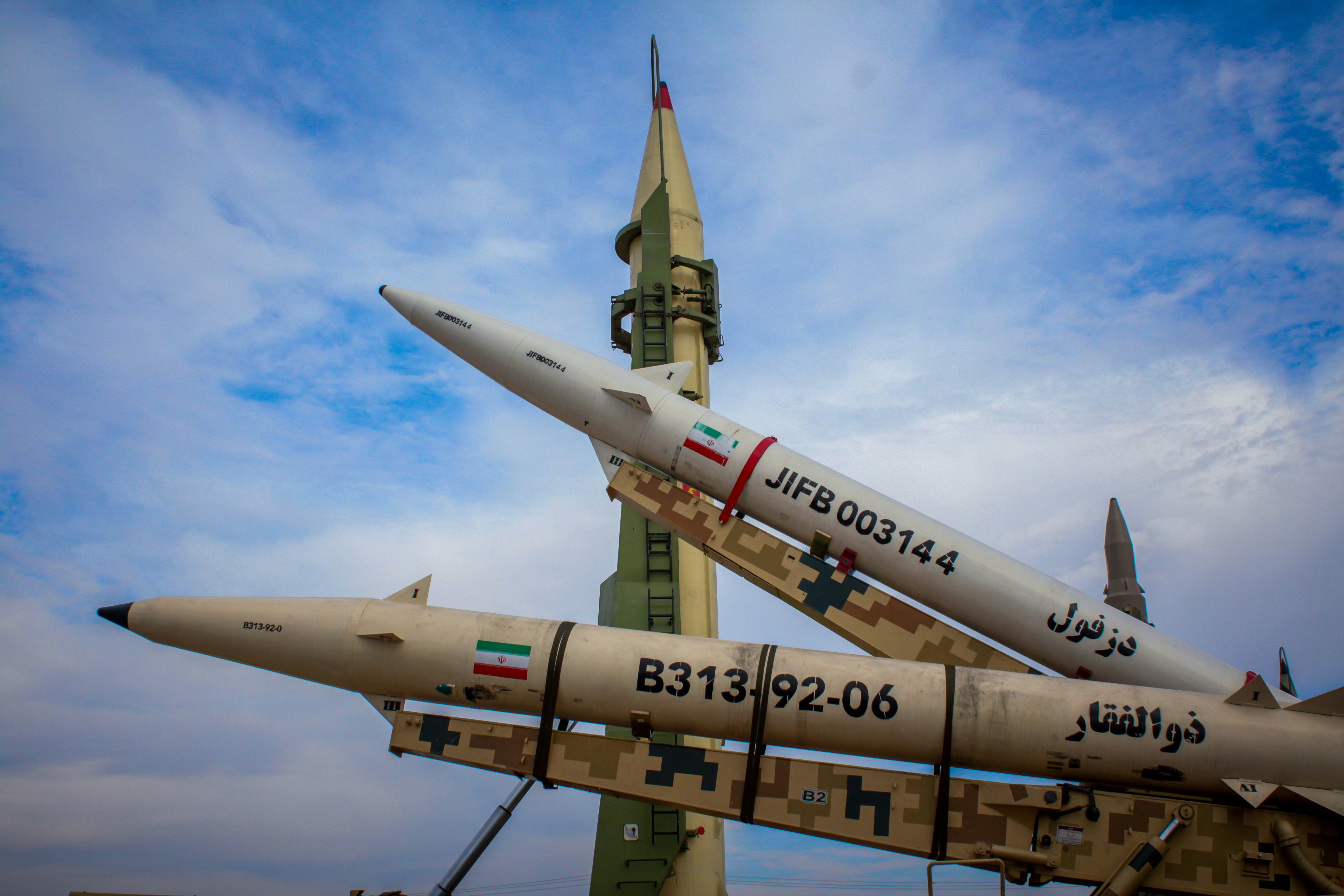
Until now, the US has sought to limit “friendly proliferation” by offering allies, in effect, cost-free shelter under its own nuclear umbrella. The current administration, however, has made clear that it does not recognise the concept of an alliance in the traditional sense. Every relationship must be transactional, and decades of loyalty to Washington are no guarantee against random trade sanctions or demands on your territory. Understandably, many former allies are now looking to their own resources – a huge opportunity, incidentally, for British defence industries.
Some in DC argue that such a world will be safer, because every aggressor will face the prospect of mutually assured destruction. Well, maybe. Still, make no mistake: we are ditching an approach that has kept the world remarkably safe and has coincided with an unprecedented decline in war. We are doing so, not as a result of lengthy cogitation and debate, but more or less at the whim of one president.
It’s an odd thing, but in the 1980s, the fear of nuclear annihilation was everywhere. There was a whole genre of post-apocalypse novels and films, from Mad Max to The Terminator. The mushroom cloud was a familiar icon. Most commentators shared Carl Sagan’s view that nuclear war was a question of when rather than if.
Now, by any objective measure, we are closer to a nuclear exchange than we were then. The old nuclear powers have proved their restraint over decades. Can we confidently say the same about states run by religious millenarians who are convinced that the end days are close? Yet it seems we can handle only one Armageddon scenario at a time, and our Armageddon scenario of choice is climate change. We have no spare attention to give to the proliferation of weapons that would end civilisation. We really are an odd species.