


Geoff Russ is the Editor-at-Large of Without Diminishment. He is a contributor to a number of publications, including the National Post, Modern Age, and The Australian Financial Review.
Between the malaise of the European Union, the transience of the United States and the threat of the world’s hostile authoritarians, countries like Canada and Britain must look to family and old friends. In this regard, they can easily look to each other.
CANZUK, the exciting proposal for a nation-to-nation union between Britain and its former dominions of Canada, Australia and New Zealand, is a very desirable avenue.
Critics call it colonial nostalgia, but that ignores the growth and strength of those countries. Canada has as much independence as Britain. Our two countries can freely engage and work together for a more secure and prosperous future.
Canada can offer reliable supplies of critical minerals, uranium and energy, while Britain can contribute specialised processing, nuclear-fuel capabilities, advanced engineering and access to global commercial and financial networks. The greatest gains would come from integrating critical-mineral and nuclear supply chains, alongside jointly financed defence and technology projects.
There is more than a purely commercial basis for this, given the long, shared history between the two countries and their familial, cultural and social ties. Canadians descended from people of the British Isles still constitute the largest share of the population, and that share was larger still in past decades and centuries, giving the country a solid, English-speaking baseline.
Canadians have fought alongside British troops more often than alongside those of any other ally, from the War of 1812 and the Transvaal to Flanders, Normandy and Afghanistan. It was airmen from the Royal Canadian Air Force who flew in the Battle of Britain alongside their British counterparts. As the ‘eldest daughter of the Empire’, Canada was also a vital supplier of raw materials to Britain, which was our top trading partner until after the First World War.
Regarding commerce, the once-vital trading relationship between our two countries went into severe decline in the 20th century, especially after 1945. It made rational sense: Canada had just spent the war years deepening its continental ties with the United States.
Canadian prime ministers were so convinced that our country’s destiny lay with America that they purposefully worked to weaken and sever first our imperial ties and then our Commonwealth ties. This was touted as modernity and as a sign that a former colony had matured into a nation.
Gradually, symbols of British Canada were deliberately removed, for instance through the renaming of the Royal Canadian Air Force and Royal Canadian Navy as the unremarkable ‘Air Command’ and ‘Maritime Command’. The former names were thankfully restored in 2011.
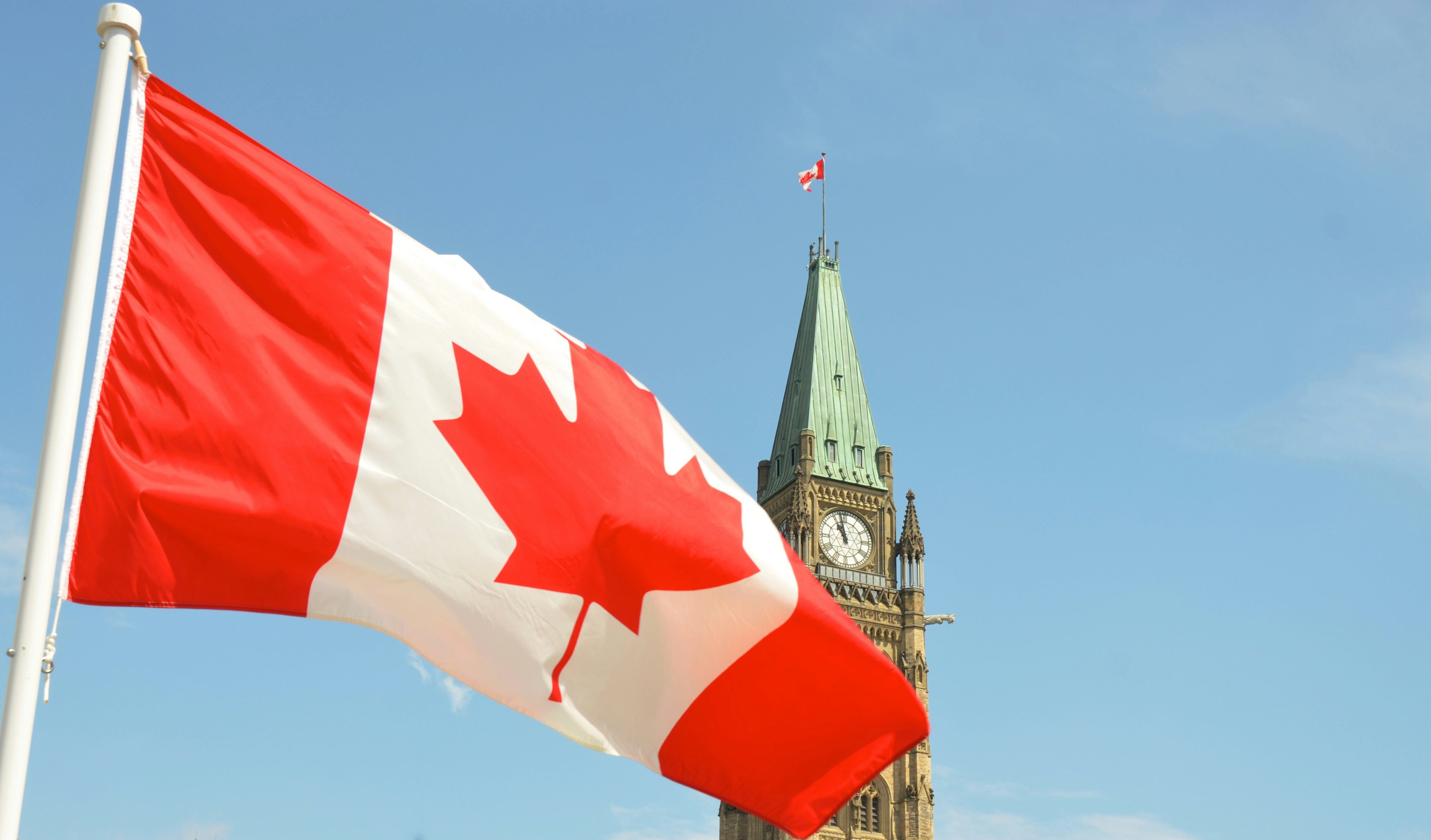
Even the flag of Canada, a crimson banner with the Union Jack in the upper-left corner and the coat of arms of Canada at the lower right, was replaced by the flag we know today. It was done without a referendum or any meaningful gesture of consent from the Canadian people, least of all the veterans, who jeered at the pencil-pushers who championed the change.
All of that happened alongside massive joint projects with the United States, the construction of pipelines from our oil-rich province of Alberta across the border, and a general explosion in continental trade. Canadians enjoyed one of the highest standards of living in the world and were so awash with the affluence of the post-war boom that they did not seem to mind the radical cultural changes being imposed upon them.
Why would Canada not attach itself as tightly as possible to its seemingly invincible neighbour?
At the time, the Democratic and Republican parties shared an opposition to communism and felt responsible for leading the Western world. Washington could defend the Canadian Arctic, serve as a reliable importer of Canadian raw materials and export cutting-edge manufactured goods.
None of it required ocean freighters or convoluted trade routes, just a simple drive across the 49th parallel. In 1989, the arrival of free trade made Canada–US ties seem as though they could only improve.
More than 30 years later, Donald Trump has set a century of friendship and co-operation alight. His administration’sincoherent campaign against Canada, waged through rhetoric and tariffs, has turned Canadians firmly against the US. It is unlikely that the relationship will recover any time soon.
It would be silly to propose that Canada could ever fully detach itself from the US. That has never been possible, going back to the colonial era, and our long-standing neighbourly relationship with the country makes it an impossible goal.
However, Canadians have learned the folly of putting all our eggs in one basket.
The Canadian government has been talking very loudly about diversifying trade in response to this American belligerence. Whether through CANZUK or not, a good place to start would be Canada’s oldest friend.
From the link: "Canada slapped counter-tariffs on U.S. goods earlier this month"
A country like Canada that would do self-harm like this is not one that the UK should establish an entangling alliance with.
Imv of course.
Trump has damaged US Canada relations, Carney has. His anti-American elbows up Campaign torpedoed trade with the US while more sensible countries made new trade deals. Carney has considerable UK connections that may make it an obvious choice for him to expand trade but the UK is suffering from an even faster self-imposed decline than Canada. From mass migration high taxes and climate change delusions, the two countries are united in decline.