


Rainer Zitelmann holds doctorates in history and sociology. He is the author of 32 books, translated into 35 languages, including The Power of Capitalism, How Nations Escape Poverty and New Space Capitalism. His writing has appeared in the Wall Street Journal, Financial Times, The Times and Newsweek, among others.
In Europe, there is a widespread misconception that the United States is a country of “pure capitalism” and that there is no such thing as an American welfare state. This perception is fundamentally wrong, and anyone who holds it will be surprised by much of what follows.
There are 100 federal programmes in the US alone that each distribute more than $100m a year, plus countless programmes at state and local level, as former US Senator Phil Gramm and economists Robert Ekelund and John Early write in their excellent book The Myth of American Inequality.[1]
At the same time, there are federal, state and local taxes, resulting in an unmanageable tangle of tax payments on the one hand and transfer payments on the other. The absurd result is that the typical middle-class household receives almost as much in government transfer payments ($17,850) as it pays in taxes ($19,314).[2]
Of course, the bureaucracy that runs all of this swallows up a massive amount of money. Many middle-class Americans sense that there is something wrong with the system, which is largely financed by the top 20 per cent of income earners, who have an average household income of $295,904 but pay taxes of almost $107,000.[3] This refutes the popular belief that America’s top earners get off lightly when it comes to paying taxes.
No. More than one in every three dollars earned by these households ends up in the government’s coffers. And the top 20 per cent of households pay more than 60 per cent of all taxes. If you look at federal income taxes alone, the top 20 per cent pay 83 per cent of the total income tax bill![4]
So, the system fleeces higher earners and discourages the middle class by removing any financial incentive to work.
And perhaps the most absurd aspect of all this is that it has done little to help people escape poverty on their own. Since the “War on Poverty” began in the US in the mid-1960s, with government programmes constantly ballooning in size and scope, the share of Americans unable to support themselves without government help has barely changed. In the two decades before the “War on Poverty” began, poverty in the US had steadily declined from 32.1 per cent to 14.7 per cent.[5]
One of the welfare state’s favourite areas of intervention in every country is housing construction and housing assistance for people on lower incomes. This is the subject of Howard A. Husock’s 2025 book, The Projects: A New History of Public Housing.
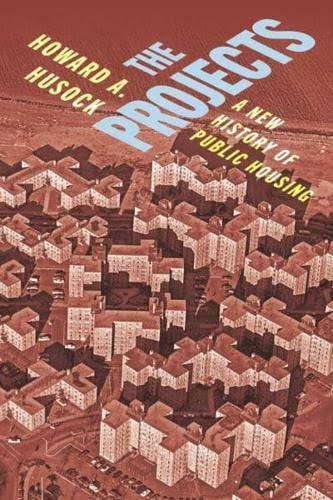
Today, no fewer than 1.6 million Americans live in 886,000 public housing units.[6] There used to be far more: between 1937 and the mid-1980s, 1.5 million units were built in the “Projects”, most of them (1 million) between 1950 and 1976.[7] Today, a total of 6.7 million Americans live either in Projects or in a “voucher household”.[8]
Hundreds of thousands of these units have, however, been demolished over the past decades. Today, the Projects are socially troubled areas with high levels of crime. “An analysis of New York police data has found that although residents of public housing make up only 4 percent of New York City’s population, an estimated 20 percent of violent crime, prominently shootings, occur within one hundred feet of public housing.”[9]
The residents of the Projects are poor: only 3 per cent of tenants are married couples with children, and the proportion of Black residents, at 42 per cent, is more than three times as high as in the population as a whole.[10]
Lee Rainwater, a Harvard sociologist who studied the Pruitt-Igoe project in St Louis, quoted residents in his study based on interviews: “There’s too much broken glass and trash outside. The elevators are dangerous. The elevators don’t stop at every floor, so many people have to walk up or down to get to their apartments. There are mice and cockroaches in the building.” Violence and vandalism were commonplace.[11]
Yet it had all begun very differently. The Projects were intended to realise utopian concepts of better housing: it was no longer the market but government planning and administration that would determine how people lived.
According to the author, it all began as early as 1934 with the “Housing Exhibition of the City of New York” in the city’s Museum of Modern Art. In a book published for the occasion, America Can’t Have Housing, the authors made clear that this was not merely about new architecture and housing: “It discusses the radical changes which must be made in our social philosophy and public policy in order to improve the housing condition of the masses of the American people.”[12]
The central thesis was that the market had failed when it came to housing.[13] The volume accompanying the exhibition stated: “Nowhere has laissez-faire failed more dismally than in the field of shelter for the low-income groups. A national housing policy will not make much progress with us until it is generally conceded that housing for these groups never has been and never will be produced for profit.”[14]
The proponents of these ideas agreed that the market had failed in the housing sector. One of the most important initiators, Catherine Bauer, played a central role in bringing about the Housing Act of 1937 and was affectionately referred to as “Communist Catherine”. Another, Philip Johnson, admired Adolf Hitler, attended the Nazi Party rally in Nuremberg and supported the antisemitic radio preacher Father Coughlin.[15]
Bauer wrote: “Modern housing means complete new communities planned entirely from the point of view of fullest usefulness and long-time amenity – instead of chaotic subdivision and the erection of dwellings designed only to bring quick speculative profits. It means that rentals must be geared to the capacity to pay and not to the ‘market’.”[16] Her book Modern Housing was illustrated with photographs of European projects, including examples from Hitler’s Germany and Stalin’s Soviet Union.[17]
The visionaries were without exception intellectuals who believed that a perfect society and perfect housing could be planned at a desk, with their own aesthetic sensibilities serving as the guiding principle. It never occurred to them to involve the people for whom the Projects were intended. “Bauer et al would be the ones choosing the architects, the locations, and the modernist housing style. It is hard to see the process as anything else but one of elites – of different social class and even religion – deciding how the working class was meant to live.”[18]
It was not voters or builders who had demanded the concept of the Projects, but “essayists and ambitious architects”.[19] The conviction they all shared was that capitalism had failed in the housing sector and that “a marriage between government and modernist architects and planners could create a new and better kind of city, one that would uplift its residents in campus-style oases of towers set in parks”.[20]
Le Corbusier, one of the most influential intellectual pioneers of the new movement, described the city of the future in his 1924 book Urbanisme, first published in English in 1929 as The City of Tomorrow. It was a city in which “the plan must rule”, with everything organised by the state and designed by architects who followed his vision.[21]
This way of thinking is typical of the constructivism repeatedly criticised by Friedrich August von Hayek, namely the idea that a society and its economic order can be consciously shaped according to a rationally devised plan. Hayek criticised this pretence of knowledge because no individual and no central planning authority possesses the dispersed knowledge of millions of people that would be necessary to manage a complex society.
Many successful institutions, such as the market, law or language, are not the result of conscious planning but have developed through a long evolutionary process without anyone having centrally designed them.
The prerequisite for creating something entirely new and utopian was, of course, the elimination – indeed, the violent and brutal elimination – of everything that had developed organically. This applied in particular to the structures referred to as “slums”.
They had to make way even when their residents resisted and when there was not enough room in the Projects that replaced them to accommodate everyone. Time and again, residents resisted having their homes razed to the ground and being forced to move into the new Projects.[22] In some cases, for example in Detroit, votes were held on whether the neighbourhoods should be destroyed, but opponents won more often than supporters.[23]
Indeed, living conditions in many of the neighbourhoods described as slums were terrible: overcrowded, dark and a reflection of social problems. But they could also be described more positively as spontaneously evolved social structures populated by hardworking immigrants and small-business owners.
The author writes about one neighbourhood in New York: “Theirs was an unplanned, chaotic and spontaneous place, certainly with flaws. Yet it is hard to be at all certain that residents and business owners would, if asked, through translators, have agreed to be relocated to a high-rise tower set in a ‘park’ without any cross streets and all without any stores or businesses. They were certainly not surveyed as to their opinions.”[24]
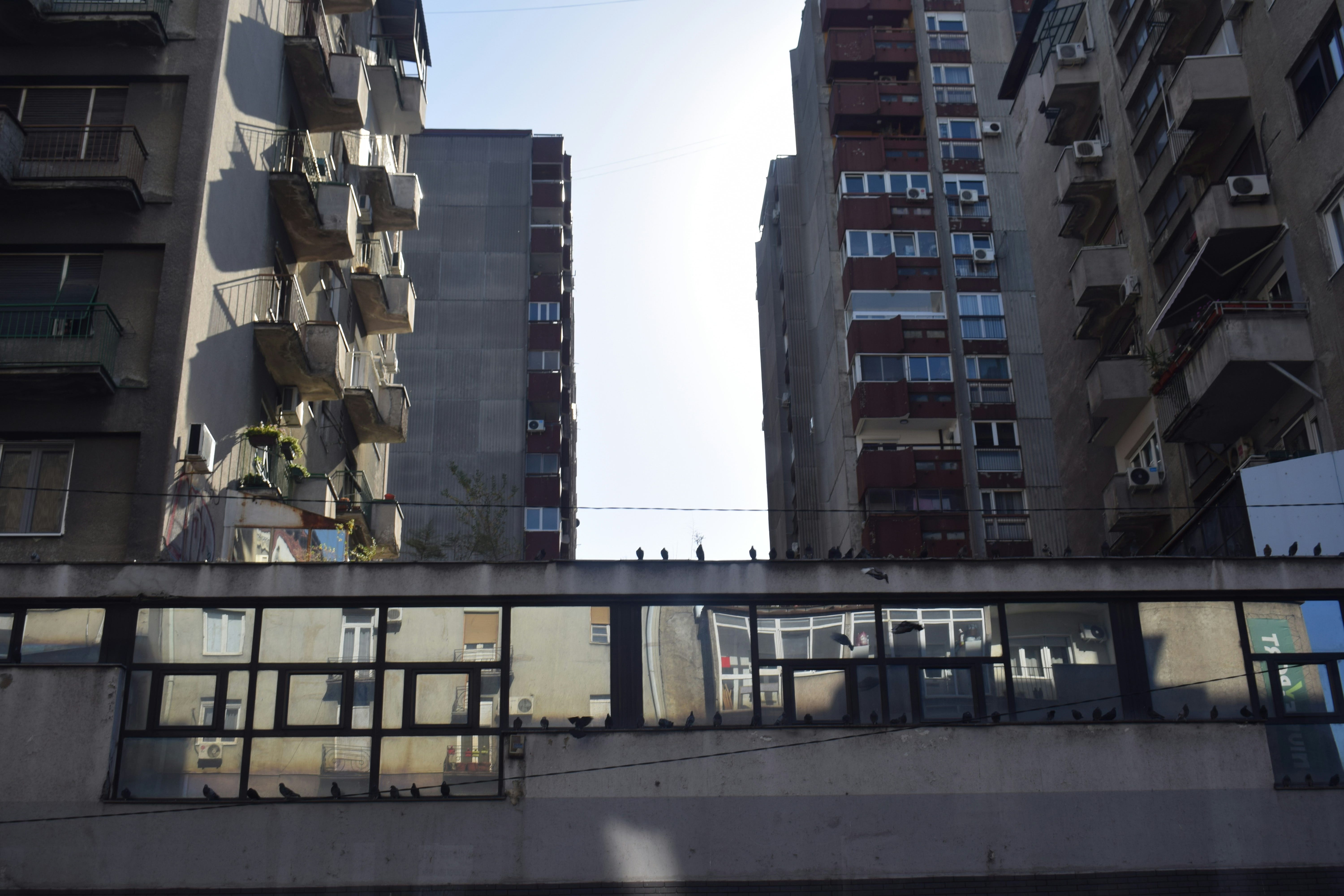
So-called “slum clearance” meant the violent destruction of spontaneously evolved structures, usually without consulting the tenants and owners whose property was expropriated. And it was not just housing that was affected. In one of the demolished slums, in addition to more than 10,000 dwellings, there were 137 food stores, 118 bars and restaurants, 86 barber shops and beauty parlours, 80 churches and missions, 24 dry cleaners and 6 funeral homes.[25]
Yes, the slums were overcrowded and much was wrong with them. “But they teemed with life: with apartments above stores, with churches and synagogues, and newspapers and barber shops. They buzzed with what we call civil society: the social clubs and charitable groups born through the efforts of residents and neighbors.” Since most slums were predominantly inhabited by Black Americans, resistance emerged under the slogan “Slum clearance is Negro clearance”.[26]
What replaced the demolished slums initially seemed better. In the early years, when the developments were new, they were usually clean and attractive, and many residents enjoyed living there. But their character changed increasingly over time. Originally conceived for working-class families on average incomes, they increasingly became poorhouses and centres of social problems.
The rents were insufficient to cover maintenance. Government administration was hopelessly overwhelmed and incapable, and the problems grew worse year after year. Bauer, the most prominent intellectual pioneer of the housing and social programme known as the Projects, eventually acknowledged its failure herself: “Life in the usual public housing project just is not the way most American families want to live. Nor does it reflect our accepted values as to the way people should live.”[27]
In 1973, the then US President Richard Nixon stated: “Leaders of all political persuasions and from all levels of government have given a great deal of thought in recent years to the problem of low-income housing. Many of them agree that the federally subsidized housing approach has failed.”[28]
In many respects, the new ghettos were even worse than the old ones. “In the projects, there were, by design, no locally owned businesses or commercial streets. No extra income could be (legally) realized by renting a room to someone who might otherwise be without shelter.”[29] There was no longer any private home ownership here; renting was the only option.
The Projects were intended to replace the slums, but in reality, after their promising beginnings, they themselves became slums, often worse than those that had been demolished to make way for them. Following Nixon’s moratorium in 1973, other concepts increasingly came to the fore. Hundreds of thousands of units were demolished, and the new fashion was “mixed communities”, which sounded good on paper but did not correspond to what many Americans wanted.
The voucher system also creates perverse incentives, since rent is calculated as a percentage of income. This means that as income rises, tenants have to pay higher rents, leaving many residents with little motivation to earn more. Maintaining the completely run-down Projects was often even more expensive (per square metre) than building a new average-sized house.[30]
The problems of government-organised housing were similar to those in East Germany. In 1989, when East Germany was nearing its end, 65 per cent of all homes – including the 3.2 million built after the war – were still heated by coal stoves.
Twenty-four per cent had no private toilet and 18 per cent had no bathroom. The provision of lifts, balconies and modern kitchens was even more limited. Forty per cent of blocks of flats were considered severely damaged, and 11 per cent were completely uninhabitable.
The author shows that one government-run system was replaced by another, but the new ideas failed as well. What remained unquestioned was the constructivist and statist approach, according to which the market had supposedly failed in the housing sector and government concepts and plans, often devised by well-meaning intellectuals, were therefore the solution.
[1]Phil Gramm, Robert Ekelund and John Early, The Myth of American Inequality: How Government Biases Policy Debate (Rowman & Littlefield, 2022), p. 14.
[2]Gramm, Ekelund and Early, The Myth of American Inequality, p. 29.
[3]Gramm, Ekelund and Early, The Myth of American Inequality, p. 29.
[4]Gramm, Ekelund and Early, The Myth of American Inequality, p. 26.
[5]Gramm, Ekelund and Early, The Myth of American Inequality, p. 35.
[6]Howard A. Husock, The Projects: A New History of Public Housing (New York University Press, 2025), p. 4.
[7]Husock, The Projects, p. 37.
[8]Husock, The Projects, p. 146.
[9]Husock, The Projects, p. 1.
[10]Husock, The Projects, p. 1.
[11]Husock, The Projects, p. 106.
[12]Quoted in Husock, The Projects, p. 11.
[13]Husock, The Projects, p. 19.
[14]Quoted in Husock, The Projects, p. 19.
[15]Husock, The Projects, p. 40.
[16]Quoted in Husock, The Projects, p. 28.
[17]Husock, The Projects, p. 34.
[18]Husock, The Projects, p. 65.
[19]Husock, The Projects, p. 7.
[20]Husock, The Projects, p. 15.
[21]Quoted in Husock, The Projects, p. 27.
[22]Husock, The Projects, p. 49.
[23]Husock, The Projects, pp. 92–93.
[24]Husock, The Projects, p. 64.
[25]Husock, The Projects, p. 79.
[26]Husock, The Projects, p. 94.
[27]Quoted in Husock, The Projects, p. 114.
[28]Quoted in Husock, The Projects, p. 105.
[29]Husock, The Projects, p. 99.
[30]Husock, The Projects, p. 171.