



Matthew Lesh is a Public Policy Fellow at the Institute of Economic Affairs and a Director at Freshwater Strategy.
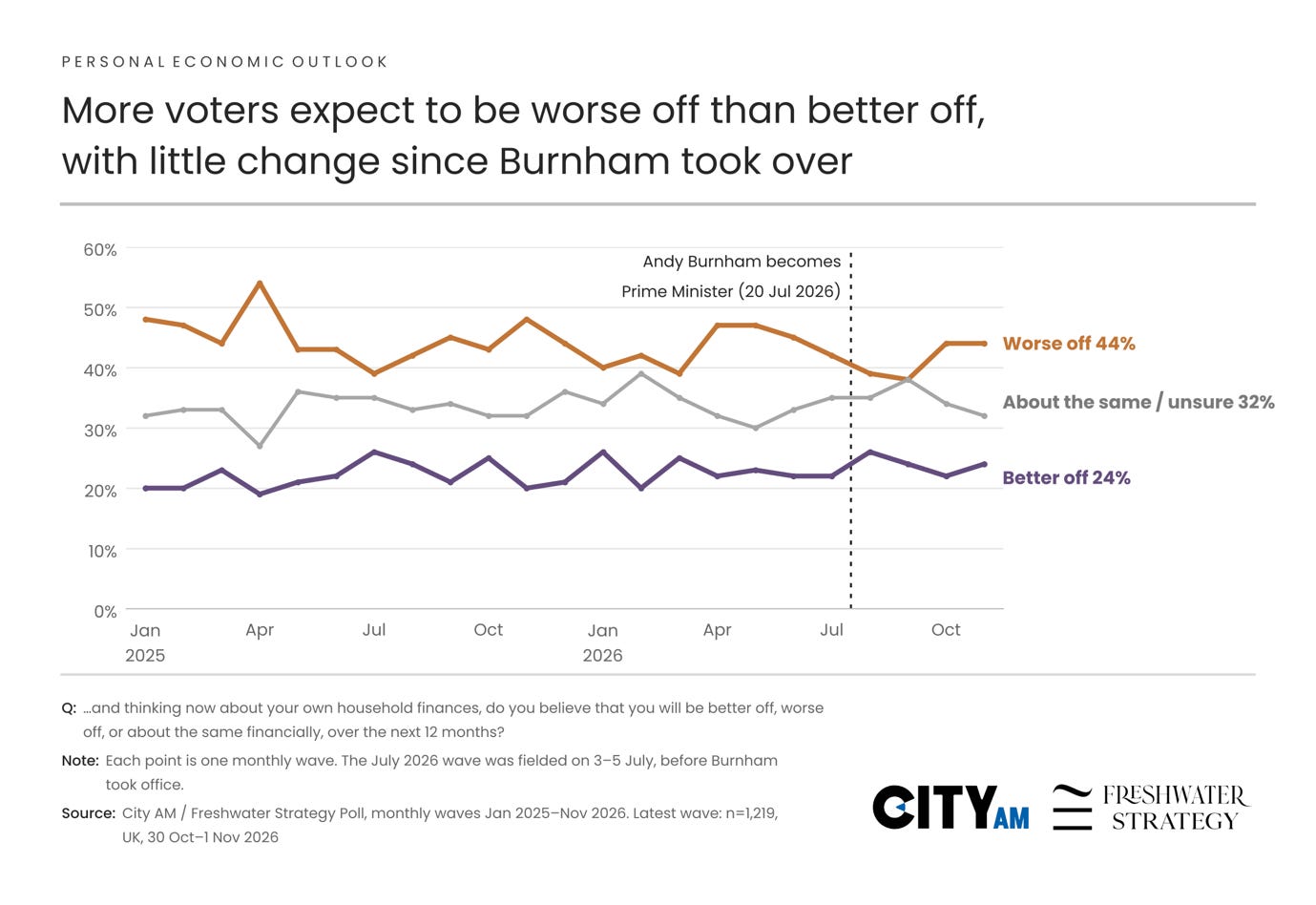
An intriguing duality has emerged in our City AM/Freshwater Strategy poll. Each month, we ask a series of questions not only about vote share (Labour is up to 30 per cent, Tories and Reform down at 22 per cent each) and topical policy issues (the Budget has been received with a collective sigh of relief, with few excited for it or particularly concerned), but also about how people see the economy and their own financial position.
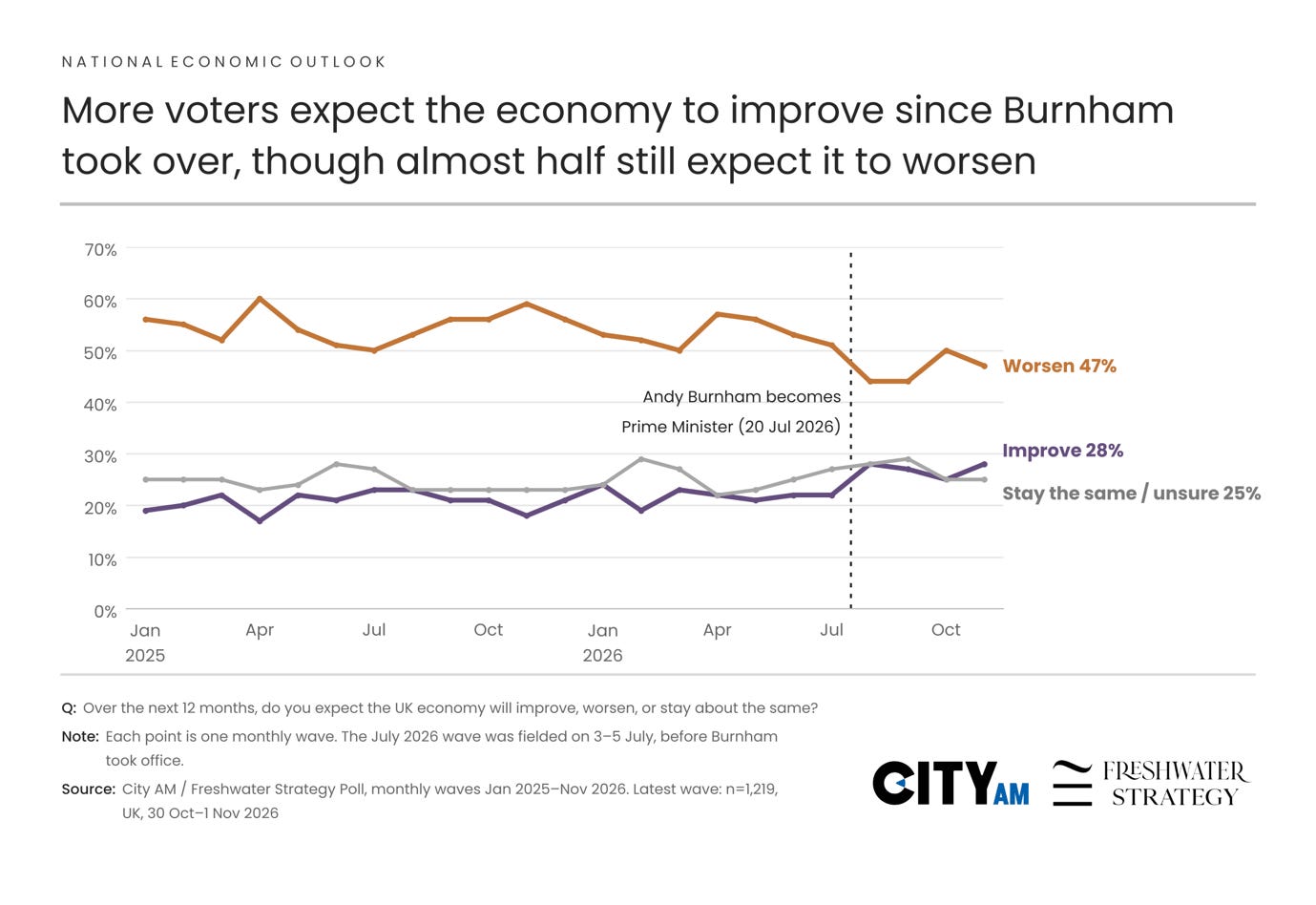
In news that will undoubtedly be welcomed by the Government, there has been an increase in the number of people who believe the country is heading in the right direction and that the economy will improve over the next 12 months. Almost a third (31 per cent) now say the country is heading in the right direction, the highest since our tracking began and up from 22 per cent before Prime Minister Andy Burnham took office, while 28 per cent expect the economy to improve over the next year, up from 22 per cent.
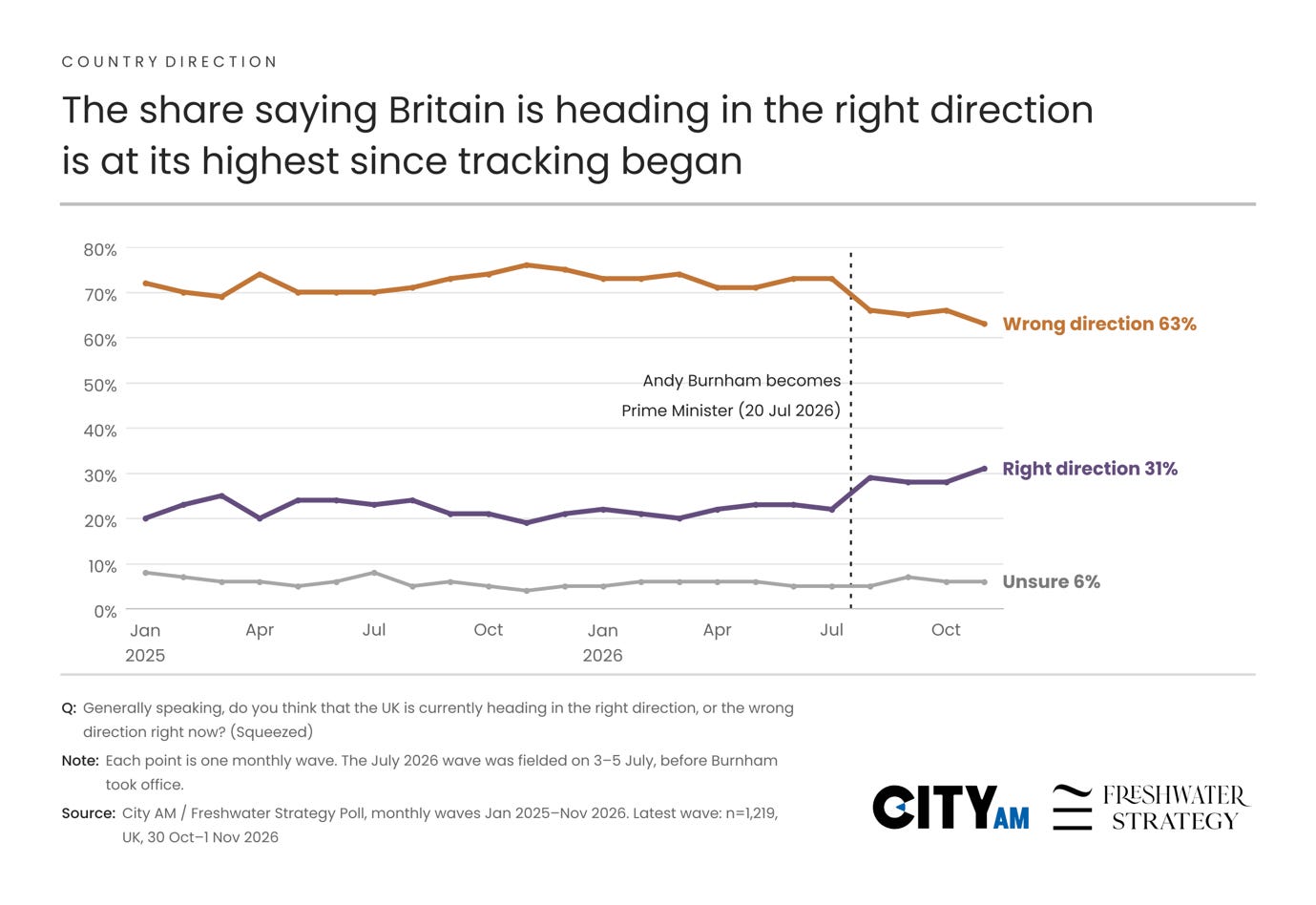
None of this should be confused with a particularly strong result. Most people do still think things are going badly and the economy will worsen: almost two-thirds (63 per cent) say the country is heading in the wrong direction, and almost half (47 per cent) expect the economy to worsen over the next year, against just 28 per cent who expect it to improve.
But a new trend has to start somewhere, and this is still a positive movement. There really has been a post-Burnham vibe shift, and that’s a big political victory after several miserable years in a row. People really do want hope for the future, and that in itself can potentially have positive economic consequences.
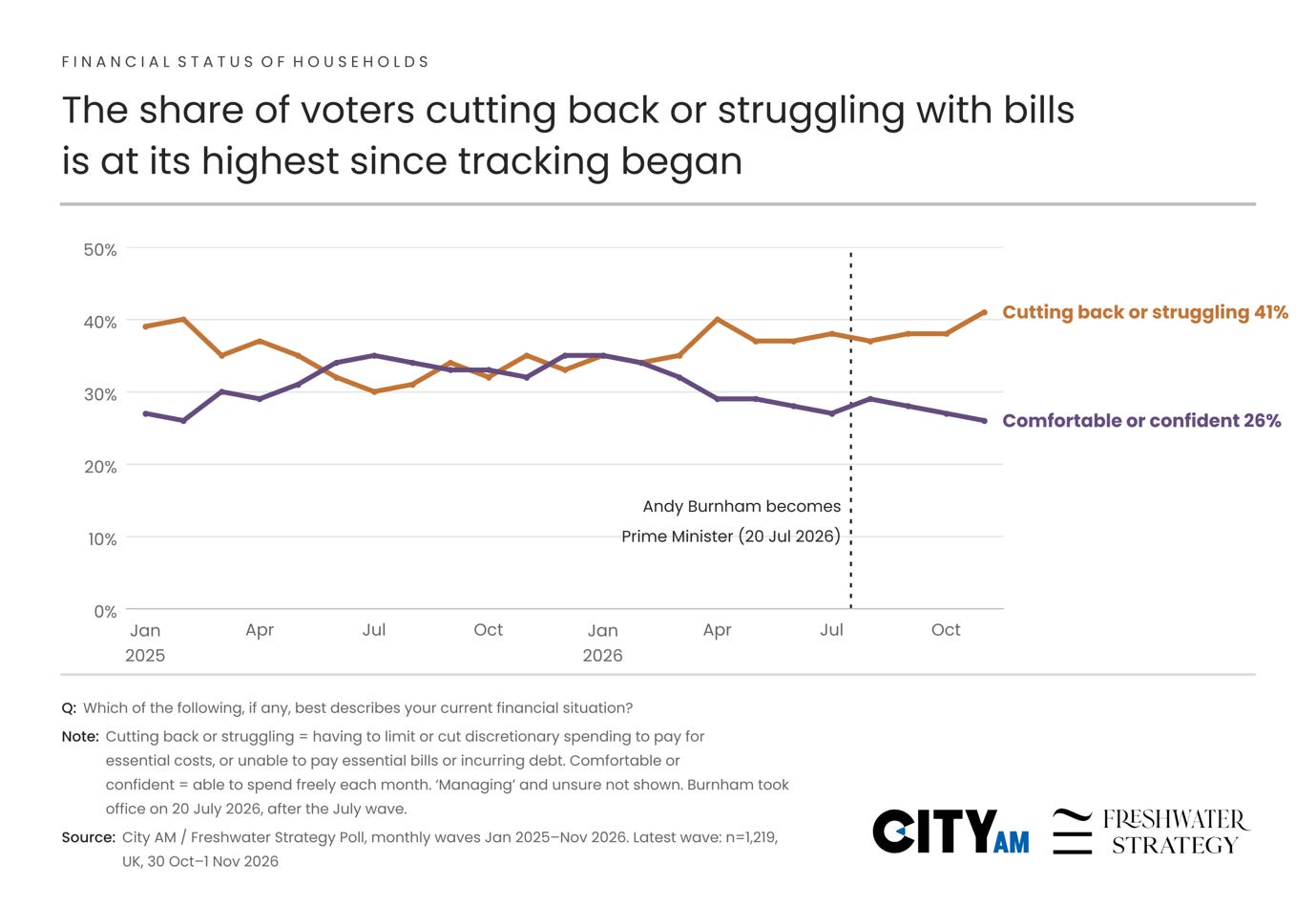
On the other hand, just as important, if not more so, is people’s personal experience, which is going in the opposite direction. Since Burnham took office, the share of voters cutting back or struggling with essential bills has risen from 38 per cent to 41 per cent, the highest since our tracking began in January 2025, while those who are comfortable or confident about their finances have slipped to 26 per cent, the joint lowest on record.
We also asked voters which of five statements best describes their current financial situation, ranging from “confident”, able to spend freely each month, to “troubled”, unable to pay essential bills or taking on debt to do so. Two in five (41 per cent) now say they are either having to limit or cut discretionary spending to cover essentials (31 per cent) or are unable to pay essential bills at all (10 per cent), putting them into the financial stress category.
This is the highest level since our tracking began in January 2025, up from 38 per cent before Burnham took office. Just a quarter (26 per cent) are comfortable or confident about their finances, the joint lowest on record, and more than one in five (22 per cent) say they could not find a way to pay an unexpected £500 bill.
The squeeze is about to tighten. Energy bills are forecast to rise sharply in the new year as the conflict in the Middle East continues to disrupt gas supplies. Cornwall Insight expects Ofgem’s price cap to rise 16 per cent in January, to around £1,999 a year for a typical household, and some suppliers forecast even higher increases. Ofgem is due to confirm the figure on 25 November.
Food prices are also picking up again: the British Retail Consortium found food inflation rose to 2.9 per cent in October, from 2.5 per cent the month before. Then there are mortgages. Our survey found that half of mortgage holders (52 per cent) say they will come off their fixed-rate deal by the end of 2028, and almost three in five (58 per cent) of those on a fix expect their monthly payments to rise.
The Office for Budget Responsibility’s forecasts, published alongside the Budget, are particularly grim. Growth next year has been cut from 1.6 per cent to around 1 per cent, inflation is expected to average 3.4 per cent in 2027, and unemployment is forecast to peak at 5.1 per cent. Real household disposable incomes, what families have left after tax and inflation, are forecast to fall this year and next, leaving them just 2 per cent higher in 2030 than before the pandemic. It’s all pretty miserable.
So while hope for the future may have ticked up, today’s reality is different and trending in the wrong direction. While it is imaginable that Burnham will be able to maintain the optimism for a bit longer, it’s hard to see this being forever, particularly as reality comes crashing down.