


Jorge Ruiz is a political economy and public policy researcher at Fundación Internacional Bases and the Ecuadorian Institute of Political Economy, and a project associate at the Tomás de Mercado Society. His work examines institutions, spontaneous order and markets in modern democracies.
When we think of drug trafficking, we tend to picture drug seizures, armed clashes, arrested cartel leaders and vast sums of illicit money. Yet behind these images lies a less-discussed economic and political reality in Mexico. Some of the country’s biggest recruiters are not businesses but criminal cartels.
A study published in Science in 2023 estimated that Mexican cartels had between 160,000 and 185,000 members in 2022, a figure comparable to the workforce of some of Mexico’s largest companies. Among the country’s most prominent criminal organisations are the Jalisco New Generation Cartel (CJNG) and the Sinaloa Cartel. Of the estimated 175,000 active members, the study attributed 17.9 per cent to CJNG and 8.9 per cent to the Sinaloa Cartel.
Beyond these figures, this phenomenon reveals the consolidation of parallel economic structures capable of recruiting workers, controlling territory and imposing rules on entire communities.
The question, then, is not simply how these organisations have grown so large, but how revenues from illegal markets can be transformed into economic, territorial and political power.
The experience of Mexico and the rest of Latin America exposes a paradox. Prohibition can create extraordinary opportunities for illegal suppliers, while the violence used to dominate these markets destroys the conditions necessary for economic freedom.
When crime replaces the state
Across various regions of Mexico, particularly along the southern border with Guatemala, criminal organisations have expanded their activities far beyond drug trafficking. They control trade routes, extort businesses, recruit workers and impose a form of authority that competes with state institutions.
This expansion cannot be explained solely by the absence of the state, because it also reflects other factors such as corruption, institutional weakness and the authorities’ inability to guarantee security, protect property and enforce the law.
The economic consequences are profound. When an entrepreneur must devote part of their income to extortion payments, their ability to invest, hire workers or compete diminishes. Productivity ceases to be the main determinant of success, which increasingly depends on relationships with those exercising territorial control.
Paradoxically, these organisations may offer income, protection and even opportunities for economic mobility to certain individuals, while depriving others of the freedom to pursue independent productive activities. Moreover, criminal recruitment is not always voluntary; it may also be sustained through threats and intimidation.
The result is a parallel economy in which exchange no longer depends solely on individual decisions and voluntary agreements, but becomes conditional upon submission to coercive authority.
Criminal economy beyond borders
Mexico is not an isolated case. Criminal networks associated with CJNG and the Sinaloa Cartel illustrate how drug trafficking can become embedded in transnational economic structures, exploiting trade routes, logistics networks and alliances with local organisations.
In Guatemala, cooperation between Mexican cartels and local criminal organisations, including groups such as Los Huistas and the Los Mendoza network, has contributed to the development of trafficking corridors connecting Mexico with Central America.
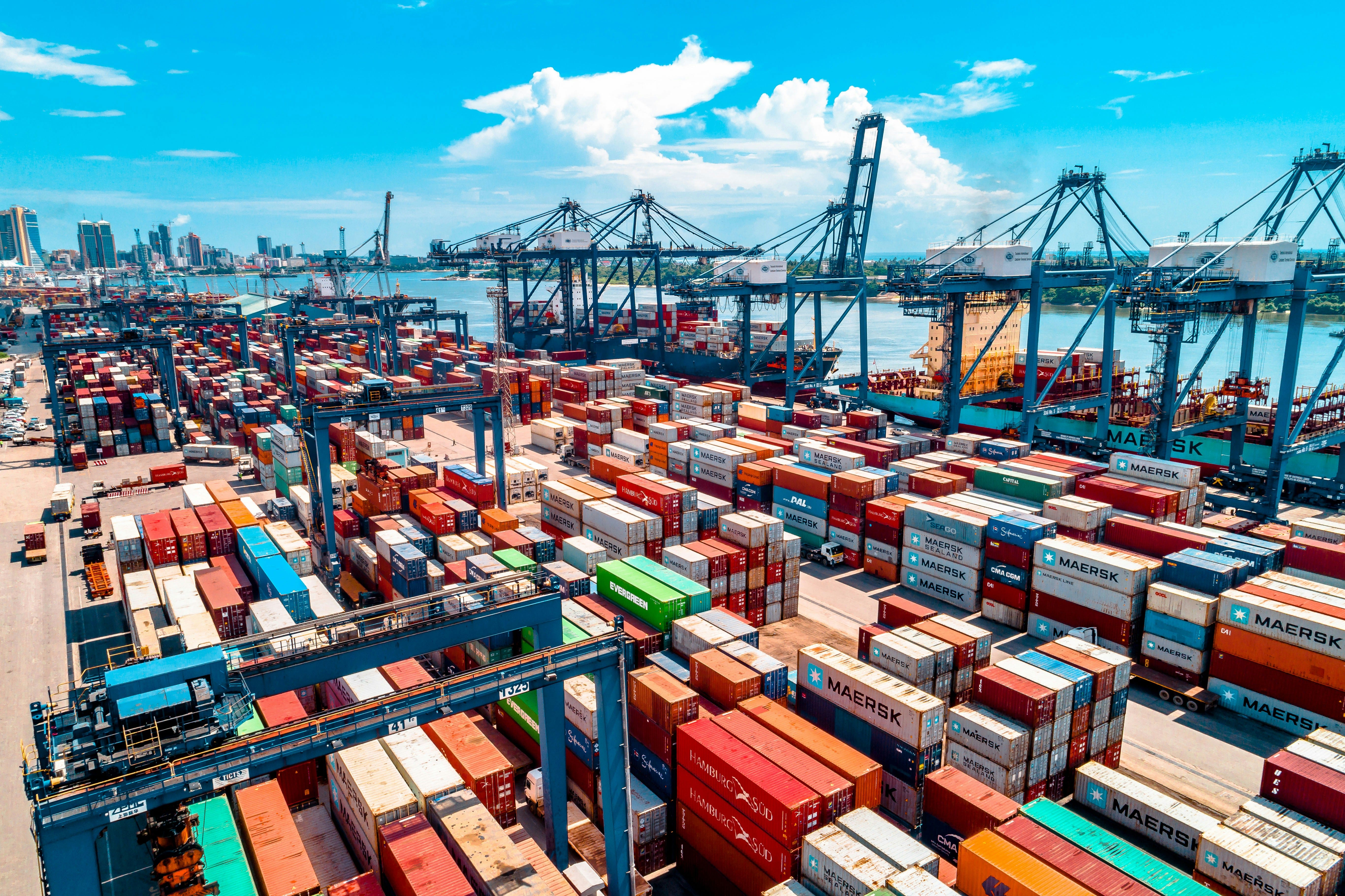
Further south, Ecuador’s growing importance within international cocaine trafficking routes has coincided with disputes over strategic ports and logistics corridors, including connections between Guayaquil in Ecuador and Manzanillo in Mexico. Local criminal organisations such as Los Choneros and Los Lobos have gained prominence amid escalating violence, while their relationships with Mexican criminal networks reflect the increasingly transnational character of the drug trade.
Although institutional conditions in these countries differ, they reveal a common mechanism. Revenues from illegal markets can finance structures capable of exercising violence, controlling economic activity and challenging public authority.
The problem, therefore, extends beyond the trade in prohibited substances. It encompasses extortion, money laundering, smuggling and the infiltration of legitimate economic activities through coercion and subordination to criminal organisations.
A criminal economy thus ceases to be merely clandestine when it acquires the power to determine who may trade, produce or work within a territory, effectively becoming a form of proto-state.
Black markets, red markets and Konkin’s lesson
To understand this transformation, it is useful to revisit the ideas of Samuel Konkin III, the libertarian thinker who developed the concept of counter-economics to explain economic activities conducted beyond state control.
From this perspective, it is essential to distinguish between voluntary exchanges outside the law and criminal activities sustained through violence.
For Konkin, a black market may emerge when the state prohibits transactions that individuals wish to undertake voluntarily and without violating the rights of others. A red market, by contrast, involves aggression, theft and coercion, including acts such as murder.
This distinction helps explain why cartels cannot simply be understood as businesses operating outside state regulation. Their power derives not only from trading prohibited goods, but also from their ability to restrict competition, impose compulsory payments and punish those who challenge their authority.
Prohibition can generate opportunities for extraordinary profits, but it does not, by itself, explain the consolidation of violent organisations, because factors such as corruption, weakness in the rule of law, international demand and the capacity to exercise coercion also play a role.
What begins as an illegal market can, under certain conditions, become a structure of domination over a particular population. Similar patterns have emerged across several Latin American countries.
Freedom against the rule of fear
Latin America’s experience raises a question that may also be relevant to the United Kingdom: what happens when demand for certain goods persists despite their prohibition?
Under Britain’s Misuse of Drugs Act 1971, cocaine remains a Class A controlled drug. Yet official figures show that 2.1 per cent of people aged 16 to 59 in England and Wales reported using powder cocaine in the year ending March 2025, and around 1.1 million reported using a Class A drug of some kind. Meanwhile, the National Crime Agency (NCA) reported that UK cocaine seizures rose from 3.4 tonnes in 2015 to 18.5 tonnes in 2025.
Prohibition has not eliminated demand. Instead, illicit supply continues through international criminal networks operating beyond ordinary legal markets. From Konkin’s perspective, this creates the conditions for black markets, in which transactions involving prohibited goods may nevertheless take place through voluntary exchange. But the existence of a black market does not mean that every activity within it remains voluntary.

The UK offers an example of how illegal drug markets can also sustain a form of coercion associated with red markets. The criminal networks operating through county lines distribute drugs between different areas of the country, frequently exploiting children and vulnerable adults to transport or store drugs and money. According to the Home Office, these organisations often rely on intimidation, violence and coercion.
The distinction lies in that buying a prohibited substance may be a voluntary exchange, but forcing someone to participate in its distribution introduces an entirely different relationship, one based on the violation of individual rights.
The coercive nature of these networks is a reality. According to Catch22, girls accounted for 22 per cent of the children supported by its national County Lines Support service in 2025, up from 15 per cent the previous year. In April 2026, The Guardian also reported how vulnerable young people can be manipulated through apparently romantic relationships and subsequently forced into transporting drugs or money.
Such practices illustrate the distinction between an illegal transaction, which may involve voluntary exchange, and a coercive criminal economy, which depends on the exploitation and subordination of individuals.
This raises a wider economic question. Can prohibition unintentionally sustain profitable opportunities for organisations whose power depends on coercion rather than voluntary exchange?
This does not mean that the UK faces the same degree of territorial domination observed in some parts of Mexico or Latin America. Rather, it illustrates how similar economic incentives can operate under different institutional conditions.
“Economic freedom cannot flourish where violence determines the rules of exchange between individuals.”
Where illegal markets offer substantial profits, organised criminal groups may seek to control distribution, suppress competition or enforce obligations through threats and violence. The NCA identifies drug trafficking as an important driver of organised crime-related violence in Britain, including offences involving firearms and kidnapping.
Illegality does not necessarily eliminate exchange, but it can push it into markets where participants lack ordinary legal mechanisms for resolving disputes. This creates incentives that criminal organisations can exploit, particularly when institutions are unable to constrain their power.
Discussing the economic consequences of prohibition does not mean justifying criminal cartel activities. Nor does it mean that legalising certain substances would automatically eliminate organisations that have already diversified into extortion, fuel theft and fraud.
The underlying question is how public policies, economic incentives and institutional quality can encourage or constrain the accumulation of criminal power and, in some cases, allow parallel structures resembling a narco-state to emerge.
In Law, Legislation and Liberty, F.A. Hayek explained how spontaneous order can emerge from the interactions of individuals without central direction. The order imposed by cartels represents precisely the opposite, a system in which economic decisions are subordinated to intimidation and force.
Free markets depend on more than the ability to buy and sell. They also require property rights, legal certainty, freedom of competition and, fundamentally, the ability to refuse a transaction without fear of reprisals.
Confronting organised crime therefore requires more than increasing arrests or deploying security forces. It also demands stronger institutions that protect peaceful exchange, greater opportunities for legitimate economic activity and an examination of the unintended consequences of prohibition.
The experience of Mexico, Guatemala and Ecuador demonstrates that economic freedom cannot flourish where violence determines the rules of exchange between individuals.
Unlike a black market, which may arise from the need to exchange goods prohibited by state regulation, a red market is sustained by the domination of individuals and communities. Its purpose is not merely to trade, but to control the economic lives of those who fall under its power.