


Matthew Bowles is a Senior Policy Researcher at the Prosperity Institute.
London is up there with the best cities in the world. This isn’t just personal bias. Described as the “Capital of Capitals”, London currently claims the top spot of the World’s Best Cities ranking in 2026, the 11th consecutive year it has done so. Having had a successful post-COVID recovery, in 2024 international travellers spent a little over £17bn in London, surpassing pre-pandemic levels and higher than other global hubs like Dubai and New York. As someone who works and spends plenty of time in London, it isn’t difficult to imagine why it ranks first, second and third, in Best Cities’ Prosperity, Lovability and Liveability indexes, respectively.
Of course, London is not perfect. The Tube runs a smaller proportion of its scheduled services than it did before the pandemic, with reliability sitting at about 90 per cent, down from the mid-to-high nineties. The GLA precept, City Hall’s portion of council tax, has been consistently increasing, rising from £276 for a Band D property in 2016/17 to £471 in 2024/25.
Shining a light on such dysfunction in a constructive manner should be lauded. But too often, when facing constructive criticism, London’s Mayor, Sadiq Khan, has the tendency to shove cotton wool into his ears.
This is no more evident than when it comes to crime, and whether the capital is a “lawless dystopia in decline”. Writing in The Times last Thursday, presumably to coincide with the launch of a £7m international campaign, delivered via London & Partners, to promote the capital and combat “a surge in online disinformation” – Khan was on the defensive.
In the piece, Sadiq Khan correctly pointed out that London’s homicide rate has fallen to its lowest level on a per capita basis since records began. On this he is correct: compared with our European peers, London has a lower homicide rate than Paris or Berlin, as well as every US state.
Serious crime has fallen, not just in London, but across Britain. We have experienced what is called a “crime drop” over the past 30 years, and this ought to be celebrated. But the crimes that Londoners and commuters experience day-to-day cannot be dismissed simply because serious crime might be on a downward trajectory.
Phone thefts, a major source of distress and concern in the nation’s capital, may not qualify as “serious” crime, but they are a serious problem. Over 170 mobile phones a day were stolen in London last year – more than one every ten minutes. London is particularly exposed to this problem, given the sheer volume of human traffic moving through the capital each day. Many individuals have pre-empted the risk by taking out phone insurance, shielding themselves against the potential financial hit while passing on the wider costs. But in one of the world’s greatest cities, should there really be a feeling that somebody can take your personal property, with the chances of being caught sufficiently low to make the crime worthwhile?
This is not, as some might claim, merely "part of life in a big city". London has a rate of 589 phone thefts per 100,000 people, compared with 344 in Paris; the only European city higher is Madrid. Pre-pandemic, robbery rates in London were rising, bucking a downward trend seen in other global cities. Rates have returned to pre-pandemic levels and are substantially worse than those in New York.
The same is true of antisocial behaviour (ASB), and Transport for London provides a useful illustration. The vast majority of ASB – quite often rowdy groups, playing loud music or open drinking – goes completely unreported. Even when ASB is reported, as a reader of Economic Affairs anecdotally pointed out a few weeks back, complainants are met with a text message asking whether or not the victim deems themselves “vulnerable”.
Instead, the true scale of ASB is captured by customer experience and sentiment metrics. According to recent TfL Customer Pulse survey data, 39 per cent of passengers report feeling worried or unsafe during their journeys. Given that TfL handles about 11 million journeys each day, taken by several million people, and that 9 per cent have been completely or temporarily deterred from using the transport network due to an incident they experienced, this is not a figure that Khan can easily disregard. It is millions of people, every day.
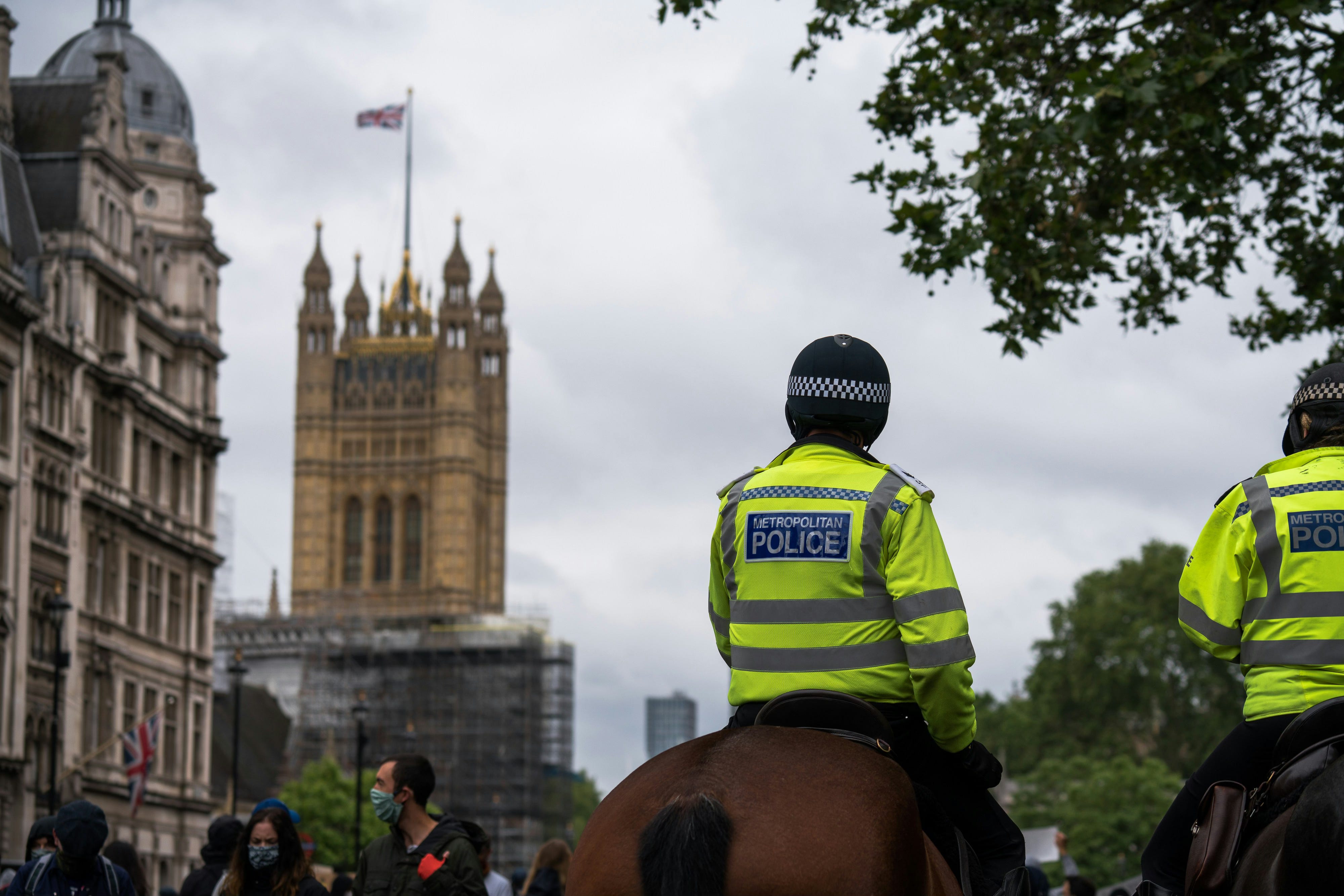
This is where the proactive policing model under the banner of Broken Windows theory deserves a serious hearing. Developed by James Q. Wilson and George Kelling in the 1980s, the theory suggests that visible disorder can create an environment in which further disorder becomes more likely, and that therefore the policing of low-level disorder is essential in stopping the spread and escalation of crime.
This is the subject of a recent Prosperity Institute paper, “Broken Windows Britain”, which highlights how the British police can use existing powers and increase their presence to diminish the frequency of low-level crime and antisocial behaviour. Some solutions to the problems facing London today include police targeting of crime hotspots and increased collaboration between the police and local authorities, as has been successfully seen in Vincent Square, Victoria, through such measures as enhanced patrols and encouraging stores to report shoplifting.
London’s falling homicide rate is undoubtedly welcome news. But it should not become an excuse for complacency and denial about crime more broadly. Cities become safer in one respect, whilst gradually becoming less pleasant in another.
Londoners are leaving, with over 420,000 moving out over the last 12 months, the first population decline in the capital for 37 years, outside the Covid pandemic. The best way to stop this outflow and defend the reputation of the British capital is not a £7m promotional campaign. That pot could be better used by the Met, encouraging them to proactively enforce rules that make public spaces usable. Sadiq Khan is right to defend London against exaggerated claims of decline, but must also be willing to take the rough with the smooth and acknowledge that, for many, London is not as safe as headline figures on serious crime might suggest.
Going to London these days is a very unpleasant experience and a large proportion of its inhabitants can only be described as feral.
Many of us don't believe the statistics collected by the police and presented by the Home Office. And secondly the homicide rate has been falling for decades due to huge advancements in emergency medicine in the last 50 years. Everything from turning ambulance drivers into para medics to the expertise gained from treating the effects of gun and blast injuries in Northern Ireland, the Falklands War, Iran, Afghanistan etc has massively improved medics ability to keep victims alive. From talking to a friend who is a trauma surgeon at St. Marys in London, the majority of her work is keeping people alive and patching them up from the knife wounds. And practice makes perfect.