


Ebeling in Brief is a weekly series, published every Saturday, of shortened chapters from economist Dr Richard M. Ebeling’s Liberty and the History of Economic Ideas: From the Ancients to the Austrian Economists (2026).
This is instalment No. 2: David Hume
Dr Richard M. Ebeling is an American libertarian author who was the president of the Foundation for Economic Education from 2003 to 2008.
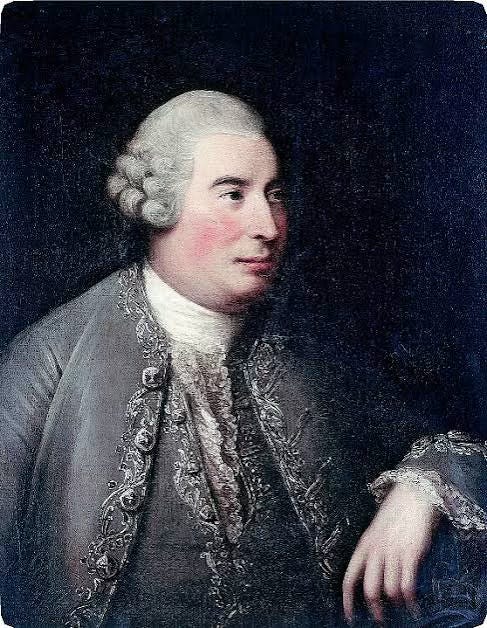
David Hume (1711–1776) was one of the most prominent of the Scottish Moral Philosophers. He is particularly famous as a philosophical sceptic, who in his book An Enquiry Concerning Human Understanding (1748) questioned whether man’s reason and reasoning ability could successfully apprehend reality with any complete degree of certainty. He also argued that reason followed men’s “passions” rather than reason being a guide for or a fully successful check upon men’s emotions and desires.
David Hume’s Contributions to Economic Understanding
In addition, and for our purposes in particular, David Hume was an important and distinctly original contributor to economic theory and policy. It was in his work Political Discourses (1752) that he made significant contributions to the emerging subject of “political economy”. In these essays, Hume presented a devastating criticism of mercantilist thinking on trade and commerce while at the same time demonstrating the self-regulating and “balancing” forces of the market process.[1] Indeed, it can be argued that if his own writings on various economic themes had been more systematically developed and joined together, it might have been David Hume who became the “father” of modern economics instead of Adam Smith.[2]
Commerce Brings Wealth, Refinement and Freedom
Hume emphasised that commerce and trade were among the most important avenues to raising people’s standards of living and bringing refinement and cultural betterment to a growing portion of a nation’s population. Commerce also served as an important leveller of the material inequality of a society based on political privilege and government-bestowed monopoly. Through trade, a wider variety and quality of goods became available to a growing number of the people, fostering the development of a “middle class”.
At the same time, growing wealth among more and more members of society acted as a means to restrain and weaken the arbitrary power of tyrannical governments, as a larger percentage of the population had the means to free themselves from government dependency and control. Or as Hume expressed it in his essay “Of Refinement in the Arts”:
“But where luxury nourishes commerce and industry, the peasants, by a proper cultivation of the land, become rich and independent; while the tradesmen and merchants acquire a share of the property, and draw authority and consideration to that middling rank of men, who are the best and firmest basis of public liberty.”[3]
Governments and special-interest groups, Hume feared, always want to use and abuse political authority and influence to gain much for themselves at the expense of the ordinary members of society. And as a society grows in wealth, there is more for the government to siphon off through taxes for its own purposes and for interest groups to use the state to plunder and manipulate. With the emergence of a middle class that increasingly supports itself through commerce and industry, however, citizens have the financial means to resist these encroachments by the state. Or as Hume said in his essay “Of Commerce”: “So the luxury of the individuals must diminish the force and check the ambition of the sovereign”.[4]
Dangers from Government Spending and Debt
One of the serious dangers from modern governments, Hume warned, was the temptation of those in political authority to resort to deficit spending to cover their expenditures and, over time, impose ruinous national debt upon the citizens of such countries. He said that in the past, governments considered it wise to accumulate surpluses during peaceful and secure times to have the financial wherewithal to cover the costly and unexpected expenses of bad times, especially to fund the costs of wars. But in more modern times, governments found it far more advantageous to spend borrowed monies with abandon, especially since this enabled those in political power to win the favour of many in society on whom the deficits are spent. Said Hume:
“It is very tempting to a minister to employ such an expedient, as enables him to make a great figure during his administration, without overburdening the people with taxes, or exciting any immediate clamours against himself. The practice, therefore, of contracting debt will almost infallibly be abused, in every government. It would be scarcely more imprudent to give a prodigal son a credit in every banker’s shop, than to empower a statesman to draw bills, in this manner, upon posterity.”[5]
Hume also drew attention to a then-new argument (one that was heard again in the twentieth century) that we need not worry about such government borrowing and debt because “we owe it to ourselves”. As Hume explained, “We have, indeed, been told, that the public is no weaker upon its debts; since they are mostly due among ourselves, and being as much property to one as they take from another. It is like transferring money from the right hand to the left; which leaves the person neither richer nor poorer than before.” Hume feared that “such loose reasonings and specious comparisons will always pass, where we judge not upon principles”.[6]
It is, after all, not necessarily the same persons upon whom borrowed monies are spent and those from whom future taxes will have to be taken to pay back that debt. And, therefore, it is really giving to the Peters of the present and taking from the Pauls in the future. These pockets are not in the same pair of trousers.
Hume summarised in his essay “Of Civil Liberty” the consequences of such fiscal follies: “The source of degeneracy, which may be remarked in free governments, consists in the practice of contracting debt, and mortgaging the public revenues, by which taxes may, in time, become altogether intolerable”, with bankruptcy facing the government.[7]
Hume’s Refutation of the Balance-of-Trade Argument
Undoubtedly, David Hume’s most important contribution in the history of economic ideas is his reply to the mercantilist policy views found in his essay “Of the Balance of Trade”, in which he challenged the argument for government’s fostering a permanent “positive” balance of trade.
People and governments had no reason to fear that gold and silver money would continue to haemorrhage out of a country until that nation was penniless, nor should they think that there was no natural market check or response to a continuous increase of gold and silver money into a country. Both types of money flows brought with them their own price and profit responses to ensure a restored balance and coordination in the buying and selling of goods across borders and a market-determined distribution of specie money between and within countries participating in such international trade.
David Hume’s analysis often has been considered the devastating critique of one of the fundamental assumptions underlying the mercantilist system. The famous Austrian-born economist Gottfried Haberler (1900–1995) said in his Theory of International Trade that “Mercantilism received its deathblow in 1752 when Hume published his Political Discourses”.[8]
Hume on the Benefits Instead of the Jealousies of Trade
Having disproved the mercantilist theory of trade, Hume, in his essay “Of the Jealousy of Trade”, argued for the wider benefits to all from international commerce and association. Through international trade, each nation, he argued, learns new skills and technologies to improve its own productive potentials; widens the circle of goods and services a nation can have access to from countries possessing different resources and climates; stimulates innovation and creative change arising from the competition of foreign manufacturers and merchants; and increases the potentials for intensified division of labour and the higher productivity from more specialised production.
Hume concluded this essay on the jealousy of trade in words that have been famous ever since, warning of the dangers and absurdities that result from government restrictions and controls on international trade and of the benefits to all parties by leaving markets free to the peaceful and voluntary associations of trading partners themselves:
“I shall therefore venture to acknowledge that, not only as a man, but as a British subject, I pray for the flourishing commerce of Germany, Spain, Italy, and even France itself. I am at least certain that Great Britain, and all those nations would flourish more, did their sovereigns and ministers adopt such enlarged and benevolent sentiments towards each other.”[9]
[1] David Hume, Writings on Economics, ed. Eugene Rotwein (Madison: University of Wisconsin Press, 1970); David Hume, Essays: Moral, Political, and Literary, ed. Eugene F. Miller (Indianapolis, IN: Liberty Fund, 1987).
[2] Alexander Gray, The Development of Economic Doctrine (London: Longmans, Green, 1931), 107.
[3] David Hume, “Of Refinement in the Arts”, in Writings on Economics, 28–29; Essays, 277–78.
[4] David Hume, “Of Commerce”, in Writings on Economics, 7; Essays, 257.
[5] David Hume, “Of Public Credit”, in Writings on Economics, 90–92; Essays, 349–52.
[6] David Hume, “Of Public Credit”, in Writings on Economics, 96; Essays, 356.
[7] David Hume, “Of Civil Liberty”, in Essays, 95.
[8] Gottfried Haberler, The Theory of International Trade, with Its Applications to Commercial Policy (London: William Hodge, 1936; first published 1933), 26.
[9] David Hume, “Of the Jealousy of Trade”, in Writings on Economics, 81–82; Essays, 331.
I did feel, when our politicians decided to end free university education, that we were telling our young that debt is acceptable. Debt is commonplace. Debt is good. We have produced graduates with a plethora of next to useless degrees and huge student debt. Where our forebears believed in saving, putting off until tomorrow when they could afford something, our young occupy the 'I want it now, I deserve it now' mindset. We reap what we sow.
There are so many well reasoned works by intellectually gifted people over the last two hundred years or more, here in the UK, on the Continent, the USA and their conclusions and reasoning repeatedly proven to be right, therefore how can it be we continually have those in government and “think tanks” and other assorted buffoons, dedicated to ignoring reasons and to repeating oft-repeated errors, and economic ruination?
Is it some sort of congenital mental disorder, a virus?