


Cllr David Moore is a business owner, Conservative councillor and one of the founding directors of Conservative Friends of CANZUK.
Families and businesses need lower taxes, more customers, more investment and fewer barriers to trade. With the arrival of the Britain’s next Budget, there is an opportunity being missed.
Closer cooperation between Canada, Australia, New Zealand and the United Kingdom, commonly known as CANZUK, offers a practical place to start. I am proud to champion the friendship between our four nations, but friendship alone does not pay wages. The economic case must stand on its own, so here goes.
We are not starting from scratch. Britain’s trade agreements with Australia and New Zealand are already in force. We have a trade continuity agreement with Canada, and since September British businesses have also been able to trade with Canada under the Pacific trade agreement, CPTPP. A prospective CANZUK must build on these arrangements.
We need to go further than conventional trade agreements. The ambition should be to make selling, investing and working across our four countries substantially easier. Combined, the four nations have a nominal GDP of around US$8 trillion. We are already aligned at a similar per capita GDP across CANZUK, with a combined 141.8 million people speaking the same language and sharing a head of state. That is a huge labour market.
Let us start with professional qualifications. Services account for around four fifths of Britain’s economic output. A growth strategy that concentrates only on goods passing through ports misses much of what we have to offer.
There is already progress worth building upon. Britain’s Architects Registration Board has mutual recognition agreements with counterparts in Australia, New Zealand and Canada, making registration easier for eligible architects. These are not automatic rights to practise everywhere, but they demonstrate that regulators can recognise comparable competence without abandoning safeguards.
We should pilot that approach for CANZUK. Why should a qualified professional face unnecessary duplication simply because they are moving between trusted, familiar jurisdictions? Test the genuine differences, protect the public and remove the obstacles that serve no useful purpose.
Australia and New Zealand already offer a wider precedent. Their Trans-Tasman Mutual Recognition Arrangement generally allows goods lawfully sold in one country to be sold in the other, and recognises equivalent occupational registrations, subject to exceptions. We should examine where a comparable approach could work across CANZUK.
That does not require a new supranational bureaucratic blob like the European Union. It requires governments and regulators to recognise one another’s work through mutual recognition, rather than harmonisation, whilst respecting sovereignty.
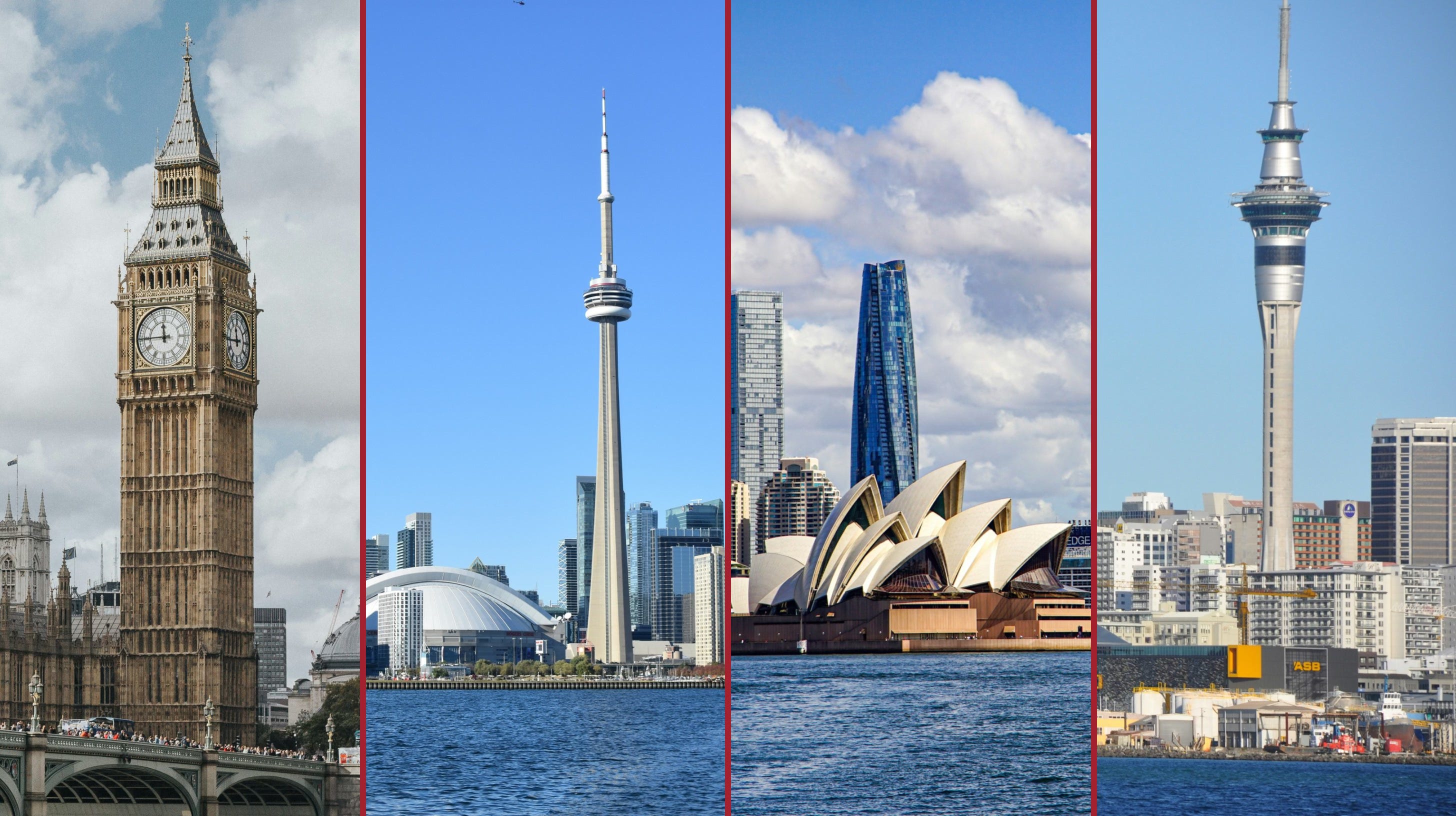
The growth mechanism is straightforward. Lower costs make entering another market more worthwhile. A British firm reaching more customers can spread its investment over more sales. Competition between suppliers can reduce input costs and encourage innovation. Consumers should benefit through lower prices and greater choice. And by making it easier to buy from trusted allies, CANZUK would give businesses more options and leave supply chains less dependent on geopolitical rivals.
Smaller firms should be central to this agenda. Imagine a British manufacturer considering its first Canadian customer. An avoidable certification bill can make a modest order uneconomic. Removing that obstacle could turn an enquiry into an export, and an occasional sale into a lasting commercial relationship.
Skilled mobility should support the same objective. Many Australians work in London and many Britons in Perth; they, like Canadians and New Zealanders, face bureaucratic barriers simply to work in an allied labour market. Make it easier for CANZUK professionals with useful expertise to fill vacancies and help firms expand, whilst retaining national control over low-wage mass immigration. Crucially, success must mean higher output per person and better living standards, not merely a larger population producing a larger headline GDP figure.
We must also be honest about geography. Canada, Australia and New Zealand cannot be moved closer to Britain by a political declaration. CANZUK should complement trade with Europe, America and the wider world, not replace it. Removing barriers between friends is worthwhile; erecting new ones against everyone else would defeat the point.
An international agreement alone cannot compensate for domestic obstacles to investment. Capital still needs viable projects. Businesses still need affordable energy and reliable infrastructure.
Our four countries have an opportunity to demonstrate that equal sovereign nations with a shared heritage, head of state and complementary economies can cooperate more closely without surrendering their independence. We should seize it. That was the promise of Brexit: seizing the opportunities for growth.
Together, the CANZUK nations would form the world’s third-largest economy. They would bring high incomes per head, substantial mineral wealth and a respected services sector: a political and economic superpower in the making.
What are we waiting for?