


John Redwood is an incisive commentator on economics and politics, writing his daily blog on www.johnredwoodsdiary.com. He has led two UK-based international industrial businesses, set up and sold on an investment management company and is a fellow of All Souls College, Oxford.
Mr Burnham is wrong about deindustrialisation. He and I share distress at its pace and extent, but hold different views on how and why it is still happening.
He claims that industrial loss occurred mainly in the Thatcher period, whereas the statistical history tells a very different story. He thinks it was because the Thatcher policy was too free-market, yet much of the damage to UK industry was done by large nationalised businesses. They became notorious for the large numbers of employees they sacked and for the huge losses they left taxpayers to cover. Workers in nationalised industries were likely to end up out of a job.
Mr Burnham ignores the dramatic closures and losses under the 1974–79 Labour government. He glides over the failure of the Blair government to arrest the progressive collapse of many key industries. He never reminds us of the sorry record of nationalisation. It was at its height in the 1970s, when the UK was known as ‘the sick man of Europe’ and needed an emergency loan from the IMF.
In 1947, when it was nationalised, the coal-mining industry employed more than 700,000 miners. Every one of those jobs had gone by the time the last deep mine closed in 2015. The losses were spread over all the post-war governments, with a particularly large number of pits closing under the 1964–70 Labour government.
In 1948, when the railways were nationalised, they employed 650,000 people. By the time of privatisation in 1997, that had collapsed to 150,000, a fall of more than three-quarters whilst in state hands. The rail industry lost huge market share and failed to use its large capital budgets to move with the times. It had no mainline rail link to Heathrow, one of the world’s busiest airports. It stood by as industry moved to new estates beside motorways, having shown no interest in the wagonload traffic it once delivered to sidings in older industrial parks.
Shipbuilding employed 220,000 in 1950. Today it employs just 24,000. It shed labour both under nationalisation and during its longer spell in the private sector. It went from building a peak of 1.3 million gross register tonnage (GRT) of ships in 1950 to building very little by 1990, with a modest revival through naval orders since. Its period of nationalisation did not stop the financial or job losses.
The steel industry still had 323,000 employees in 1971. By the time of its privatisation after Labour’s 1967 nationalisation, it was down to just 52,000, and it has been declining ever since. Now renationalised as British Steel, it is likely to see the end of all blast-furnace steel and more job losses under state ownership.
The Labour government of the 1970s presided over a sharp decline in industrial employment, as did the Blair/Brown governments of 1997–2010. In 1997, Mr Blair inherited 4.379 million manufacturing jobs from the Conservatives. By 2010, when Mr Brown lost office, that had slumped to 2.87 million, a fall of a third. It is true there was also a substantial fall in the early Thatcher years, continuing the rail, coal and steel trends of the previous Labour government.
As the 1980s advanced, the Thatcher government helped rebuild the car industry. Car production slumped from a peak of 1.9 million in 1972 to under 1 million by the early 1980s. British Leyland, in public ownership, suffered a particularly sharp decline in the 1970s. By the late 1990s, the total was back up to 1.8 million. Privatisation of telecoms led to a surge in private investment, innovation and choice in the sector. Privatisation of gas and electricity led to rapid further development of UK gas production and new, cleaner combined-cycle gas power stations replacing coal.
If you take the ONS index of manufacturing output capturing all production industries, the picture looks rather better. The index stood at just 40 in 1948 and progressed to a peak of 104.7 in 2007 before the Great Recession hit. It was still at 101.3 on the eve of Covid in 2019. Under Margaret Thatcher, manufacturing output rose by 9.1% overall. If, however, you look at manufacturing’s share of GDP, it has been in continuous decline for many years. As in other advanced countries, services have been outperforming industry. Under Labour in 1997–2010, manufacturing as a share of the UK economy halved from 20% to just 10%.
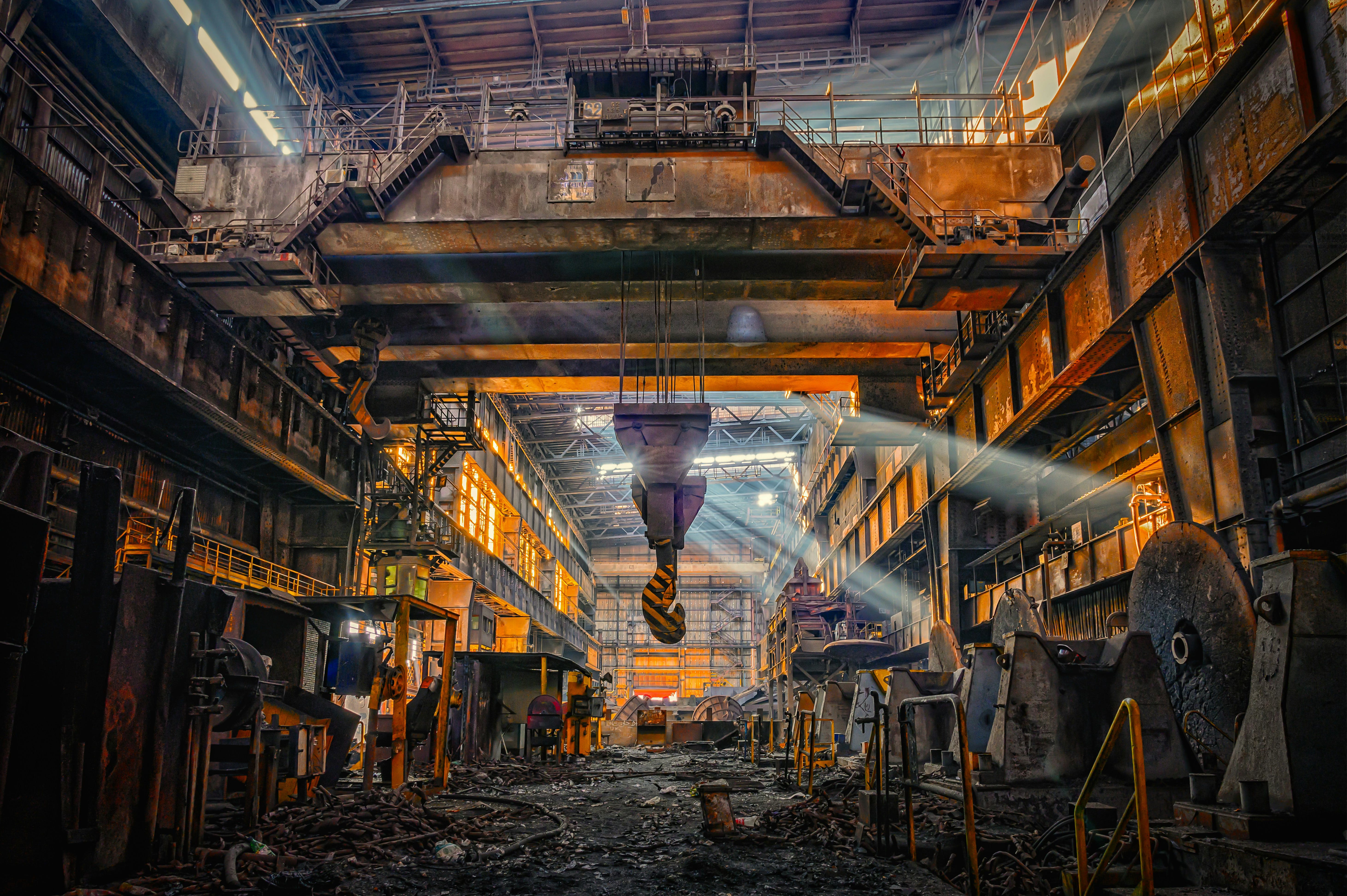
So why have traditional industries like coal, steel, shipbuilding and rail done so badly and destroyed so many jobs? Part of the answer lies in their years as nationalised industries. Even the 1974–79 Labour government, itself keen on nationalisation, was driven to publish a White Paper exposing the losses, the low returns and the failure of the nationalised businesses to spend their large capital investment programmes wisely. It was also partly the failure of the state monopolies to move with the times and see how consumer preferences and technology were changing the business landscape, and partly bad management and difficult unions conspiring to keep productivity down and costs high.
Our shipbuilding disappeared to South Korea and Japan because their yards were far more efficient. Our coal industry lost out to gas and oil, which were better in so many ways. Our rail industry missed out on where the business opportunities were, whilst delays and cancellations undermined service quality. Rail privatisation brought more and better services, and an early surge in passenger numbers that briefly promised a more successful future. Gradual tightening of central controls and the replacement of Railtrack with the state-backed Network Rail put a stop to that progress.
If we compare overall growth in the 1970s and 1980s, Mr Burnham will be surprised to see that from 1979 to 1989 under Mrs Thatcher the UK economy grew by 29%, whereas in the five years from 1974 to 1979 under Labour it managed just 9.5%. It is true that the disastrous European Exchange Rate Mechanism gave us a nasty hit in the early 1990s under John Major, but this was a policy Labour and the Lib Dems were very keen on. Today’s Labour Party never criticises Mr Major for that disastrous European policy. We few who opposed it were told we were wrong as we watched the predictable damage unfold.
Over a million industrial jobs were lost in the 1970s, another million in the 1980s, and more than that under the 1997–2010 government.
The UK industrial sector has more recently been throttled by expensive energy under net zero policies supported by all the main parties until this Parliament. Deindustrialisation accelerated under the Government, as it doubled down on carbon taxes, dear electricity and an eager reliance on imported energy at the expense of our own oil, gas and petrochemical production.
I think it wrong that we have set ourselves against home production of energy and energy-intensive products. Importing them is worse for global CO2 emissions, bad for the balance of payments, bad for jobs, and costs us tax revenue.
If Mr Burnham is serious about wanting to halt the rapid industrial decline of the past two years, he needs to change his mind on its causes. It is dear energy, the jobs tax (employer National Insurance), the tax attacks on business and the net zero bans, such as those on new oil and gas licences, that are accelerating industrial collapse. Nationalised British Steel still plans to shut down the remaining blast furnaces for net zero reasons, with likely large job losses. Nationalised Great British Railways will plough on with the ruinously expensive and much-delayed HS2 project, misallocating money on a huge scale. This will perpetuate losses and prolong poor services across the rest of the network.
For industry to flourish, we need lower energy costs and lower taxes, with plenty of competition. More nationalisation will replay the 1970s, when large losses in the nationalised industries helped lead to too much public borrowing, sky-high interest rates and the infamous trip to the IMF. History shows that heavy losses in nationalised industries invariably led to large-scale job cuts. Too often they could not produce a business plan to break out of a downward spiral that lasted for years. Nationalised water came with plenty of sewage discharges to rivers and seas, and nationalised rail came with waves of cuts to services as travellers went elsewhere.
More nationalisation and more intense net zero policies will speed yet more closures and job losses.
Amazing that so far, this history of Labour (yes, and Tory) industrial mismanagement hasn’t been put to Mr Burnham by any of the great British press and media folk. It’s currently Labour’s plans to return us to the bad old days of the 70s, rather than those of the Tories but they should also be grilled in time about their hapless efforts. Thatcher may have become the bete noir of the Left but stats show how as a country under her watch, we prospered. I doubt the same will be Burnham’s legacy.