


John Redwood is an incisive commentator on economics and politics, writing his daily blog on www.johnredwoodsdiary.com. He has led two UK-based international industrial businesses, set up and sold on an investment management company and is a fellow of All Souls College, Oxford.
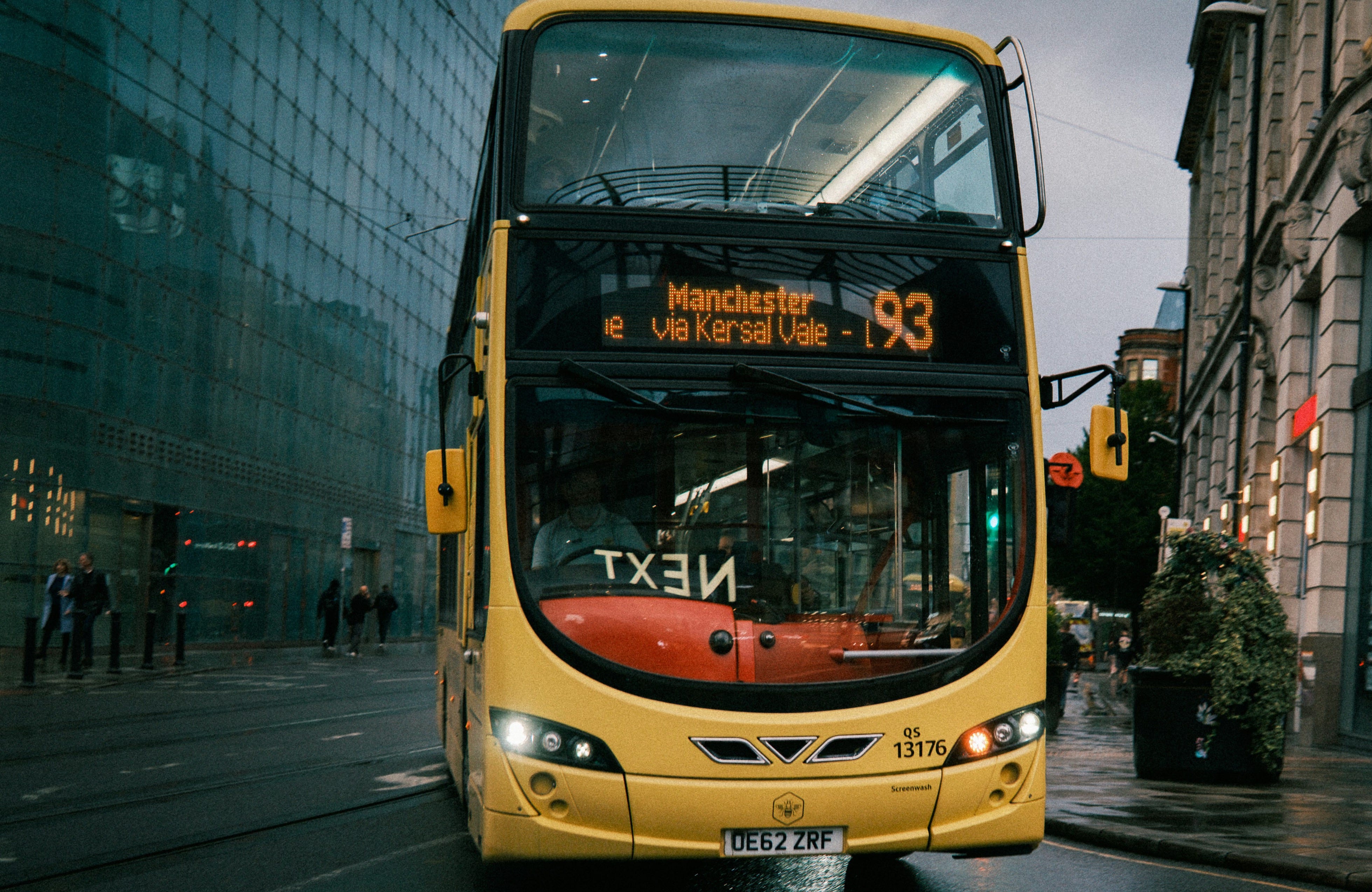
The Government’s economic approach is modelled on how Andy Burnham ran Manchester’s buses before he became Prime Minister. As Mayor, he took control of bus services and directed them from the centre. Copying the London model, local government takes the fare revenue, sets the fares and dictates the pattern of services. Private-sector bus companies compete for contracts to own and run the buses.
Advocates of nationalisation take the view that the best economy is state planned, eliminating what they call the extra costs of choice and competition, and taking over the profits of successful enterprise. They see all business revenues as something the state should control or receive, often objecting to the role of profit in attracting investment and innovation. Profits to them are a loss of money for the state, to be taxed or preferably to be taken over. Ideally, they would also want the state to own the operating assets and employ the staff.
The bus industry in England went through a period of deregulation, allowing some free-enterprise companies to offer new routes. New companies could in some places be set up and established companies could expand. Innovation could thrive. The Government is gradually reversing this, working towards a fully nationalised answer. It is going for nationalisation of the railways and steel. Its middle course of a council controlling bus services is called franchising, where all the key decisions are taken by the public sector. The residual private companies operate on small margins to own and drive the buses.
The Government wants to take more industries into public ownership, even as it struggles to manage the Post Office, HS2, the railways and other unruly state enterprises. In looking back to the 1970s model, it overlooks how in that decade the grim reality of the failure of the Soviet nationalised system became ever clearer. The long post-war contest between planned state-directed economies in the east of Europe and the freer, more free-enterprise economies of the West was coming to an end.
The 1980s, whose policies the Prime Minister has rejected, saw the capitulation of the Soviet model and the liberation of economies and people. The Berlin Wall finally came down. That was a symbol of people’s wish to be free themselves. They were tired of being kept in poor countries with controls over what they were allowed to think and say. In the extreme version of the USSR they could be shot if they tried to leave for the more prosperous West. The wall fell partly because of their appetite for the more abundant and better products the free-enterprise consumer system delivered. Shopping in West Berlin was a pleasure with plenty of choice of good products. Shopping in the East was painful, working around shortages and empty shelves.
Past Labour governments in the 1940s, 1960s and 1970s nationalised the “commanding heights” of the economy. The big three of rail, coal and steel supported each other in an interdependent system of coal mining, steam trains and a coal-burning steel industry. All three stumbled into large losses. All three ended up closing down much of their activity and sacking the bulk of their employees.
All three failed to innovate, falling behind the advances elsewhere. Japan pioneered the pace and reliability of bullet trains, whilst the UK responded to falling passenger numbers with big cuts in lines and services. Germany, Korea and later China came to dominate the steel market. The five large UK integrated works created by large taxpayer investment through the nationalised industry had to plan reducing outputs and making staff redundant, only to be followed by eventual closure. The UK gave up on coal mining altogether and switched to gas.
The experience of the nationalised Post Office which owned the phone system was not much better. The UK continued with an older electromechanical switching technology when the world moved on to crossbar and then to fully electronic exchanges. The UK supply industry was left mainly servicing the UK nationalised industry with an out-of-date product the rest of the world did not want to buy any more. Only after privatisation of telecoms did the UK system spend big money on catching up with the electronic technology. The UK supply industry then enjoyed a better home base to help drive an export business but the delay getting into the electronic market caused by nationalisation meant overseas competition was already well set.
Today, the Government’s appetite for nationalisation is constrained by the lack of money and the high costs of nationalising. The UK would have to compensate existing owners when taking over water or energy or transport businesses. If it failed to do so, it would hit foreign investment into the country and steal from UK savers and pension funds. If the state takes over a low-cost or near-bankrupt business, like steel, it still comes with a huge public-spending cost as the taxpayer has to pick up the bills for all the losses and for every pound of new investment the business needs to make. If Thames Water became available for a low price, the costs of its annual capital programme to put in more reservoir capacity and to replace old and small pipes would be very large and all part of public spending.
As a result, the Government is turning to accounting changes that make borrowing look smaller. Former Chancellor Rachel Reeves relaxed the fiscal rules substantially. She allowed the state to reduce its debt figure by deducting financial assets such as loans and equity stakes. Whilst it is true that if you borrow too much you can always sell an asset to help you repay, the fact that you own an asset does not cancel the debt and leaves you liable for the interest. Many people own a house with a mortgage. The house is usually worth more than the debt. They still, however, have to pay the interest, and do not want to sell the house to pay the bill as they need somewhere to live. They are in debt.
And where the state does build physical assets, it is often a bad investor. It frequently pays too much for a new facility, whose value will be less than the debt the state incurred to buy it. The biggest current case is that of HS2. The costs have escalated giddily. It may now cost £100bn for a rail line that just runs from London to Birmingham, duplicating other lines we already own. All of the cost is effectively being borrowed as the state is in long-running large deficit. What would be the value of a new line? Nothing like the £100bn of extra state debt. The new line will have to compete with the existing lines to win passengers and may well operate at a loss when it finally opens in the late 2030s. In the meantime, the taxpayers have to go on paying the interest on the ever-growing debt. It would be difficult to attribute any significant sale value to the potential new line.
The case of Sizewell shows the state getting clever at finding ways to borrow that do not count. The state has the largest shareholding in Sizewell C at just under 45 per cent. The Government will lend £36.6bn to the Sizewell consortium to help build the new plant. It will do it by routing the money through the National Wealth Fund. The Fund will earn a profit by charging Sizewell more than the rate of interest the Treasury will have to pay to borrow this large sum. It will be electricity customers who pay the bills to ensure the delivery of reliable nuclear power to the grid. This will be a rare example of a profit-making activity by the state based on lending at a higher rate than the borrowing. This gain will appear as a positive in the accounts of the National Wealth Fund. The taxpayer will, however, pay for the equity stake and the risks involved, whilst energy bill payers will pay for the higher lending costs the state will charge them.
Great British Energy is building a portfolio of renewable energy investments which rely heavily on guaranteed prices, green subsidies and high taxes on rival gas production and generation. These investments will be supported by increasingly tough bans on the fossil fuel alternative and by extensive redistribution through taxes and subsidies.
Great British Railways will dictate routes, services and investment for the rail industry and will doubtless remain heavily in loss before grants. The investment will continue to be a claim on public spending. British Steel and the Post Office remain big loss makers, with taxpayers having to pay the compensation to sub-postmasters wrongly accused of fraud, some of whom were sent to prison, and for the £1.3m-a-day losses at British Steel. Neither of these businesses has convincing business plans to get into profit.
The problem with all of this is that the growing public sector loses too much money and demands too much investment, forcing government to tax the private sector ever more severely. Supporters of nationalisation often see profit-making private business as potential “exploiters” to be taxed or regulated into submission. This may just result in more businesses closing, more investors taking their money abroad, more companies leaving the country altogether or re-siting crucial activities. We see this on a big scale with the closures of UK refineries, oil and gas production, glass, ceramics, paper, steel and many other energy-intensive activities. Even higher bank taxes might switch large amounts of capital and financial activity to other centres.
Meanwhile, as in the 1970s, the growing nationalised estate will cost taxpayers a fortune in losses and in large and often uneconomic capital spending programmes. This will leave the Government facing difficult decisions. Will it have to replace the two blast furnaces of British Steel with an electric arc plant that would probably entail sacking half the workforce? Will it end up having to close the blast furnaces owing to their age and large losses, undermining the pledge to the employees? Will rail investment have to be cut back to accommodate more defence spending? Will the Post Office continue to close more branches and sell properties? Will rail losses require more service cuts? Will HS2 suffer further delays and further cuts in the scope of the scheme?
The Government hopes more regulatory control will lift performance. It needs to puzzle over why strong powers already given to the water regulator have not stopped many discharges of sewage into rivers and the sea, a practice much used by the former nationalised industry without even having to report it. Why has the Bank of England allowed inflation to stay above target for most of the last five years? Why have rail delays and cancellations continued despite the presence of the rail regulator? Experience shows regulators struggle to improve monopolies without competition to keep businesses responsive to customer needs.
The new Chancellor, John Healey, says he wants to back private-sector entrepreneurs and sees the need for a lively private sector. Many of his colleagues are pursuing policies that will burden the state with more expensive white-elephant public-sector investments, and more high-cost and loss-making activities subsidised by the hard-pressed taxpayers who remain in the UK and pay. In the 1980s, even the Soviets woke up to the way large-scale nationalisation and much central direction meant falling further and further behind freer economies. The Government’s approach looks more like the 1970s, an era of high nationalised losses, high inflation and a borrowing crisis when the state ran out of money.
Devolution to Metromayors seems likely to result in many local “pet projects” which wd be declined by the private sector - eg the revival of the mothballed Doncaster-Sheffield airport which Peel cdn’t make a goer of after many years. À white elephant if I ever saw one. On the other hand with changed metal prices and mine economics, maybe Cornish Metals can make a goer of tin mining in Cornwall, but here the National Wealth Fund is co-investing alongside Mick the Miner’s Vision Blue Fund, and they know what they are doing. DItto Tungsten West, where the changed market environment for tungsten seems to offer NWF à return on the money.