



Dr Christopher Snowdon is the Head of Lifestyle Economics at the IEA
In the dying days of the Starmer administration, the former Prime Minister announced a handful of policies to secure his legacy. In keeping with his predecessor, Rishi Sunak, he was particularly interested in restricting the rights of children. Seven days before announcing his resignation, he declared that social media would be banned for the under-16s. Four days before leaving office, he announced that the sale of energy drinks would be banned in England to the under-16s.
The announcement on energy drinks had a familiar ring to it. It is now eight years since Theresa May drew up plans to ban their sale to minors, with the only question being whether to define a minor as someone under 16 or under 18. “It’s a question not of whether we do it, but how,” said a Downing Street source. But they didn’t do it. May left office the following year and the baton was passed to Boris Johnson who left it out of his otherwise extensive anti-obesity legislation in 2020. The policy was reportedly ditched by the health secretary Sajid Javid in June 2022 as being too “nanny state” but then Johnson fell, Truss came and went, and Sunak was too busy banning the under-16s from ever buying tobacco to bother with Red Bull.
Labour promised to revive the ban during the 2024 general election and launched another consultation in 2025, with then health secretary Wes Streeting making it quite clear that it would result in retailers being forbidden from selling energy drinks to the under-16s. This was confirmed by the Department for Health and Social Care and the torch now passes to Andy Burnham.
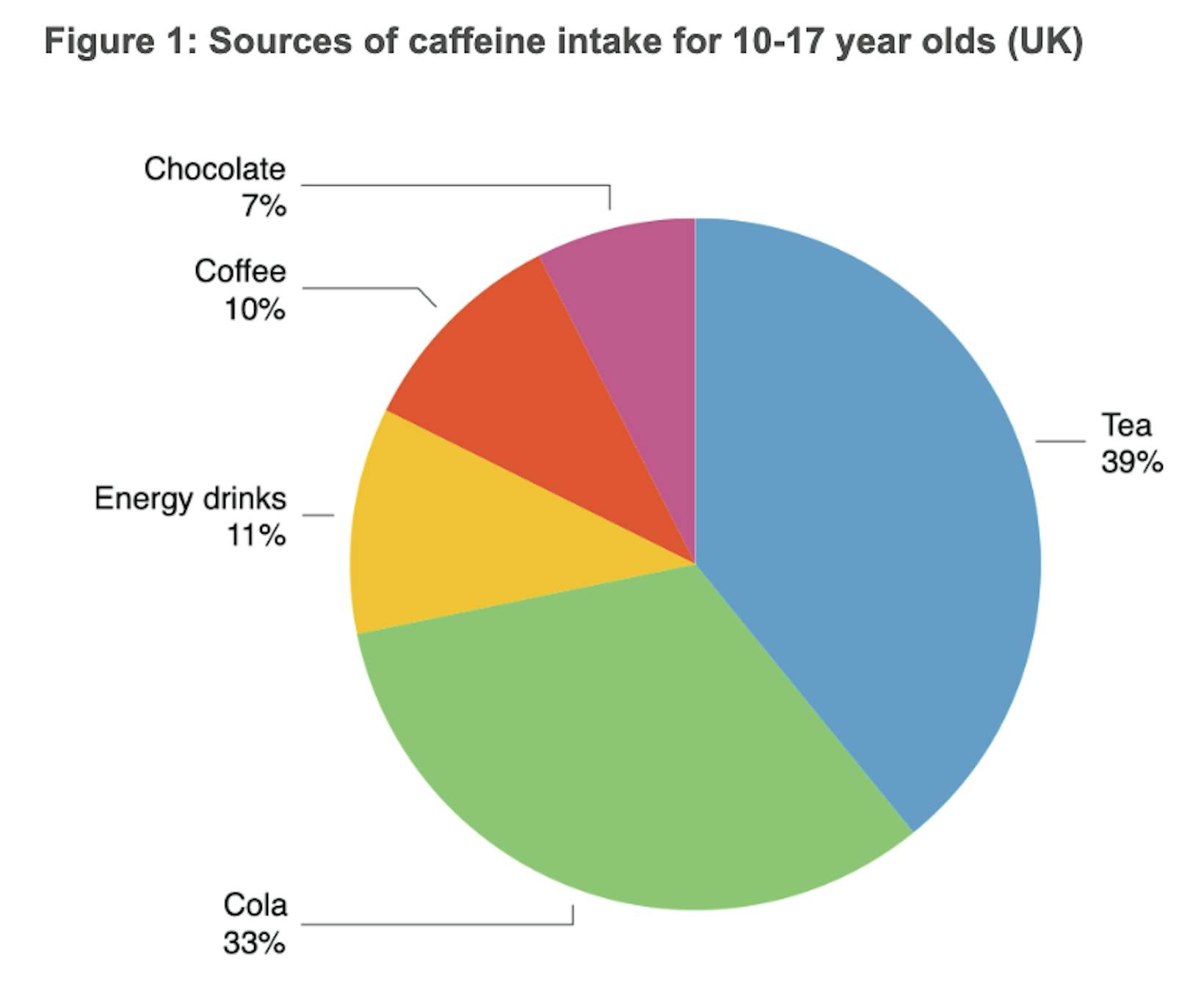
But if obesity is the issue, it seems perverse to include zero-calorie energy drinks in the ban while ignoring high-sugar soft drinks. And if caffeine is the issue, it is inconsistent to ban the sale of energy drinks while allowing the sale of coffee and coffee-based drinks such as Frappuccinos which typically contain more caffeine. The usual explanation is that kids don’t drink much tea and coffee but they do drink a lot of Monster and Red Bull, but this isn’t true. When I looked at the evidence in 2019, I was surprised by how little caffeine kids consume via energy drinks. Tea and cola are by far the biggest sources of caffeine for British consumers of any age, including those aged between 10 and 17, as the pie chart below shows.
Perhaps it is too much to ask for evidence-based policymaking from governments that are effectively run by Mumsnet and YouGov, but even the Scottishgovernment concluded that there was insufficient evidence to justify such a ban.
You may not care about the freedom of teenagers to buy caffeinated fizzy drinks, but it will not just be children who find things more difficult if a ban is introduced. There are 170,000 vending machines in the UK selling cold drinks, none of which will be able to stock energy drinks once the ban comes into effect. This is ridiculous because, according to the Vending & Automated Retail Association, more than 82 per cent of vending machines are in places that either ban children or are of no interest to children, such as offices, factories and warehouses. Millions of adults will be inconvenienced for no obvious gain.

Furthermore, adults will have to prove their age to buy these drinks. This is already a common complaint from those who shop at the virtue-signalling supermarkets that have brought in a voluntary ban. It will soon apply to every shop in England.
You don’t have to gaze too intently at the second order effects to see that restrictions on the freedom of children and teenagers have implications for the freedom of adults. Once the generational tobacco sales ban gets underway, consumers of all ages will have to provide identification to buy a pack of cigarettes or even a pack of cigarette papers. The ban on under-16s using social media will require everybody to have a digital ID if it is to stand any chance of working.
You may think that these relatively small sacrifices are worth it or you may not, but they are further steps in the regimentation of society and deserve a more considered response than yelping “Think of the children!”.
This article first appeared in The Critic